
Chinese Grammar Points
HSK 5
Intermediate


71 grammar points covering everything from basic word order to complex sentence patterns. Each point includes clear explanations, real-world examples, and exercises to reinforce your learning.
rhetoric
Advanced grammar lets you persuade, emphasize, and write with style.
Band 5 Requirements
Official HSK 3.0 quantitative criteria — what you need to know and how you'll be tested.
Exam Structure
| Section | Questions | Duration |
|---|---|---|
| Listening | 45 | ~30 min |
| Reading | 45 | ~45 min |
| Writing | 10 | ~40 min |
Proficiency Standards
Understand complex discussions on abstract and professional topics, including lectures and broadcasts.
Speak fluently on complex topics, debate ideas, and give structured presentations in professional settings.
Read academic texts, newspapers, and literary works with strong comprehension of implicit meaning.
Write academic essays, detailed reports, and perform basic translation tasks with accuracy.
Source: 新版HSK考试大纲 (HSK 3.0 official syllabus, 国家汉办 / Chinese Testing International). Score validity: 2 years from exam date.
What's Inside Every Grammar Point
Each of our grammar points is a complete mini-lesson. We don't just tell you the rule — we show you how it works with real sentences, warn you about the traps other learners fall into, and give you exercises to make it stick. Whether you're studying for the HSK exam or building conversational fluency, every point is designed to take you from "I've seen this before" to "I can use this confidently." Clear, structured, and built for lasting progress — not just memorization.
Sentence Patterns
Every grammar point starts with a clear, visual pattern template showing exactly where each word goes. No guesswork — just fill in the slots and build correct sentences from day one.
In-Depth Explanations
Each point comes with a thorough breakdown of how the grammar works, why it exists, and how native speakers actually think about it. Cultural notes add the context textbooks leave out.
Real-World Examples
Every rule is backed by graded example sentences — from simple beginner phrases to natural conversational Chinese. Each example includes pinyin, English translation, and usage notes so nothing is left unclear.
Common Mistakes
Learn what not to say. Each grammar point highlights the mistakes Chinese learners actually make, with side-by-side wrong vs. correct comparisons and clear explanations of why the error happens.
Interactive Exercises
Put your understanding to the test with multiple-choice questions, fill-in-the-blank drills, and translation challenges. Instant feedback and explanations help you learn from every attempt.
Tips & Study Strategies
Practical memory tricks, mnemonics, and study advice written by experienced Chinese teachers. Each grammar point ends with homework prompts to keep your practice focused and consistent.
Audio Pronunciations
Hear every example sentence and key vocabulary spoken by native Mandarin speakers. Train your ear alongside your grammar — because understanding spoken Chinese is just as important as reading it.
Progress Tracking
Earn XP and unlock checkpoints as you work through each grammar point. Track your mastery across sections, monitor your study streaks, and watch your understanding grow from beginner to confident speaker.
Demonstrative Pronouns: 彼此 & 如此
指示代词:彼此、如此
Use 彼此 to express reciprocity and 如此 to express "so / such / like this" in formal contexts
Measure Words: 册, 朵, 幅, 届, 颗, 匹, 扇
名量词:册、朵、幅、届、颗、匹、扇
Use seven new measure words accurately for books/volumes, flowers, paintings, graduating classes, small round objects, horses/cloth, and doors/windows
Degree Adverbs: 过于, 可, 稍, 稍微, 尤其
程度副词:过于、可、稍、稍微、尤其
Express fine-grained degrees of intensity — from "excessively" to "slightly" to "especially"
Scope Adverb: 大都
范围副词:大都
Use 大都 to express "mostly / for the most part" when describing general tendencies of a group
Time Adverbs: 不时, 将, 将要, 仍旧, 时常, 时刻, 依旧, 一向
时间副词:不时、将、将要、仍旧、时常、时刻、依旧、一向
Express nuanced time relationships — from "occasionally" and "constantly" to "still" and "about to"
Frequency Adverbs: 偶尔 & 再次
频率、重复副词:偶尔、再次
Use 偶尔 to express "occasionally" and 再次 to express "once again" in formal contexts
Manner Adverb: 偷偷
方式副词:偷偷
Use 偷偷 to describe actions done secretly, stealthily, or without others knowing
Mood Adverbs: 毕竟, 不免, 差(一)点儿, 倒是, 干脆, 就, 居然, 可, 明明, 总算
语气副词:毕竟、不免、差(一)点儿、倒是、干脆、就⁴、居然、可²、明明、总算
Express nuanced attitudes and emotions using ten mood adverbs that convey surprise, resignation, determination, and relief
Preposition: 随着 (Along With / As)
介词引出时间处所:随着
Use 随着 to express that one change accompanies or is caused by another change
Preposition: 将 (Formal 把)
介词引出施事受事:将
Use 将 as a formal written equivalent of 把 to indicate disposal or handling of an object
Preposition 由 — Introducing the Agent
介词:由²
Use the preposition 由 to indicate who is responsible for or carries out an action
Preposition 凭 — By Means Of
介词:凭
Use 凭 to express doing something based on a certain basis, credential, or ability
Preposition 依据 — Based On (Formal)
介词:依据
Use 依据 to express formal reasoning based on facts, evidence, or regulations
Preposition 依照 — In Accordance With
介词:依照
Use 依照 to express acting in accordance with rules, customs, or someone's wishes
Clause Connectors: 从而, 加上, 完了, 一旦
连接分句或句子:从而、加上、完了、一旦
Use four advanced conjunctions to connect clauses expressing result, addition, sequence, and contingency
Particle 也好 — "That Would Be Fine" / "Whether...Or..."
其他助词:也好
Use the particle 也好 to express acceptance, concession, or the "whether X or Y" pattern
Pattern A来A去 — Back and Forth
四字格式:A来A去
Use the A来A去 pattern to express repeated or prolonged action without resolution
Pattern A着A着 — While Doing A...
四字格式:A着A着
Use the A着A着 pattern to describe an unexpected change or event that occurs during an ongoing action
Pattern 没A没B — Without A Without B
四字格式:没A没B
Use the 没A没B pattern to express a lack of two related things, often with a critical or negative tone
Pattern 说A就A — Do It as Soon as Said
四字格式:说A就A
Use the 说A就A pattern to express spontaneous, decisive, or impulsive action
Paired Pattern: 有A有B
有A有B
Describe something that has both quality A and quality B using the 有A有B pattern
Fixed Phrase: 不得了
不得了
Use 不得了 to express that something is terrible, extraordinary, or extreme
Fixed Phrase: 不敢当
不敢当
Use 不敢当 to humbly deflect compliments and praise
Fixed Phrase: 得了
得了
Use 得了 to express "that's enough," "forget it," or "just do X then"
Fixed Phrase: 用不着
用不着
Use 用不着 to express that there is no need for something
Pattern: 从……来看
从……来看
Use 从……来看 to express a perspective or basis for judgment
Pattern: 到……为止
到……为止
Use 到……为止 to express a time limit or endpoint
Pattern: 够……的
够……的
Use 够……的 to emphasize that something is "quite" or "really" a certain way, often with a mild complaint
Pattern: 拿……来说
拿……来说
Use 拿……来说 to introduce a specific example to support a point
Pattern: A的A,B的B
A的A,B的B
Use A的A,B的B to describe a disorderly situation where things vary widely or everyone is doing their own thing
Fixed Pattern: 在……看来
在……看来
Express someone's perspective or viewpoint using the pattern 在...看来
Object Semantic Types: Agent & Patient Objects
宾语的语义类型1:施事宾语与受事宾语
Understand and use sentences where the object is the agent (doer) or patient (receiver) of the action
Multiple Adverbials
多项状语
Stack multiple adverbials (time, place, manner, purpose) correctly before a verb
Directional Complements: Extended Figurative Uses
趋向补语4:引申用法
Use directional complements 上, 起来, 下去, and 下来 in their figurative (non-directional) meanings
Potential Complement 2: V + 得/不 + 了/得
可能补语2:动词+得/不+了/得
Express whether an action can or cannot be done using extended potential complement patterns
Degree Complement 2: Advanced Patterns
程度补语2
Express extreme degrees using advanced complement patterns with 得 and fixed phrases
State Complement 2: V/Adj + 得 + Descriptive Phrase
状态补语2:动词/形容词+得+描述短语
Describe resulting states and reactions using V/Adj + 得 + verb or subject-predicate phrases
"有" Sentences 3: 有着 & V + 有
"有"字句3
Use 有着 for deep/enduring possession and V + 有 for attached/inscribed existence
"把" Sentences 3: Advanced Disposal Patterns
"把"字句3:表处置
Master advanced 把-sentence patterns including directional disposal, swift action, completion, and purpose
Notional Passive 3: Passive Meaning Without 被
被动句3:意念被动句
Express passive meaning without using 被 by placing the patient (receiver of action) as the subject
Serial Verb Sentences 3: Cause-Effect, Concessive & Conditional
连动句3:前后两个动词性短语具有因果、转折、条件关系
Use serial verb constructions where two verb phrases are linked by cause-effect, concessive, or conditional relationships
Pivotal Sentences 3: Causative Constructions
兼语句3:表致使
Use 叫, 令, 使, and 让 to express that someone causes another person to do something or feel a certain way
Comparison Sentences 5: 跟…相比 & Adjective + Quantity Complement
比较句5
Make comparisons using 跟…相比 and the pattern A + adjective + B + quantity complement
Selective Compound: 或是…或是…
或是……,或是……
Present two or more alternatives using the formal selective pattern 或是…或是…
Concessive Compound: 尽管…但是/可是…
尽管……,但是/可是……
Express concession using 尽管 (even though) paired with 但是 or 可是 (but)
Hypothetical Compound: 一旦…就…
一旦……,就……
Express that once a critical event happens, a consequence inevitably follows, using 一旦…就…
Complex Hypothetical: 要是…就…否则…
要是……,(就)……否则……
Express a conditional with both the preferred outcome and the negative alternative using 要是…就…否则…
Conditional Compound: 除非…才…
除非……,才……
Express that only under a specific condition will something happen, using 除非…才…
Conditional Compound: 除非…否则/不然…
除非……,否则/不然……
Express that unless a condition is met, a negative outcome will occur, using 除非…否则/不然…
Causal Compound: …因而…
……,因而……
Express cause and effect in formal contexts using 因而 (and therefore / as a result)
Concessive Compound: 即使……也…… (Even If…Still…)
即使……,也……
Express concession — that a result holds true even under an unfavorable or hypothetical condition
Purpose Compound: ……为的是…… (The Purpose Is To)
……,为的是……
Explain the purpose or reason behind an action using the 为的是 structure
Purpose Compound: ……以便…… (So That / In Order To)
……,以便……
Express purpose using the formal conjunction 以便 to indicate "so that" or "in order to"
Tight Compound: 没有……就没有…… (Without…There Would Be No…)
没有……就没有……
Express a necessary condition — that without X, Y cannot exist or happen
Concessive Compound: 再……也…… (No Matter How…Still…)
再……也……
Express that a result remains unchanged regardless of the degree or extent of a condition
Multi-Layered Compound Sentence: Simple + Compound / Compound + Simple
二重复句1:单句+复句;复句+单句
Construct complex multi-layered sentences by combining simple and compound clauses
Emphasis with 再也不/没 (Never Again)
用"再也不/没"表示强调
Use 再也不 and 再也没 to emphatically express that something will never happen again or has never happened since
Emphasis with Adverb 可 (Really / So — Emphatic)
用副词"可"表示强调
Use the adverb 可 to add emphasis, expressing strong feelings such as relief, urgency, or warning
Emphasis with 怎么都/也+不/没 (No Matter What…Can't/Didn't)
用"怎么都/也+不/没"表示强调
Express emphatic inability or impossibility using 怎么都/也 with negation
Colloquial: X也不是,Y也不是 (Neither X Nor Y Works — Stuck in a Dilemma)
X也不是,Y也不是
Express being stuck in an awkward dilemma where neither option is appropriate
Can Neither X nor Y: X也X不得,Y也Y不得
X也X不得,Y也Y不得
Express a dilemma where neither action is possible using the pattern X也X不得,Y也Y不得
No Other Option: X是它,Y也是它
X是它,Y也是它
Express that regardless of the outcome, the situation remains the same — there is no other choice
Since You're Just Doing X Anyway: X着也是X着
X着也是X着
Express that since you are just idly doing X anyway, you might as well do something more useful
Keep Things Separate: X归X,Y归Y
X归X,Y归Y
Express that two things should be kept separate and not confused with each other
No Matter What: 不管怎样说
不管怎样说
Use 不管怎样说 to introduce a conclusion that holds true regardless of circumstances
Look at You! 看你X的 / 瞧他X的
看你X的/瞧他X的
Use 看你X的 or 瞧他X的 to tease or react to someone's behavior with humor or mild criticism
You're Really Something! 真有你的
真有你/他/她的
Use 真有你的 to express admiration, surprise, or mild exasperation at someone's ability or audacity
Stop Doing X! X什么X
X什么X
Use X什么X to bluntly tell someone to stop doing something or dismiss an action as pointless
What Does It Matter? 什么X不X的
什么X不X(的)
Use 什么X不X的 to dismiss a concern or distinction as unimportant
Pronoun Reference for Cohesion
用代词复指
Use personal and demonstrative pronouns to create cohesive, well-connected multi-sentence passages
Ellipsis: Omitting Sentence Elements
省略成分
Understand and use ellipsis (omission of subjects, objects, and other elements) to create natural, concise Chinese
Recommended books
Books chosen for HSK 5 — grammar references and course books that cover the patterns on this page. Full list on the HSK 5 books page.

A Chinese Text for a Changing China

Developing Chinese
HSK Standard Course 5A
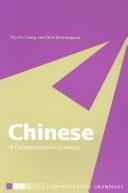
Chinese: A Comprehensive Grammar

Intermediate Chinese: A Grammar and Workbook

Chinese Writing and Calligraphy

Reading and Writing Chinese
