

August 27, 2026 · 星期四
Zhongyuan (Ghost) Festival
中元节· middle

 Today’s episode with Jason & Amy
Zhongyuan Festival highlights the importance of harmony between the living and the spiritual world in Chinese culture.
处暑 signals that the oppressive summer heat is finally retreating, with 处 here meaning to halt or withdraw. Mornings and evenings turn crisp, the air loses its heaviness, and the harvest of autumn crops begins.
Coastal communities hold fishing festivals to celebrate the open season, and people eat duck, believed to nourish the body in autumn.
Zhongyuan (Ghost) Festival
中元节zhōng yuán jié
Zhongyuan Festival, also known as Ghost Festival, is a significant traditional event in Chinese culture, celebrated on the 15th day of the 7th lunar month. During this time, it is believed that the spirits of ancestors return to the earthly realm to visit their living relatives. Families prepare offerings of food and incense to honor these spirits and ensure their well-being in the afterlife.[1]
The festival has deep roots in both Buddhist and Taoist traditions. In Buddhism, it is associated with the Ullambana Festival, which emphasizes prayers and offerings to relieve the suffering of spirits. Taoism, on the other hand, marks it as a day to honor the deity of the underworld and perform rituals to appease wandering spirits.[2] This blend of beliefs underlines the importance of filial piety and respect for ancestors, which are central themes in Chinese culture.
Community activities during Zhongyuan Festival often include the release of water lanterns and the performance of operas or other cultural events. These practices symbolize guiding lost spirits and bringing peace. The festival is a reflection of the harmonious balance between the living and the deceased, acknowledging the cycle of life and death. The word 中 (zhōng), meaning 'middle,' aptly describes the festival as it falls in the middle of the lunar month and serves as a bridge between realms.[3]
Zhongyuan Festival highlights the importance of harmony between the living and the spiritual world in Chinese culture.
中元节是今天。
Zhōngyuán Jié shì jīntiān.
Zhongyuan Festival is today.
- [1] 《白话佛学》 Buddhism in Plain Terms
- [2] 《道德经》 Tao Te Ching
- [3] 《中华传统节日》 Traditional Chinese Festivals
Jason & Amy on 中
Podcast: Dragon Daily: Zhongyuan (Ghost) Festival — and the word 中
Jason & Amy on Zhongyuan (Ghost) Festival and 中
New here?
August 27, 2026
Today, we explore a foundational moment in constitutional history and celebrate the life of an influential director in Chinese arts.
Promulgation of the Qinding Xianfa Dagang 钦定宪法大纲
In 1908, the Qing dynasty issued the Qinding Xianfa Dagang, China's first constitutional document. It aimed to transform the Qing empire into a constitutional monarchy, marking a significant shift in governance.
This document laid the groundwork for future reforms in China's political structure.
Read more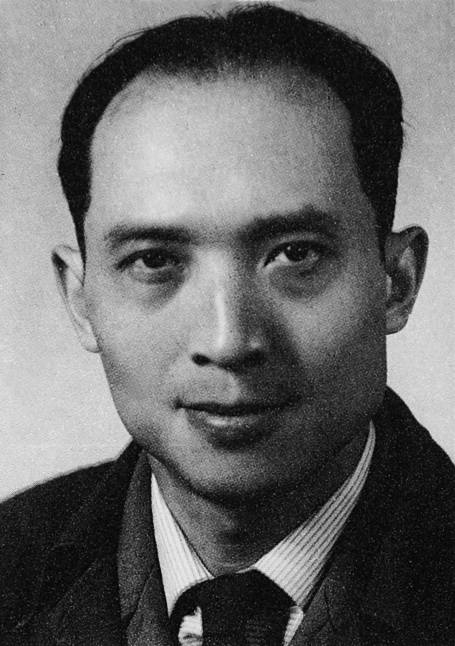
Unknown author Unknown author / Wikimedia Commons (Public domain) source Death of Director Chen Liting 陈鲤庭
Chen Liting, a celebrated Chinese director and playwright, passed away in 2013. Known for his influential works in Chinese cinema, he left a lasting mark on the film industry with his unique storytelling and contributions to theatrical arts.
Chen's work continues to inspire Chinese filmmakers and artists today.
Read more
我在中间。
Wǒ zài zhōngjiān.
I am in the middle.
The word 中 is used to indicate a position 'in the middle.'
中午我们吃饭。
Zhōngwǔ wǒmen chīfàn.
We eat at noon.
中 is used in 中午 to mean 'noon,' indicating the middle of the day.
事情进行到中途。
Shìqíng jìnxíng dào zhōngtú.
The matter is halfway through.
中途 refers to 'halfway' or 'midway' in a process.
他在思考中找到答案。
Tā zài sīkǎo zhōng zhǎodào dáàn.
He found the answer in thought.
中 is used here to indicate being 'in' a process of thinking.
Using '中' for indicating 'in the middle'
在 + noun + 中
This pattern is used to indicate something happening within or during a process or location.
Use this pattern to express being in the middle of an activity or place.
他在学习中。
Tā zài xuéxí zhōng.
He is in the middle of studying.
我们在旅行中。
Wǒmen zài lǚxíng zhōng.
We are in the middle of a trip.
会议在进行中。
Huìyì zài jìnxíng zhōng.
The meeting is in progress.
What does 中 mean?
How is 中 pronounced?
How do you write "middle" in Chinese?
Listen. What does the sentence mean?
会议在___进行。(The meeting is ___ progress.)
他在中间。 — What does this sentence mean?
What is a common activity during Zhongyuan Festival?
Arrange into a correct sentence
What significant document was promulgated during the Qing dynasty in 1908?
Which Chinese director, known for his impact on the film industry, died in 2013?
Frequently asked questions about the word 中
You can use 中 to indicate location, such as '我在桌子中' (Wǒ zài zhuōzi zhōng), meaning 'I am in the middle of the table.'
中 refers to the middle or center of something, while 里 (lǐ) generally refers to 'inside' or 'within'.
Yes, 中 can be used in both contexts, but be mindful of the specific phrases it is used in.
Chinese Learner’s Horoscope
Your sign’s reading for today, written for learners.
Find your sign
The Chinese zodiac assigns each birth year one of twelve animals, each paired with an element that colours its character. Yours shapes a reading written for learners.
- Your sign and its elementOne of twelve animals on a 12-year cycle
- A daily affirmationFresh every morning, never repeated
- A learning horoscopeWhat to study today, and when
- A lucky characterWith pinyin, meaning and a study tip
Your birth date
Saved on this device — used only to work out your zodiac sign.
Today's Mandarin word: 中 (zhōng) — middle.
Learn it on Mandarin Temple's Dragon Daily 🐉