Chinese Grammar Points
HSK 1
Beginner


70 grammar points covering everything from basic word order to complex sentence patterns. Each point includes clear explanations, real-world examples, and exercises to reinforce your learning.
grammar
The foundation of every sentence you will ever build in Chinese.
HSK 1 Requirements
What the official HSK 3.0 syllabus asks for at this level, and the exam that tests it from 13 December 2026.
能用中文就生活场景进行简单交流。Can communicate simply in Chinese in everyday situations.
Exam Structure
| Section | Questions | Time |
|---|---|---|
| Listening | 20 | about 12 min |
| Reading | 20 | 20 min |
| Written paper | 40 | about 40 min |
The paper's time includes filling in your details and the answer sheet.
Topics at this level
| Topic | In Chinese |
|---|---|
| Basic information | 基本信息 |
| Daily life | 日常生活 |
| Education | 教育情况 |
| Working life | 职场生活 |
| Culture and tradition | 文化与传统 |
The syllabus's topic list (话题大纲) breaks these 5 into 15 subtopics and 30 in detail.
Sources: 中文水平考试 HSK 考试大纲, 中外语言交流合作中心 (Center for Language Education and Cooperation; published November 2025, in force July 2026), and 新版HSK(1–6级)考试结构与样题示例 (Chinese Testing International, December 2025). Words and characters are cumulative; grammar items are those new at this level. The exam time includes filling in your details and the answer sheet.
What's Inside Every Grammar Point
Each of our grammar points is a complete mini-lesson. We don't just tell you the rule — we show you how it works with real sentences, warn you about the traps other learners fall into, and give you exercises to make it stick. Whether you're studying for the HSK exam or building conversational fluency, every point is designed to take you from "I've seen this before" to "I can use this confidently." Clear, structured, and built for lasting progress — not just memorization.
Sentence Patterns
Every grammar point starts with a clear, visual pattern template showing exactly where each word goes. No guesswork — just fill in the slots and build correct sentences from day one.
In-Depth Explanations
Each point comes with a thorough breakdown of how the grammar works, why it exists, and how native speakers actually think about it. Where it helps, a cultural note adds the context.
Real-World Examples
Every rule is backed by graded example sentences — from simple beginner phrases to natural conversational Chinese. Each example has pinyin and an English translation, and many add a note on how it is used.
Common Mistakes
Learn what not to say. Each grammar point highlights the mistakes Chinese learners actually make, with side-by-side wrong vs. correct comparisons and clear explanations of why the error happens.
Interactive Exercises
Put your understanding to the test with multiple-choice questions, fill-in-the-blank drills, and translation challenges. Instant feedback and explanations help you learn from every attempt.
Tips & Study Strategies
Practical memory tricks, mnemonics and study advice, with homework prompts at the end to keep your practice focused and consistent.
Audio Pronunciations
Hear every example sentence and key word read aloud in Mandarin. Train your ear alongside your grammar — because understanding spoken Chinese is just as important as reading it.
Progress Tracking
Earn XP and unlock checkpoints as you work through each grammar point. Track your mastery across sections, monitor your study streaks, and watch your understanding grow from beginner to confident speaker.
Prefixes 小— and 第—: 小王, 第一
前缀:小—、第—
Call friends 小王 or 小李, and say first, second and third with 第
Suffixes for Groups and Places: —们 and —边
后缀:—们、—边
Make words for groups of people with 们, and place words with 边
Location Words: 上, 下, 里, 外, 前, 后
方位名词:上、下、里、外、前、后
Say where things are with 上, 下, 里, 外, 前 and 后
Modal Verbs: 会 & 能
能愿动词:会、能
Say what you can do: a skill with 会, being able with 能
Expressing Wants: 想 & 要
能愿动词:想、要
Say what you would like, what you want and what you plan to do
Asking and Giving Permission: 可以
能愿动词:可以
Ask whether you may do something, say someone may, and say what is possible
Separable Verbs (离合词)
离合词:看病、睡觉、说话、上课、下课、上班、下班、生病
Use eight everyday verbs that already contain their object
Question Words: 什么, 谁, 哪儿, 几, 多少 and More
疑问代词
Ask what, who, where, which, how many and how with question words
Personal Pronouns: 我, 你, 他, 我们, 大家
人称代词
Talk about yourself and others with pronouns such as 我, 你 and 他
This and That: 这, 那, 这儿, 这些, 有的
指示代词
Point to things, places and groups with 这, 那, 这儿 and 这些
Numbers: 一 to 千, and 二 or 两
数词
Count, say prices and ages, and choose between 二 and 两
Measure Words: 本, 个, 家, 口, 块, 件, 只, 元
专用名量词:本、个、家、口、块、件、只、元
Count people, books, shops, clothes and animals with the right measure word
Borrowed Measure Words: 杯
借用名量词:杯
Order and count drinks by the cup or glass with 杯
Time Measure Words: 天, 年, 岁, 点, 分, 号, 日
时量词:日、号、岁、点、分、年、天
Say ages, dates, clock times and numbers of days and years
Degree Adverbs: 很, 非常, 太, 真, 有点儿
程度副词:非常、很、太、真、有(一)点儿
Say how hot, cheap or busy something is with five degree adverbs
All and Both: 都
范围副词:都
Say that everyone or everything in a group does the same, with 都
Time Adverbs: 在 & 正在
时间副词:在、正在
Say that an action is going on, with 在 or 正在 before the verb
Again: 再
频率副词:再
Ask for something again, or say you will do it again, with 再
Adding Info: 还 & 也
关联副词:还、也
Say "too", "either" and "as well" with 也 and 还
Saying No: 不, 没(有) and 不要
否定副词:不、没(有)、不要
Say no with the right word: 不, 没(有) or 不要
Where Something Happens: 在
介词:在
Say where something happens, with 在 and a place before the verb
With and To Someone: 和 and 对
介词:和、对
Say who you do something with, and who it is aimed at
And Between Words: 和
连词:和
Join two people or things with 和, meaning 'and'
Owner and Description: 的
结构助词:的
Link an owner or a description to a thing with 的
After the Verb: The Particle 了
动态助词:了
Put 了 after a verb correctly, and say no with 没
Sentence Particles: 吧, 了, 吗, 呢
语气助词:吧、了、吗、呢
End a sentence with 吗, 吧, 了 or 呢 to ask, suggest or report
Hello on the Phone: 喂
叹词:喂
Answer the phone and call out to someone with 喂
Coordinate Phrases: 爸爸妈妈 & 你和我
联合短语
Join two people or things into one unit, with or without 和
Modifier-Head Phrases: 好朋友 & 很好
偏正短语
Put a describing word before a thing, an action or a quality
Verb-Object Phrases: 喝茶 & 去学校
动宾短语
Put what a verb acts on after it, as in 喝茶 and 去学校
Subject-Predicate Phrases: 我知道他很忙
主谓短语
Put a whole small sentence after 知道, 觉得, 喜欢 or 看见
Number and Measure Word Phrases: 三个, 两本
数量短语
Count things with a number and a measure word, and use the phrase
Preposition Phrases: 在家, 和朋友, 对我
介宾短语
Say where, with whom or towards whom something is done, before the verb
Location Phrases: 桌子上, 房间里, 学校外边
方位短语
Turn a thing into a place, and use that place in a sentence
The Subject: 我, 老师 & 这个房间
主语
Put a noun, a pronoun or a noun phrase first as the subject
The Predicate: 今天星期一, 他二十岁 & 这个三块
名词、代词、数词作谓语
Make a noun, a number or 三块 the predicate, with no verb
Verbs and Adjectives as the Predicate: 喝茶, 很忙
动词、形容词作谓语
Say what someone does or what something is like, with no 是
The Object: 喝茶, 认识他 & 买一个手机
宾语
Put the thing or person you act on after the verb
Attributive Modifiers: 中国菜, 很好的朋友 & 三个人
定语
Describe a noun with a noun, an adjective or a number before it
Adverbial Modifiers: 都去, 很好 & 多吃
副词、形容词作状语
Put 都, 也, 不 or 很 before a verb or an adjective
Time and Place Before the Verb: 明天, 在家
时间、处所词语作状语
Say when and where something happens, in the right order before the verb
A Quick Go: Verb + 一下
数量补语1:动词+动量补语
Ask or offer to do something briefly with verb + 一下
Verb-Predicate Sentences: 我去 & 我不喝茶
动词谓语句
Make statements, negatives and questions around one verb
Adjective-Predicate Sentences: 我很好 & 今天不冷
形容词谓语句
Say what something is like, with 很 and no 是
Noun-Predicate Sentences: 今天八号, 不是九号
名词谓语句
Ask and answer about dates, times, ages and prices, and say 'not' with 不是
Sentences Without a Subject: 下雨了
非主谓句
Say short sentences that need no subject, such as 下雨了 and 八点了
Making Statements: 我是学生
陈述句
Tell someone something, and say no, with 不 or 没有
Yes–No Questions with 吗
是非问句
Turn a statement into a yes–no question with 吗, and answer it
Information Questions: 你去哪儿?
特指问句
Ask for information by putting a question word where the answer goes
A-not-A Questions: 去不去?
正反问句
Ask a yes–no question by putting a verb and its negative together
Commands & Requests: 请, 吧, 不要
祈使句
Ask someone to do something, or not to, with 请, 吧 and 不要
Exclamations: 太……了 and 真
感叹句
Say how you feel about something with 太……了 and 真
Sentences with 是: Who or What It Is
“是”字句1:表示等同或类属
Say who someone is or what something is with 是
Having with 有: 我有一个哥哥
“有”字句1:表示领有
Say what someone has and doesn't have, with 有 and 没有
What Is in a Place: 桌子上是我的书
存现句1:处所 + 是 + 名词
Say what is in a place, with the place first and 是
There Is and There Are: 桌子上有一本书
存现句:处所 + 有 + 数量短语 + 名词
Say what is in a place, and how many, with 有
Going Somewhere to Do Something: 去商店买东西
连动句1:后一动作是前一动作的目的
Say where you are going and what for, as in 去商店买东西
The First Verb Says How: 坐车去
连动句:前一动作是后一动作的方式
Say how you go somewhere or do something, with the way first
Two Objects: 给你一本书
双宾语句1:主语+动词+宾语1+宾语2
Say who gets what with 给, and ask someone something with 问
Too and Either: ……,也……
并列复句:……,也……
Join two clauses with 也 to say the same is true again
Adding to the List: ……,还……
并列复句:……,还……
Add a second thing one person does, has or likes with 还
Done, Not Past: Completion with 了
完成态:了
Say what someone did, and how much, with 了 after the verb
Something Has Changed: 了 at the End
变化态:用动态助词“了2”表示
Say that something has changed, with 了 at the end of the sentence
In Progress: 在/正在 + Verb
进行态:在/正在+动词
Say what someone is doing at a moment with 在 or 正在
In Progress with 在/正在……呢
进行态:在/正在……呢
Say what someone is in the middle of doing with 在/正在 and 呢
In Progress with 呢 Alone
进行态:……呢
Say what someone is doing now with a verb and 呢 alone
Talking About Money: 块, 元 and 多少钱
钱数表示法
Ask how much things cost and say prices in yuan
First, Second, Third: 第 + Number
序数表达法1:第+数词
Say first, second, third and so on with 第 + number
Dates and Days of the Week: 年, 月, 号, 星期
时间表示法:年、月、日、星期
Say and ask the date and the day of the week
Telling the Time: 点, 分 and 半
钟点表示法
Ask the time and say when things happen by the clock
Recommended books
Books chosen for HSK 1 — grammar references and course books that cover the patterns on this page. Full list on the HSK 1 books page.

Chinese for Dummies

Chinese Made Easier

Colloquial Chinese

Complete Mandarin Chinese

Contemporary Chinese (当代中文)
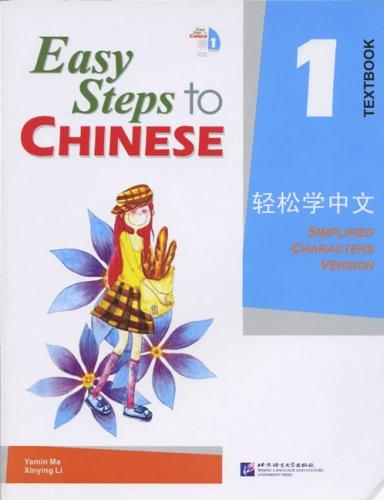
Easy Steps to Chinese 1

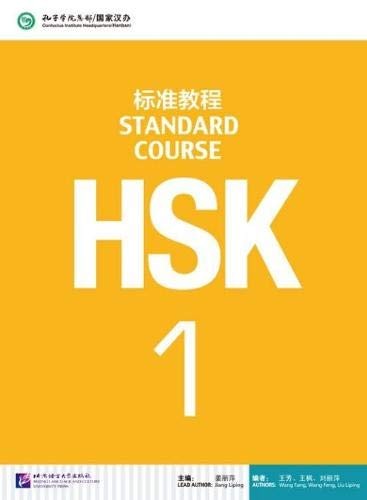
HSK Standard Course 1

Integrated Chinese
