
Podcast


Podcast: Zhu Xi and Neo-Confucianism: The Great Synthesis
Listen to Jason & Amy discuss Zhu Xi and Neo-Confucianism: The Great Synthesis
New here?
The Second Confucius
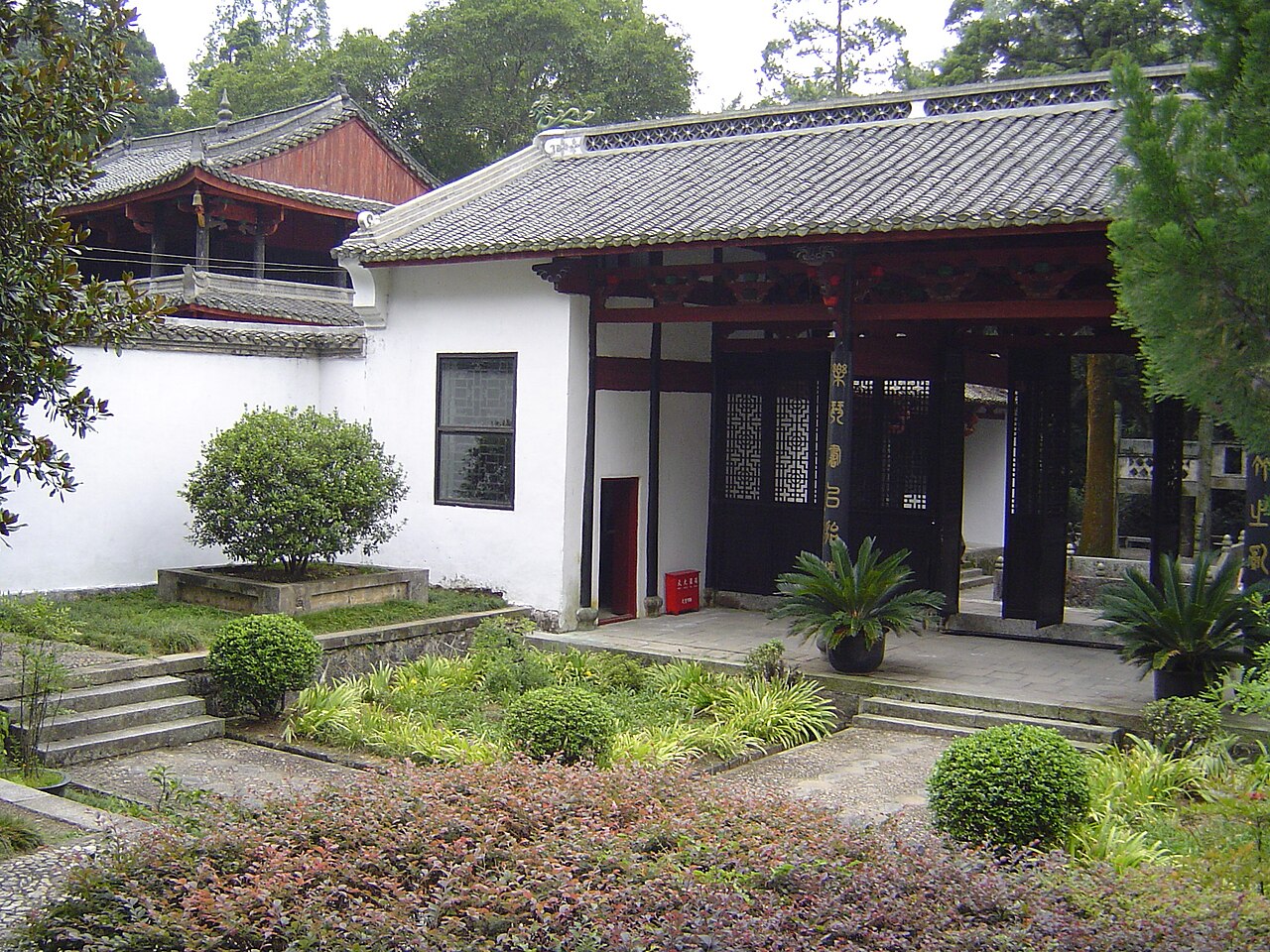
Zhu Xi was born in 1130 in Fujian province during one of the most traumatic periods in Chinese history. The Song dynasty had just lost its northern territories to the Jurchen Jin dynasty, and the imperial court had retreated south in a humiliating withdrawal that haunted Chinese intellectuals for generations. Zhu Xi grew up in this atmosphere of national crisis and cultural anxiety, which gave urgency to his lifelong project of reconstructing Confucianism as a comprehensive philosophical system capable of meeting every intellectual and spiritual need. If China had lost its political greatness, it could at least recover and perfect its philosophical heritage (Gardner, 1990).
Zhu Xi was a prodigiously gifted scholar who passed the highest civil service examination at the age of eighteen, a remarkable achievement that marked him as one of the most intellectually talented men of his generation. Yet he spent relatively little of his career in government, preferring instead to devote himself to teaching, writing, and philosophical debate. He served in several minor official positions but was most influential as the head of the White Deer Grotto Academy, which he revived as a center of philosophical education. His reconstruction of the academy's curriculum and educational philosophy became the model for Confucian academies throughout East Asia, establishing the institutional framework for Neo-Confucian learning that endured for centuries (Chan, 1989).
Zhu Xi's philosophical achievement was one of synthesis. He drew on the work of earlier Song dynasty thinkers, particularly Zhou Dunyi, Zhang Zai, and the brothers Cheng Hao and Cheng Yi, integrating their insights into a unified system that addressed metaphysics, epistemology, ethics, politics, and personal cultivation. But Zhu Xi was far more than a compiler. He transformed the raw materials he inherited into something qualitatively new, a philosophical architecture of extraordinary coherence and depth that could stand comparison with the great systematic philosophies of the Western tradition, from Aristotle to Hegel. His achievement was so monumental that later generations called him simply "the Master," and his interpretation of Confucianism became the standard against which all subsequent Chinese philosophy was measured (Tillman, 1992).
"How can the pond be so clear? Because living water flows from its source."
Zhu Xi, "Reflections While Reading" (Guanshu yougan)Li and Qi: Principle and Material Force
The metaphysical foundation of Zhu Xi's philosophy rests on the distinction between li (principle or pattern) and qi (material force or vital energy). Li is the rational structure that gives each thing its nature and its place in the cosmic order. Qi is the material, energetic substrate through which li manifests in the physical world. Every concrete thing is a combination of li and qi: the li of water makes it water rather than fire, while the qi of a particular body of water determines its specific characteristics, whether it is clear or muddy, flowing or still. This framework allowed Zhu Xi to explain both the universal order of nature and the particular diversity of individual things (Chan, 1989).
The relationship between li and qi in Zhu Xi's system is subtle and has generated centuries of interpretive debate. Zhu Xi insisted that li is logically prior to qi, meaning that the principle of a thing is what makes it the kind of thing it is, regardless of its material instantiation. Yet he also maintained that li never exists apart from qi in the actual world. There is no disembodied principle floating in a Platonic realm of forms. Li and qi are always found together, mutually dependent and inseparable in practice even though distinguishable in analysis. This position avoided both a crude materialism that would deny the existence of rational structure and a crude idealism that would deny the reality of the physical world (Gardner, 1990).
Zhu Xi applied the li-qi framework to the problem of human nature and moral psychology with transformative results. He argued that every human being possesses the same li, which is the perfectly good moral nature endowed by Heaven. The differences among people in moral character and intellectual ability result from variations in the clarity or turbidity of their qi. A person with clear, refined qi will naturally exhibit virtue, while a person with turbid, coarse qi will struggle against selfish impulses. This analysis preserved the Mencian doctrine that human nature is fundamentally good while explaining why people nonetheless behave badly, a problem that had troubled Confucian philosophy since Mencius first articulated it. Moral cultivation, in Zhu Xi's framework, consisted in refining one's qi so that the original goodness of one's li could shine through unobstructed (Tillman, 1992).
The Investigation of Things
Zhu Xi's epistemology centered on the practice he called gewu, the "investigation of things," which he derived from a passage in the ancient text the Great Learning. For Zhu Xi, genuine knowledge required the systematic, patient study of the principles inherent in all things, from natural phenomena to human affairs, from historical events to classical texts. The investigation of things was not mere empirical observation but a disciplined effort to penetrate through the surface of phenomena to the rational principles underlying them. By accumulating such investigations over time, the student would eventually experience a breakthrough in which the interconnection of all principles became clear, achieving what Zhu Xi called "the complete penetration of principle" (Gardner, 1990).
This epistemological program had enormous practical consequences. It justified and indeed required the careful study of the natural world, human history, and the classical texts as complementary paths to understanding. Zhu Xi himself was an extraordinarily wide-ranging scholar who wrote on astronomy, geography, ritual, music, calligraphy, agriculture, and dozens of other subjects in addition to his philosophical works. His insistence that the investigation of things must encompass both reading and direct observation of nature gave Neo-Confucian learning a breadth that distinguished it from the narrower textual focus of earlier Confucianism. Some modern scholars have argued that Zhu Xi's gewu program contained the seeds of empirical science, though it developed in a different direction than the experimental method of the European scientific revolution (Chan, 1989).
The investigation of things was not merely an intellectual exercise but a practice of moral cultivation. Zhu Xi believed that genuine understanding of principle naturally transforms the knower, because to truly comprehend why virtue is necessary is to become motivated to practice it. Knowledge and action are not separate domains but aspects of a single process of self-transformation. This integration of epistemology and ethics distinguished Zhu Xi's philosophy from Western traditions that tend to treat knowledge as morally neutral. For Zhu Xi, a person who truly understands the principle of filial piety cannot help but be a filial son, just as a person who truly understands the principle of water cannot help but know that it flows downhill. Failure to act virtuously is therefore always a failure of genuine understanding, not a conflict between knowledge and will (Tillman, 1992).
"Investigate things to extend knowledge."
Great Learning (Daxue), as interpreted by Zhu XiThe Four Books Project
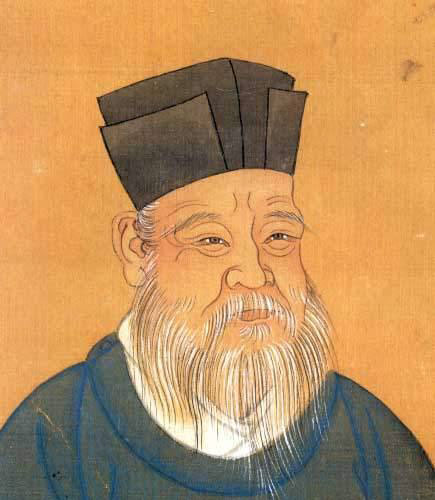
Perhaps Zhu Xi's most consequential achievement was his elevation of the Four Books, the Analects, the Mencius, the Great Learning, and the Doctrine of the Mean, to the center of the Confucian curriculum. Before Zhu Xi, the canonical core of Confucian education consisted of the Five Classics: the Book of Changes, the Book of Documents, the Book of Songs, the Spring and Autumn Annals, and the Book of Rites. These were long, difficult texts requiring years of specialized study. By selecting four shorter, more philosophically focused texts and providing them with detailed commentaries, Zhu Xi created a new educational foundation that made Confucian philosophy accessible to a much wider audience while simultaneously reshaping it according to his own philosophical vision (Gardner, 1990).
Zhu Xi's commentaries on the Four Books were works of extraordinary intellectual ambition. They did not merely explain the ancient texts but reinterpreted them through the lens of the li-qi metaphysics, effectively reading Song dynasty philosophy back into pre-Qin sources. His commentary on the Great Learning, for example, transformed what had been a relatively minor chapter of the Book of Rites into a systematic program of self-cultivation and political order. His commentary on the Mencius reinforced the doctrine of the original goodness of human nature as the foundation of all Confucian ethics. Through these commentaries, Zhu Xi created a coherent philosophical curriculum that began with personal self-cultivation and expanded outward to encompass family, community, state, and cosmos (Chan, 1989).
The adoption of Zhu Xi's Four Books commentaries as the basis for the civil service examinations in 1313, over a century after his death, was one of the most consequential events in Chinese intellectual history. For the next six hundred years, until the abolition of the examination system in 1905, every aspiring government official had to master Zhu Xi's interpretations of these texts. This meant that generations of China's brightest minds were trained to think within the philosophical framework Zhu Xi had constructed. His vocabulary, his categories, his methods of argument, and his vision of moral cultivation became the shared intellectual language of the Chinese educated elite. No single philosopher in Western history, not even Aristotle, has exercised such sustained institutional influence over such a vast population for such a long period of time (Tillman, 1992).
Wang Yangming's Challenge
The most powerful critique of Zhu Xi's philosophy came from within the Neo-Confucian tradition itself, in the work of Wang Yangming (1472-1529), a Ming dynasty official, military commander, and philosopher who argued that Zhu Xi had fundamentally misunderstood the relationship between knowledge and action. Wang's famous doctrine of the "unity of knowledge and action" held that genuine moral knowledge is not something acquired through the patient, external investigation of things but is immediately present in the mind as "innate knowing" (liangzhi). To know the good and to do the good are not two separate steps but a single act. When we see a child falling into a well, we do not first investigate the principle of compassion and then decide to act; we simply act, and in that spontaneous action, knowledge and virtue are unified (Ivanhoe, 2009).
Wang Yangming's critique targeted what he saw as the paralysis of Zhu Xi's epistemological program. He told the famous story of how, as a young man, he had tried to follow Zhu Xi's instructions to investigate the principle in things by sitting before a bamboo grove and contemplating the bamboo for seven days. The result was not philosophical insight but illness, which convinced Wang that the investigation of external things was a philosophical dead end. True knowledge, he argued, must be sought within the mind itself, which already contains all the principles needed for moral action. This inward turn gave Wang's philosophy an immediacy and existential intensity that Zhu Xi's more academic approach sometimes lacked (Chan, 1989).
The debate between the Zhu Xi school (Lixue, or School of Principle) and the Wang Yangming school (Xinxue, or School of Mind) became the central intellectual conflict of late imperial Chinese philosophy. Each school accused the other of dangerous errors. Zhu Xi's followers charged that Wang's emphasis on innate knowledge led to subjective relativism and antinomian disregard for textual learning. Wang's followers charged that Zhu Xi's emphasis on external investigation produced book-learned pedants who could quote the classics but lacked genuine moral commitment. This debate was never resolved but proved enormously productive, generating some of the most sophisticated philosophical arguments in Chinese intellectual history and demonstrating that the Neo-Confucian tradition contained the resources for vigorous internal self-criticism (Ivanhoe, 2009).
"A half-acre square pond opens like a mirror, where the light of heaven and the shadows of clouds linger together."
Zhu Xi, "Reflections While Reading" (Guanshu yougan)Neo-Confucianism Beyond China
Zhu Xi's Neo-Confucianism spread throughout East Asia with a cultural force comparable to the spread of Aristotelianism in medieval Europe. In Korea, Neo-Confucianism arrived during the late Goryeo period and became the official state ideology of the Joseon dynasty (1392-1897), which adopted it with an intensity that sometimes exceeded even Chinese practice. Korean Neo-Confucian philosophers such as Yi Hwang (T'oegye) and Yi I (Yulgok) developed the li-qi metaphysics with a subtlety and rigor that rivaled anything produced in China, conducting a famous "Four-Seven Debate" about the relationship between the four moral beginnings identified by Mencius and the seven emotions of classical Chinese psychology (Kalton, 1988).
In Japan, Neo-Confucianism was initially transmitted through Zen Buddhist monks who had studied in China and became the dominant intellectual framework of the Tokugawa period (1603-1868). The shogunate promoted Zhu Xi's philosophy as the orthodox teaching, though Japanese thinkers developed distinctive variations. Hayashi Razan made Neo-Confucianism the basis of Tokugawa political theory, while Kaibara Ekken developed its naturalistic dimensions into a philosophy of nature study. The Ancient Learning (Kogaku) movement, represented by Ito Jinsai and Ogyu Sorai, challenged Zhu Xi's metaphysics while still operating within the broadly Confucian framework he had defined. Even the Meiji Restoration of 1868, which opened Japan to Western ideas, was partly justified in Neo-Confucian terms as a restoration of proper moral governance (Tucker, 2018).
In Vietnam, Neo-Confucianism shaped the Le and Nguyen dynasties' educational and administrative systems along lines closely modeled on the Chinese examination system. The Vietnamese adaptation of Neo-Confucianism, while less philosophically innovative than the Korean and Japanese variants, was remarkably thorough in its institutional implementation. Today, the legacy of Zhu Xi's Neo-Confucianism continues to shape educational values, family ethics, and social expectations across East Asia, even among people who have never heard his name. The emphasis on education as moral cultivation, on family as the foundation of social order, and on self-discipline as the basis of public service, these enduring East Asian values are, in large part, the cultural inheritance of Zhu Xi's great synthesis (Kalton, 1988).
Quiz
What was Zhu Xi's primary contribution to Confucian philosophy?
How did Zhu Xi view the relationship between li and qi?
What was the focus of Zhu Xi's 'investigation of things'?
What was the impact of Zhu Xi's commentaries on the Four Books?
Why did Wang Yangming critique Zhu Xi's philosophy?
What role did Neo-Confucianism play in Korea during the Joseon dynasty?
How did Neo-Confucianism influence Vietnam?
What was the significance of the Four Books in Zhu Xi's philosophy?
Write your thoughts, then get feedback from Jason — you can turn any answer into a full discussion.
9. Why might Zhu Xi's emphasis on li and qi be relevant to understanding cultural and intellectual developments in East Asia?
10. How does the debate between Zhu Xi and Wang Yangming reflect broader philosophical questions about the nature of knowledge and action?
Frequently Asked Questions
Common questions about Zhu Xi and Neo-Confucianism: The Great Synthesis
Who was Zhu Xi and why is he important?
Zhu Xi (1130-1200 CE) was the most influential Chinese philosopher after Confucius, who created the Neo-Confucian synthesis that became the dominant intellectual framework in East Asia for six centuries. His commentaries on the Four Books became the official basis of China's civil service examinations, shaping the education and worldview of every scholar-official in China, Korea, Japan, and Vietnam.
What is Neo-Confucianism?
Neo-Confucianism is a philosophical movement that revitalized Confucian thought during the Song dynasty (960-1279 CE) by incorporating metaphysical concepts to rival Buddhism's intellectual sophistication. It reinterpreted classical Confucian ethics through a cosmological framework of li (principle) and qi (material force), creating a comprehensive system that addressed questions about the nature of reality, mind, and moral cultivation.
What are li and qi in Neo-Confucian philosophy?
Li (principle) refers to the rational pattern or organizing principle inherent in all things, while qi (material force) is the dynamic energy that gives things their physical form and substance. Zhu Xi argued that everything in the universe is constituted by the interaction of li and qi, with li providing the blueprint and qi providing the material — a metaphysical framework that unified ethics, cosmology, and natural philosophy.
What are the Four Books in Confucianism?
The Four Books — the Analects, the Mencius, the Great Learning, and the Doctrine of the Mean — were selected and organized by Zhu Xi as the core curriculum of Confucian education. His commentaries on these texts became the standard interpretation used in China's imperial examinations from 1313 until 1905, making them the most widely studied books in East Asian history.
How did Zhu Xi respond to Buddhism?
Zhu Xi admired Buddhism's meditative practices and metaphysical depth but ultimately rejected it as a philosophy that withdraws from social responsibility and denies the reality of the material world. He developed Neo-Confucianism partly as an intellectual response to Buddhism, creating a system that matched its philosophical sophistication while reaffirming Confucian commitments to family, society, and active engagement with the world.