
Podcast


Podcast: The I Ching: The Book of Changes and the Architecture of the Cosmos
Listen to Jason & Amy discuss The I Ching: The Book of Changes and the Architecture of the Cosmos
New here?
Origins in Divination
The I Ching, known in Chinese as the Yijing or "Classic of Changes," has its earliest roots in the divination practices of the Shang dynasty, roughly 1600 to 1046 BCE. The Shang rulers consulted the spirit world through pyromancy, applying heat to the shoulder bones of oxen or the shells of turtles and interpreting the resulting crack patterns as messages from ancestors and deities. When the Zhou dynasty overthrew the Shang around 1046 BCE, a different divination method using yarrow stalks gradually gained prominence. This method produced numerical results that corresponded to specific line patterns, broken or unbroken, which were eventually systematized into the sixty-four hexagrams of the I Ching (Wilhelm, 1967).
The core text of the I Ching, consisting of the sixty-four hexagram names, their associated line statements, and brief judgments, was likely compiled during the early Western Zhou period, roughly the tenth to ninth centuries BCE. Tradition attributes the arrangement of the hexagrams to King Wen of Zhou, who supposedly organized them during his imprisonment by the last Shang king. His son, the Duke of Zhou, is traditionally credited with composing the individual line statements. While modern scholarship questions these attributions, there is broad consensus that the hexagram system crystallized during the early Zhou as a tool for royal divination that gradually acquired philosophical and ethical significance (Smith, 2008).
The transition from divination manual to philosophical text was gradual and organic. As generation after generation of diviners, scribes, and counselors worked with the hexagrams, they noticed patterns and principles that seemed to transcend any individual consultation. The hexagrams appeared to map a complete cycle of natural and human situations, from creative initiative to receptive yielding, from youthful inexperience to accomplished maturity, from conflict to resolution. This recognition that the hexagrams encoded a universal grammar of change transformed the I Ching from a practical tool into a cosmological framework. By the time the philosophical commentaries known as the Ten Wings were composed during the Warring States and early Han periods, the I Ching had become nothing less than a theory of how the universe works (Rutt, 1996).
"One yin and one yang, this is called the Dao."
I Ching, Xici zhuan (Great Commentary)The 64 Hexagrams
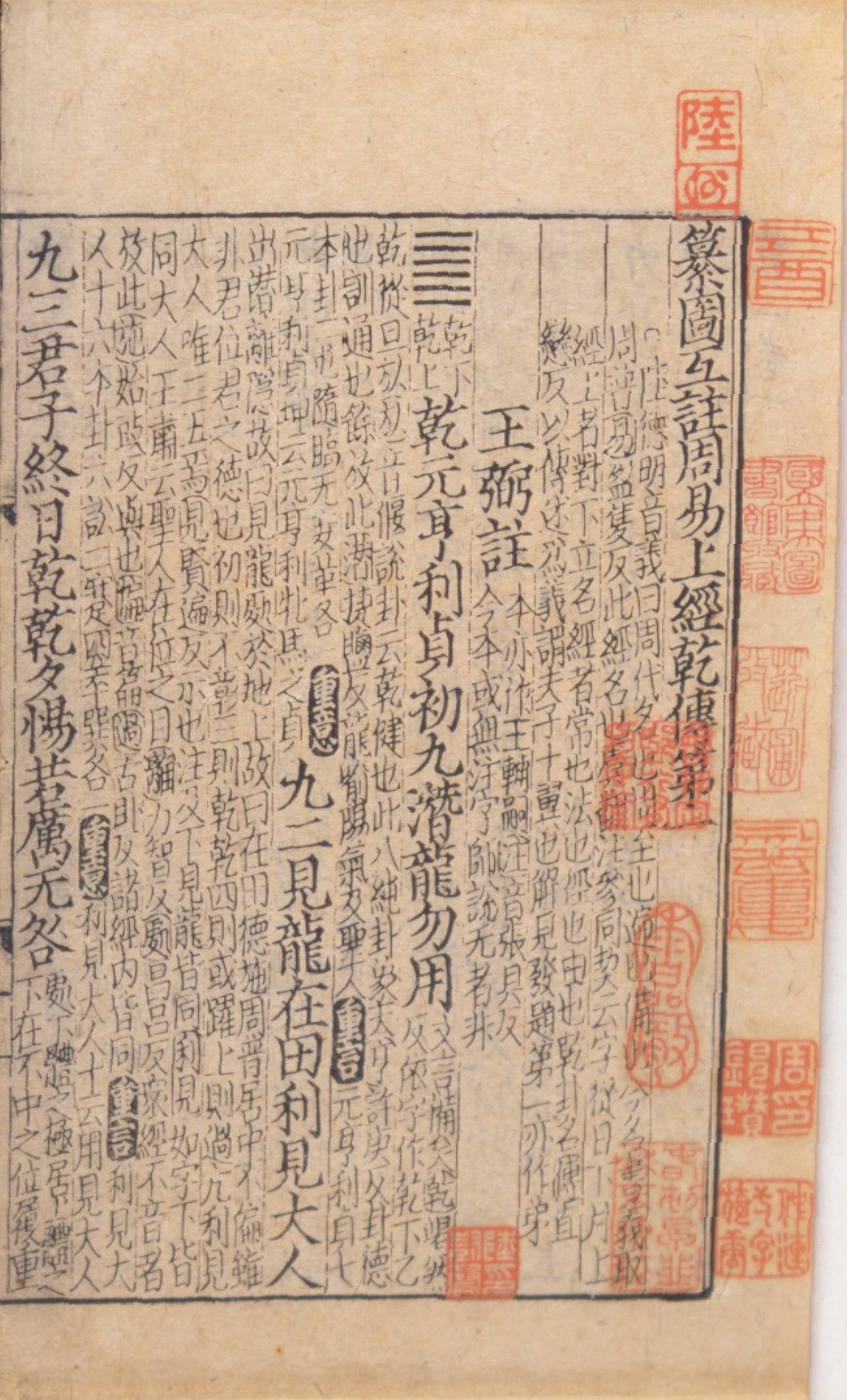
Each of the sixty-four hexagrams consists of six lines stacked from bottom to top. Each line is either solid (yang) or broken (yin), and each hexagram is understood as a combination of two trigrams, three-line figures that represent fundamental natural phenomena. The eight trigrams, known as the bagua, correspond to heaven, earth, water, fire, mountain, lake, wind, and thunder. By combining these eight trigrams in pairs, the I Ching generates its sixty-four hexagrams, each representing a distinct situation, dynamic, or phase in the cycle of change. The system is elegantly mathematical: two possible line values raised to the power of six yields exactly sixty-four combinations (Wilhelm, 1967).
The hexagrams are not static symbols but dynamic processes. Each hexagram contains within itself the potential for transformation into any other hexagram through the changing of individual lines. When a diviner casts the yarrow stalks or coins, certain lines may be identified as "moving" or "changing" lines, which transform into their opposite and thereby generate a second hexagram. The reading of a consultation involves interpreting both the primary hexagram and the hexagram of transformation, creating a narrative of movement from one situation to another. This built-in dynamism is what makes the I Ching a book of changes rather than a book of fixed categories. Every situation is understood as already in the process of becoming something else (Smith, 2008).
The sequence of hexagrams as traditionally arranged also tells a story. The book opens with Qian, the Creative, six unbroken yang lines representing pure creative force, and Kun, the Receptive, six broken yin lines representing pure receptive yielding. These two primordial hexagrams generate the remaining sixty-two through their interaction, just as yin and yang generate all phenomena in the cosmos. The sequence then traces a journey through situations of difficulty, waiting, conflict, fellowship, abundance, and decline, concluding with hexagrams sixty-three and sixty-four, "After Completion" and "Before Completion." The fact that the final hexagram represents incompletion rather than culmination embodies the I Ching's deepest teaching: the cycle of change never ends, and every completion is the beginning of a new process (Rutt, 1996).
Yin Yang and the Cosmic Pattern
The I Ching is the foundational text for the yin-yang cosmology that pervades virtually every dimension of Chinese culture, from philosophy and medicine to architecture and cuisine. The terms yin and yang originally referred to the shady and sunny sides of a hill, but through their development within the I Ching tradition, they became the most fundamental categories of Chinese metaphysics. Yin represents darkness, receptivity, yielding, coldness, and descent. Yang represents light, activity, firmness, warmth, and ascent. Crucially, these are not fixed essences but relational tendencies: nothing is purely yin or purely yang, and each contains the seed of the other (Wilhelm, 1967).
The I Ching's yin-yang philosophy differs profoundly from the dualistic traditions common in Western thought. Where Western dualism tends toward opposition between good and evil, spirit and matter, or mind and body, the yin-yang framework insists on complementarity and mutual dependence. Yang cannot exist without yin any more than day can exist without night or exhalation without inhalation. Each pole calls forth and sustains its opposite. This non-dualistic logic has consequences that ripple through every dimension of Chinese thought. In ethics, it suggests that virtue is not the elimination of vice but the proper balancing of complementary tendencies. In politics, it implies that strength and yielding must alternate according to circumstances rather than one permanently dominating the other (Cheng, 2009).
The cosmological implications of yin-yang thinking, as developed through the I Ching tradition, provided Chinese civilization with a comprehensive model of natural process. The alternation of yin and yang generates the five phases or elements: wood, fire, earth, metal, and water. These five phases interact through cycles of generation and overcoming, producing the complex patterns of change observable in the natural world. This framework was applied to medicine through the identification of yin and yang organs and the five-phase classification of bodily systems, to music through the identification of pentatonic scales with the five phases, to governance through the correlation of administrative functions with cosmic patterns, and to agriculture through the alignment of farming activities with seasonal cycles. The I Ching thus provided not merely a philosophy but an entire operating system for Chinese civilization (Smith, 2008).
"The movement of heaven is powerful; thus the noble person strives ceaselessly to strengthen himself."
I Ching, Hexagram 1 Qian (The Creative), Xiang zhuanThe Ten Wings Commentary
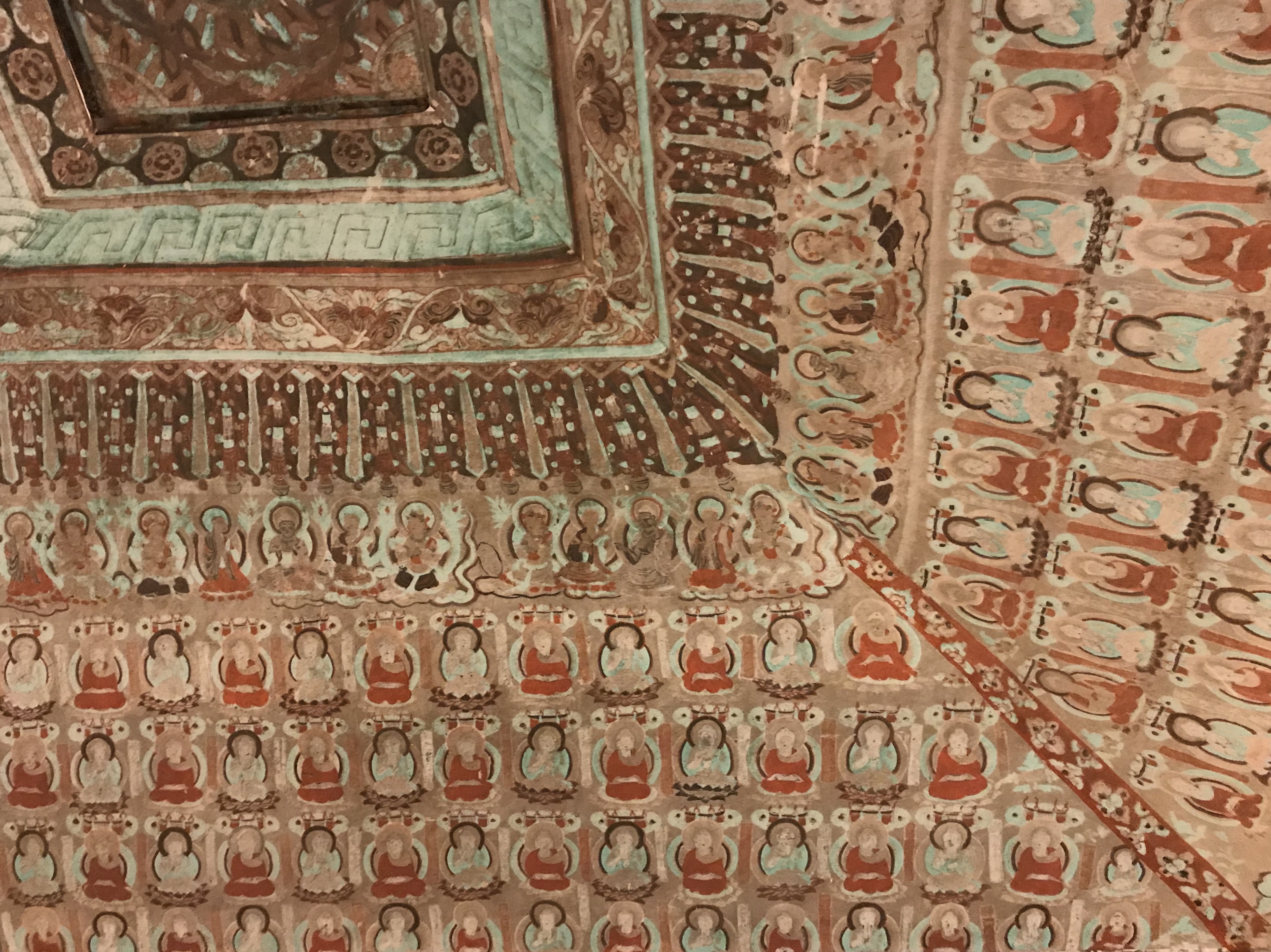
The Ten Wings, or Shi Yi, are a set of philosophical commentaries traditionally attributed to Confucius but now generally dated to the late Warring States and early Han periods, roughly the fourth through second centuries BCE. These commentaries transformed the I Ching from a divination text into a philosophical masterwork by providing systematic interpretations of the hexagrams, the trigrams, and the cosmological principles underlying the entire system. The most important of the Ten Wings include the Xici zhuan (Great Commentary or Appended Statements), the Shuogua zhuan (Discussion of the Trigrams), and the Xugua zhuan (Sequence of the Hexagrams). Together, they constitute the first comprehensive Chinese philosophy of nature and change (Wilhelm, 1967).
The Great Commentary, or Xici zhuan, is the most philosophically ambitious of the Ten Wings and arguably one of the most important texts in the entire Chinese philosophical tradition. It articulates the metaphysical principle that the cosmos operates through continuous change governed by the alternation of yin and yang. "One yin and one yang, this is called the Dao," declares the Great Commentary, establishing a definition of the Way that differs significantly from both the Confucian and Daoist understandings. Where Confucius understood the Dao primarily as a moral path and Laozi understood it as an ineffable metaphysical ground, the I Ching tradition identified the Dao with the pattern of change itself. The cosmos is not governed by a static principle or a personal deity but by the ceaseless rhythm of alternation between complementary opposites (Cheng, 2009).
The attribution of the Ten Wings to Confucius, while historically dubious, had enormous cultural consequences. Because Confucius was regarded as the supreme sage, his supposed authorship elevated the I Ching to the highest position in the Confucian canon. During the Han dynasty, when Confucianism became the state ideology, the I Ching was placed first among the Five Classics, a position of honor it retained throughout imperial Chinese history. This canonical status ensured that every educated Chinese person engaged with the I Ching's cosmological framework, making yin-yang thinking not merely one philosophical option among many but the shared intellectual grammar of Chinese civilization. The Ten Wings thus accomplished something remarkable: they embedded a cosmological worldview so deeply into the educational system that it became virtually invisible, functioning as common sense rather than theory (Smith, 2008).
The I Ching and Chinese Science
The I Ching's influence on the development of Chinese science and mathematics was profound, though its legacy is ambiguous. On one hand, the binary logic of yin and yang lines, the combinatorial mathematics of the hexagram system, and the emphasis on pattern recognition in natural processes all stimulated scientific thinking. Chinese astronomers used I Ching correlations to organize their observations of celestial phenomena. Chinese physicians applied the yin-yang and five-phase frameworks derived from the I Ching to develop a comprehensive medical system that remains in use today. Chinese mathematicians explored the combinatorial properties of the hexagram system, anticipating aspects of modern information theory (Needham, 1956).
The most striking mathematical property of the I Ching is its binary structure. Each hexagram can be represented as a six-digit binary number, with yang lines as ones and yin lines as zeros. This binary encoding was recognized by the German mathematician and philosopher Gottfried Wilhelm Leibniz in 1703, when the Jesuit missionary Joachim Bouvet sent him the hexagram arrangement attributed to the legendary sage Fuxi. Leibniz was astonished to find that the Fuxi sequence, when read in binary, produced the numbers zero through sixty-three in perfect order. He interpreted this as confirmation of his own binary arithmetic and as evidence of an ancient universal mathematical language. While Leibniz's interpretation was more enthusiastic than historically accurate, the structural parallel between the hexagram system and binary mathematics remains genuinely remarkable (Smith, 2008).
On the other hand, some historians of science have argued that the I Ching's emphasis on correlative thinking, finding correspondences between cosmic patterns and human affairs, may have inhibited the development of experimental and causal science in China. The correlative framework encouraged Chinese thinkers to seek harmony between human activity and natural patterns rather than to manipulate nature through controlled experimentation. This criticism, associated with scholars such as Joseph Needham, remains controversial. Defenders of the I Ching tradition point out that correlative thinking produced genuine scientific insights in domains such as ecology, traditional medicine, and systems theory, where the ability to perceive complex patterns of interdependence is more valuable than isolated causal analysis. The debate continues to shape discussions of comparative intellectual history and the relationship between cosmology and scientific method (Needham, 1956).
"When something is exhausted, it changes; when it changes, it opens through; when it opens through, it endures."
I Ching, Xici zhuan (Great Commentary)Western Reception and Modern Relevance
The I Ching first entered Western consciousness through the Jesuit missionaries of the seventeenth and eighteenth centuries, but its major impact came with the publication of Richard Wilhelm's German translation in 1924, rendered into English by Cary Baynes in 1950. Wilhelm's translation, which included the full text, the Ten Wings, and extensive commentary, became one of the most influential translations of any Chinese text and introduced the I Ching to an enormous Western readership. The psychologist Carl Jung contributed a foreword to the English edition in which he proposed the concept of "synchronicity," or meaningful coincidence, as a framework for understanding how the I Ching works. Jung's endorsement connected the I Ching to the emerging Western interest in depth psychology and alternative epistemologies (Wilhelm, 1967).
During the 1960s and 1970s counterculture, the I Ching experienced a remarkable surge of popular interest in the West. The composer John Cage used hexagram consultations to determine compositional elements in his aleatory music. The novelist Philip K. Dick used the I Ching to make plot decisions in The Man in the High Castle. The physicist Fritjof Capra cited the I Ching in The Tao of Physics as evidence that ancient Chinese thought had anticipated modern quantum mechanics. While some of these appropriations were intellectually serious and others were superficial, they collectively transformed the I Ching from an obscure classical text into a global cultural phenomenon. By the early twenty-first century, the I Ching had been translated into virtually every major world language (Cheng, 2009).
The contemporary relevance of the I Ching extends beyond its popular reception into serious academic and practical domains. Complexity scientists have noted structural parallels between the hexagram system and modern models of complex adaptive systems. Organizational theorists have drawn on the I Ching's analysis of change dynamics to develop frameworks for managing institutional transformation. Environmental philosophers have found in the I Ching's emphasis on harmony between human activity and natural processes a resource for ecological thinking. Whether the I Ching is understood as a divination tool, a philosophical text, a mathematical system, or a cultural artifact, its three-thousand-year journey from Zhou dynasty oracle bones to twenty-first-century complexity science testifies to the enduring power of its core insight: that change is not chaos but pattern, and that understanding the pattern of change is the deepest form of wisdom (Smith, 2008).
Quiz
What did the Shang dynasty primarily use for divination?
Who is traditionally credited with organizing the hexagrams of the I Ching?
What do the eight trigrams of the I Ching represent?
What is the primary philosophical concept underlying the I Ching?
How does the I Ching view the relationship between yin and yang?
Which philosopher's foreword contributed to the Western understanding of the I Ching?
What is one criticism of the I Ching's influence on Chinese science?
What did Leibniz find remarkable about the hexagram arrangement attributed to Fuxi?
Write your thoughts, then get feedback from Jason — you can turn any answer into a full discussion.
9. How might the I Ching's concept of change being a pattern rather than chaos apply to modern organizational management?
10. Why do you think the I Ching has maintained relevance across different cultures and historical periods?
Frequently Asked Questions
Common questions about The I Ching: The Book of Changes and the Architecture of the Cosmos
What is the I Ching and how does it work?
The I Ching (Yijing), or Book of Changes, is an ancient Chinese divination text and cosmological framework based on sixty-four hexagrams — six-line figures composed of solid (yang) and broken (yin) lines. Users traditionally cast yarrow stalks or coins to generate a hexagram, then consult the associated text for guidance on how to navigate change and make decisions in harmony with the cosmos.
How old is the I Ching?
The I Ching originated around 1000 BCE during the Western Zhou dynasty as a divination manual, making it one of the oldest books in continuous use in world history. It evolved over centuries as successive layers of commentary were added, including the "Ten Wings" traditionally attributed to Confucius, transforming it from an oracle into a comprehensive philosophical and cosmological system.
What are hexagrams in the I Ching?
Hexagrams are the sixty-four six-line symbols that form the structural foundation of the I Ching, each composed of a unique combination of solid (yang) and broken (yin) lines arranged in pairs of trigrams. Each hexagram represents a specific situation or archetype of change, with associated judgments and line texts that offer guidance on navigating that particular phase of transformation.
How did the I Ching influence Chinese culture?
The I Ching profoundly shaped Chinese philosophy, medicine, art, military strategy, and governance by providing a universal framework for understanding change through the interplay of yin and yang. Its binary logic of solid and broken lines even inspired Gottfried Leibniz's work on binary arithmetic in the 17th century, and its influence extends to feng shui, traditional Chinese medicine, and martial arts.
Can the I Ching predict the future?
The I Ching is not designed to predict fixed future events but rather to illuminate the dynamics of a current situation and suggest how it is likely to evolve based on the patterns of change. It functions more as a tool for contemplation and decision-making, helping users understand the forces at play and align their actions with the natural flow of circumstances.