
Podcast


Podcast: Mencius: The Goodness of Human Nature
Listen to Jason & Amy discuss Mencius: The Goodness of Human Nature
New here?
Second Sage of Confucianism
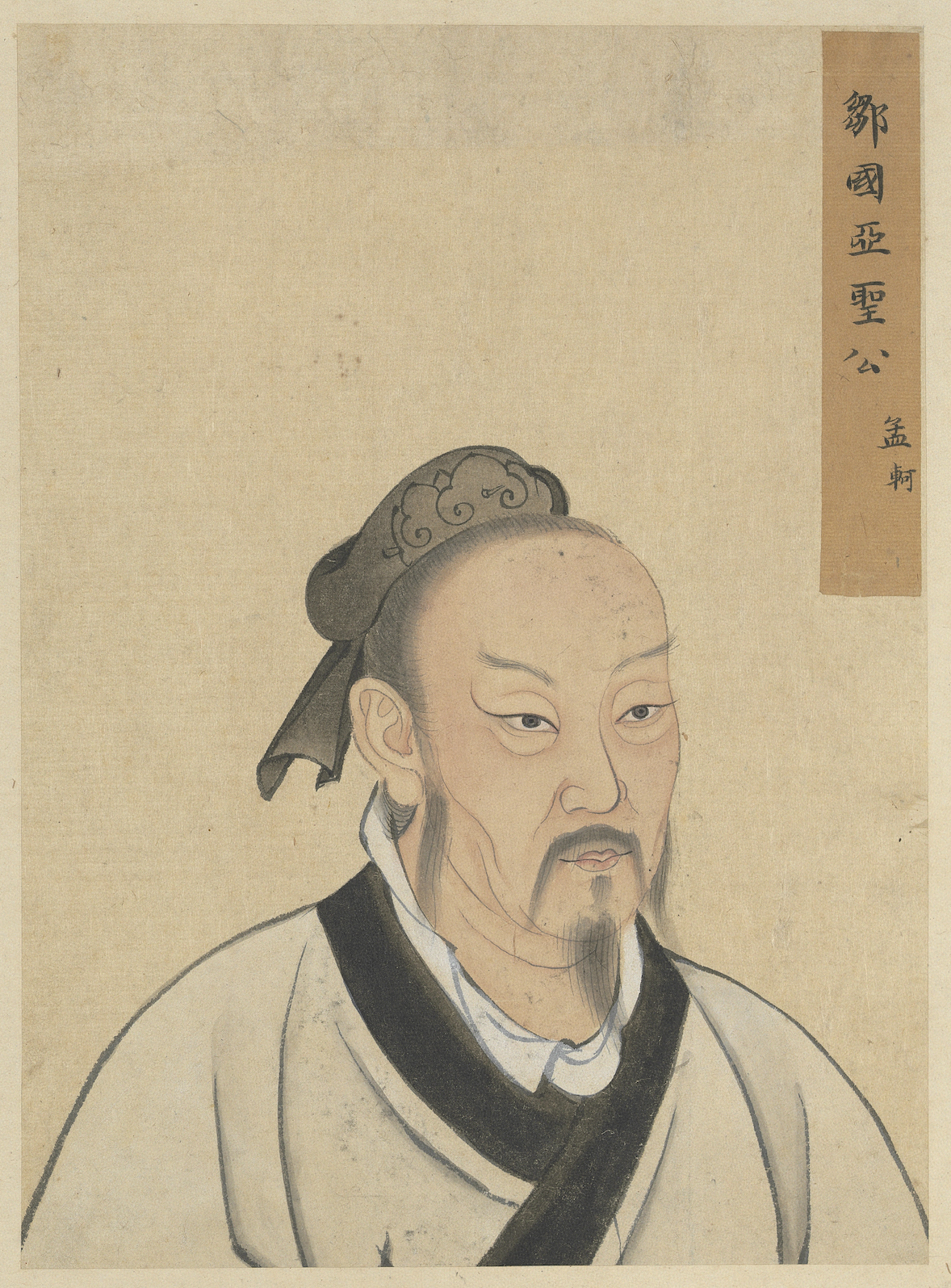
Mencius (Mengzi, 孟子) was born around 372 BCE in the state of Zou, near the birthplace of Confucius in the state of Lu. Like Confucius, he came from a family of modest means and devoted his life to study, teaching, and the pursuit of moral governance. Later tradition credits his mother with extraordinary devotion to his education — the famous story of "Mencius's mother moving three times" (meng mu san qian) describes how she relocated repeatedly to provide her son with a suitable environment for learning, eventually settling near a school (Shun, 1997). Whether historical or legendary, the story reflects the Confucian conviction that environment and education are crucial to moral development, a theme that would become central to Mencius's own philosophy.
Mencius studied under a student of Confucius's grandson Zisi and saw himself as the faithful inheritor of the Confucian tradition. Like Confucius, he traveled from state to state during the Warring States period, seeking rulers willing to implement benevolent governance. His conversations with various kings — particularly King Hui of Liang and King Xuan of Qi — are recorded in the book that bears his name, the Mengzi, one of the Four Books that became the core of Confucian education (Van Norden, 2008). Unlike the laconic Analects, the Mengzi is characterized by extended arguments, vivid analogies, and a rhetorical forcefulness that reflects Mencius's combative intellectual temperament. He was not shy about challenging rulers, rival philosophers, or anyone whose ideas he considered dangerous.
Mencius's elevation to the status of "Second Sage" (Ya Sheng) was not immediate. During his lifetime and for several centuries afterward, he was one Confucian thinker among many, and his views were sometimes controversial. It was the Neo-Confucian philosopher Zhu Xi (1130–1200 CE) who canonized Mencius by including the Mengzi in the Four Books and declaring Mencius the authentic transmitter of Confucius's Way (Ivanhoe, 2000). From the Song dynasty onward, Mencius's interpretation of Confucian thought — particularly his claim that human nature is good — became orthodox doctrine, shaping the worldview of educated Chinese for nearly a millennium. Understanding Mencius is therefore essential to understanding not only ancient Chinese philosophy but the entire subsequent tradition of Confucian thought.
"All human beings have a heart that cannot bear to see the suffering of others."
Mengzi 2A6The Four Sprouts
Mencius's most celebrated philosophical contribution is his theory of the "four sprouts" (si duan, 四端) — innate moral dispositions that are present in every human being. He identifies these as: the feeling of commiseration (ceyin zhi xin), which is the sprout of benevolence (ren); the feeling of shame and disgust (xiu wu zhi xin), which is the sprout of righteousness (yi); the feeling of deference and yielding (cirang zhi xin), which is the sprout of ritual propriety (li); and the feeling of approval and disapproval (shi fei zhi xin), which is the sprout of wisdom (zhi) (Van Norden, 2008). These four feelings are not fully developed virtues but nascent tendencies — "sprouts" that must be cultivated through effort, education, and practice to grow into mature moral character.
Mencius illustrates the universality of these moral sprouts with one of the most famous thought experiments in Chinese philosophy. "Suppose someone suddenly sees a child about to fall into a well," he argues. "Anyone in such a situation would have a feeling of alarm and commiseration — not because they wanted to gain the favor of the child's parents, not because they wanted the praise of their neighbors and friends, and not because they disliked the sound of the child's cries" (Mengzi 2A6). This spontaneous, unreflective compassion demonstrates that human beings possess an innate moral sense that precedes calculation, socialization, and self-interest (Shun, 1997). The feeling may be brief and easily overridden, but its very existence proves that the raw material of goodness is built into human nature.
The agricultural metaphor of "sprouts" (duan) is carefully chosen. A sprout is not yet a plant, still less a harvest; it requires water, sunlight, and care to grow. Similarly, the four moral feelings are not sufficient on their own to make a person virtuous. They must be nourished through education, self-reflection, and sustained practice (Ivanhoe, 2000). Mencius warns against two opposite errors: forcing growth (the famous parable of the farmer who pulled up his sprouts to help them grow faster, thereby killing them) and neglecting growth through inattention. The task of moral cultivation is to provide the right conditions for the sprouts to develop naturally — an approach that shares something with both Daoist naturalism and modern developmental psychology.
Human Nature is Good
Mencius's claim that "human nature is good" (xing shan, 性善) is one of the boldest and most consequential assertions in the history of Chinese philosophy. It was a radical claim even in his own time, when rival thinkers argued that human nature is evil (Xunzi), that it is neither good nor bad (Gaozi), or that it varies from person to person (Van Norden, 2008). Mencius argued against all these positions, insisting that every human being is born with the innate capacity for goodness. The key word is "capacity": Mencius did not deny that people often behave badly, but he argued that bad behavior results from the corruption or neglect of innate tendencies, not from the absence of moral potential.
To support his position, Mencius offered a series of analogies drawn from nature. Just as water naturally flows downward, human nature naturally tends toward goodness (Mengzi 6A2). Water can be forced uphill by damming or channeling, and likewise human nature can be distorted by poverty, oppression, and bad education — but these are impositions on nature, not expressions of it (Shun, 1997). Mencius also used the analogy of Ox Mountain (Niu Shan), once covered with beautiful trees that were repeatedly cut down until the mountain appeared barren. Observers looking at the bare mountain assumed it had never been forested, just as those who see only bad behavior assume that human nature lacks goodness. But the stumps remain, and given time and protection, the forest will regrow. So too with human moral nature: it may be damaged, but it is never destroyed.
The implications of Mencius's position are profound. If human nature is inherently good, then the primary task of government is not to restrain and punish but to create conditions in which natural goodness can flourish. This leads Mencius to advocate for what he calls "benevolent government" (ren zheng): low taxes, land reform, public education, care for the elderly and orphaned, and an economy that ensures the basic material security of every family (Ivanhoe, 2000). A ruler who exploits or brutalizes the people is acting against nature itself and thereby forfeits the Mandate of Heaven. Mencius went so far as to assert that the people have the right to overthrow a tyrannical ruler — a position that was considered dangerously radical and that some later emperors attempted to suppress.
"The people are the most important element in a state; the altars of grain and soil come next; the ruler is of least importance."
Mengzi 7B14The Flood-like Qi
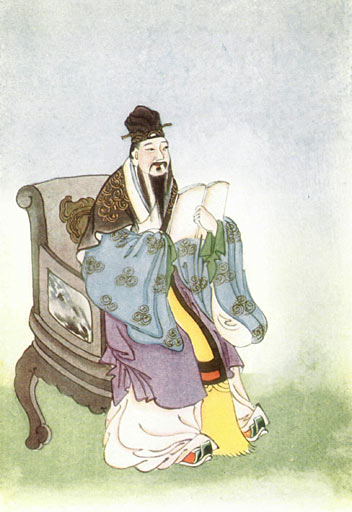
One of the most intriguing and difficult concepts in Mencius's philosophy is what he calls the "flood-like qi" (haoran zhi qi, 浩然之气). When asked by his student Gongsun Chou what he excelled at, Mencius replied: "I am good at nourishing my flood-like qi" (Mengzi 2A2). This qi, he explained, is "supremely great and supremely strong" — when nourished with integrity and not injured, it fills the space between heaven and earth (Van Norden, 2008). It is generated by the accumulation of righteous acts and cannot be obtained through occasional or hypocritical virtue. The flood-like qi is, in essence, the spiritual energy or moral vitality that arises from a life lived in consistent alignment with righteousness.
The concept of qi (气) is fundamental to Chinese thought, appearing in medicine, cosmology, martial arts, and philosophy. In its most basic sense, qi refers to the vital energy or breath that animates all living things (Shun, 1997). Mencius's innovation was to connect this cosmological concept to moral philosophy. The flood-like qi is not merely physical energy but a kind of moral force that gives a person courage, confidence, and an unshakeable sense of integrity. A person who possesses it cannot be intimidated by power, corrupted by wealth, or deflected from the path of righteousness by threats or hardship. Mencius contrasted this genuine moral courage with mere physical bravery, which can be found in bandits and thugs who lack any moral foundation.
The cultivation of the flood-like qi became an important theme in later Confucian self-cultivation practice. Neo-Confucian thinkers like Zhu Xi and Wang Yangming developed elaborate theories of how to nourish qi through meditation, study, and moral action (Ivanhoe, 2000). The concept also influenced Chinese literary criticism, where the vitality and authenticity of a writer's work were connected to the quality of their qi. In a broader sense, Mencius's insistence that moral cultivation has a bodily, energetic dimension — that virtue is not merely an intellectual achievement but involves the whole person — represents a distinctive contribution to ethical theory that has no precise parallel in Western philosophy.
Mencius and Political Philosophy
Mencius is one of the earliest and most articulate proponents of what might be called a people-centered theory of political legitimacy. His most famous political statement declares: "The people are the most important element in a state; the altars of the grain and soil come next; the ruler is of least importance" (Mengzi 7B14). This radical inversion of the expected hierarchy was not a call for democracy in the modern sense, but it established the principle that political authority is legitimate only insofar as it serves the welfare of the people (Van Norden, 2008). A ruler who fails in this fundamental obligation — who enriches himself while the people starve, who wages aggressive wars, who governs through fear rather than virtue — has forfeited the Mandate of Heaven and may rightfully be deposed.
Mencius developed these political ideas through dramatic confrontations with the rulers of his time. When King Hui of Liang asked how to profit his state, Mencius replied that a king who speaks of profit rather than benevolence and righteousness will bring ruin upon his kingdom (Mengzi 1A1). When King Xuan of Qi asked whether it was acceptable that the tyrant King Zhou of Shang had been overthrown, Mencius answered that a man who violates benevolence and righteousness is no true king but a mere "fellow" — and that executing a fellow is not regicide (Shun, 1997). These exchanges reveal Mencius's extraordinary courage and his conviction that the philosopher has a duty to speak truth to power, regardless of the personal consequences.
Mencius's political philosophy also includes detailed proposals for economic justice. He advocated the "well-field system" (jing tian), an idealized land-distribution scheme in which eight families would each farm a private plot surrounding a central communal field, the produce of which would support the government (Ivanhoe, 2000). Whether this system ever existed in practice is debated, but as a philosophical ideal it expressed Mencius's conviction that economic security is a precondition for moral development. "Only a scholar can maintain a fixed heart without a fixed livelihood," he argued; ordinary people who lack economic security cannot be expected to practice virtue consistently. This recognition that material conditions shape moral possibilities represents a remarkably sophisticated integration of ethics and political economy.
"I am skillful at nourishing my flood-like qi."
Mengzi 2A2The Debate with Xunzi
The most consequential philosophical debate in the Confucian tradition is the dispute between Mencius and Xunzi (c. 310–235 BCE) over the nature of human nature. While Mencius argued that human nature is inherently good, Xunzi countered that human nature is inherently bad (xing e, 性恶) and that goodness is the product of conscious effort, education, and the transformative power of ritual (Van Norden, 2008). Xunzi pointed to the ubiquity of selfishness, aggression, and moral failure as evidence that the raw material of human nature, left uncultivated, tends toward disorder. For Xunzi, the sages who created ritual, music, and law were not expressing innate goodness but imposing artificial order on recalcitrant natural impulses.
The debate is not merely academic; it has profound implications for education, governance, and social policy. If Mencius is right that human nature is good, then the task of education is primarily to remove obstacles and provide nourishment, allowing innate virtue to unfold naturally. Harsh punishment and authoritarian control are not only unnecessary but counterproductive, as they damage the very moral sprouts they should be cultivating (Shun, 1997). If Xunzi is right, however, then education must be understood as a more radical process of transformation: the student must be trained, disciplined, and reshaped through rigorous study of the classics, practice of ritual, and submission to the authority of teachers and tradition. The role of the state in moral formation becomes correspondingly greater.
Historical circumstances ultimately favored Mencius's position. When Zhu Xi established the Neo-Confucian orthodoxy in the twelfth century, he sided decisively with Mencius, and Xunzi was marginalized for centuries (Ivanhoe, 2000). Yet many scholars have argued that the two positions are less opposed than they appear. Both thinkers agree that moral cultivation is essential; they disagree about the starting point. Both would acknowledge that human beings are capable of great evil and great goodness; they disagree about which represents the default state. Some contemporary philosophers have suggested that the Mencius-Xunzi debate anticipates modern discussions in moral psychology about the relative contributions of nature and nurture, innate moral intuitions and cultural learning, to human ethical life. Read in this light, the debate remains as vital and unresolved today as it was twenty-three centuries ago.
Quiz
What is the primary philosophical claim made by Mencius about human nature?
Which concept did Mencius use to illustrate the innate moral dispositions in humans?
How did Mencius propose rulers should govern according to his philosophy?
What role did Mencius's mother play in his philosophical development?
Which analogy did Mencius use to explain the natural tendency of human nature?
What is the 'flood-like qi' according to Mencius?
What political principle did Mencius advocate regarding the importance of the people?
What was a major consequence of the philosophical debate between Mencius and Xunzi?
Write your thoughts, then get feedback from Jason — you can turn any answer into a full discussion.
9. How might Mencius's concept of 'benevolent government' be applied to modern political systems?
10. Why do you think Mencius's theory of the 'four sprouts' remains relevant in discussions about human nature today?
Frequently Asked Questions
Common questions about Mencius: The Goodness of Human Nature
What is Mencius known for in Chinese philosophy?
Mencius (Mengzi) is known as the "Second Sage" of Confucianism and is most famous for his doctrine that human nature is inherently good. He argued that all people are born with four moral "sprouts" — compassion, shame, courtesy, and moral judgment — that can be cultivated into full virtues through education and self-reflection.
What are the four sprouts in Mencius philosophy?
The four sprouts (si duan) are innate moral tendencies that Mencius believed every person possesses: the sprout of compassion (leading to benevolence), the sprout of shame (leading to righteousness), the sprout of deference (leading to ritual propriety), and the sprout of moral judgment (leading to wisdom). These sprouts must be actively nurtured, much like a plant needs water and sunlight to grow.
How did Mencius differ from Xunzi on human nature?
Mencius argued that human nature is fundamentally good and that evil arises only when people neglect their innate moral tendencies, while Xunzi countered that human nature is inherently selfish and requires deliberate training through ritual and education. This debate between the two Confucian thinkers became one of the most consequential philosophical disagreements in Chinese intellectual history.
What is the Mencius text about?
The Mencius (Mengzi) is a collection of dialogues between Mencius and various rulers, disciples, and rivals, recorded by his students around the 3rd century BCE. It presents his arguments for benevolent government, the goodness of human nature, and the right of the people to overthrow tyrannical rulers, making it one of the Four Books central to Confucian education.
Why did Mencius believe rulers should be benevolent?
Mencius argued that a ruler who governs through benevolence (ren zheng) wins the hearts of the people, which is the only sustainable basis for political power. He famously declared that a tyrant who loses the people's trust forfeits the Mandate of Heaven and may be legitimately overthrown, establishing a powerful tradition of political accountability in Chinese thought.