
Podcast


Podcast: Laozi and the Dao De Jing: The Way That Cannot Be Named
Listen to Jason & Amy discuss Laozi and the Dao De Jing: The Way That Cannot Be Named
New here?
The Mysterious Sage
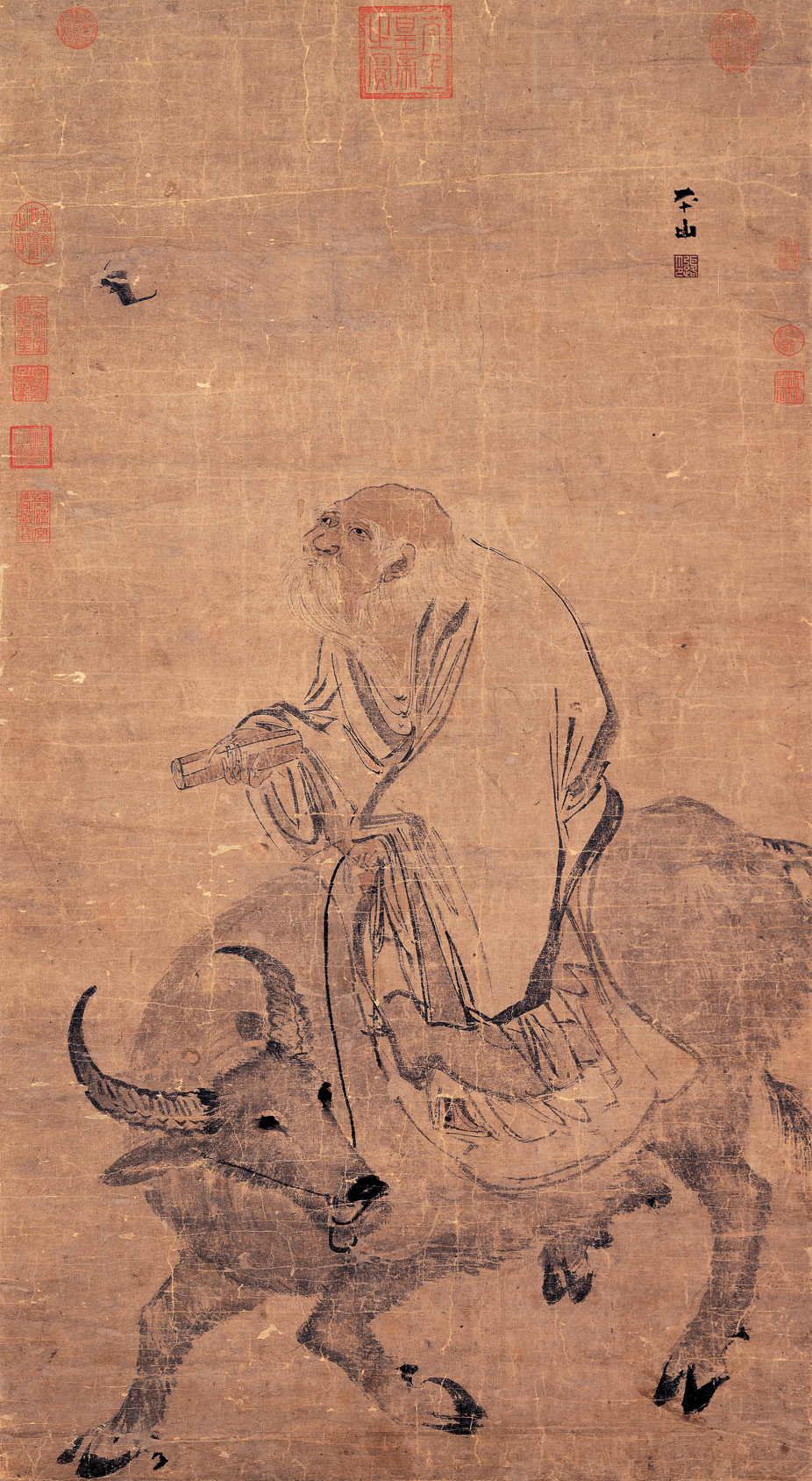
Few figures in the history of philosophy are as elusive as Laozi. The name itself is not a proper name but an honorific meaning "Old Master" or "Old Child," and the question of whether Laozi was a single historical person, a composite figure, or a purely legendary creation has been debated for over two thousand years. The earliest biographical account appears in the Records of the Grand Historian (Shiji) by Sima Qian, written around 100 BCE, which identifies Laozi as a keeper of the royal archives in the Zhou court named Li Er or Li Dan (Graham, 1989). According to this account, Confucius once traveled to consult Laozi on matters of ritual and came away deeply impressed, comparing the Old Master to a dragon riding the wind — something beyond ordinary human comprehension.
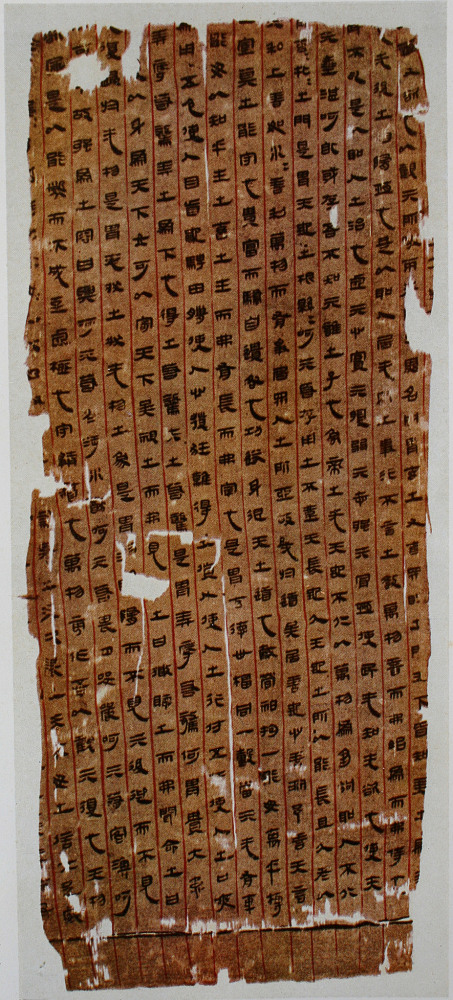
Sima Qian's biography, however, is hedged with uncertainty. He presents multiple candidates for the identity of Laozi and acknowledges that "no one in the world can say whether this is true or not." Modern scholarship has largely abandoned the search for a historical Laozi and focused instead on the text attributed to him (Kohn, 2000). Archaeological discoveries have complicated the picture further. In 1973, two silk manuscripts of the Dao De Jing were unearthed from a tomb at Mawangdui, dating to around 168 BCE, and in 1993, bamboo-strip fragments were found at Guodian, dating to around 300 BCE. These discoveries confirmed that the text existed in some form by the late Warring States period, even if the question of authorship remains unresolved.
The mystery surrounding Laozi is, in a sense, philosophically appropriate. The Dao De Jing itself warns against the desire to name, categorize, and pin down reality. A sage who could be fully known, neatly classified, and biographically documented would contradict the very principles the text espouses (Moeller, 2006). The legend of Laozi departing civilization on the back of a water buffalo, pausing at the western pass to write down his wisdom at the request of a border guard, and then vanishing into the wilderness, captures the Daoist ideal of the sage who leaves no trace. Whether or not there was a historical Laozi, the text bearing his name has proven to be one of the most influential and widely translated works in all of world literature.
"The Way that can be told is not the eternal Way; the name that can be named is not the eternal name."
Dao De Jing, Chapter 1Structure of the Dao De Jing
The Dao De Jing is one of the shortest major philosophical texts in any tradition, comprising approximately five thousand Chinese characters divided into eighty-one brief chapters. Despite its brevity, or perhaps because of it, the text has generated more commentaries than almost any other work in Chinese history. The title itself is revealing: Dao (道) means "Way" or "path," De (德) means "virtue," "power," or "potency," and Jing (经) means "classic" or "scripture" (Ivanhoe, 2002). The text is traditionally divided into two parts: the Dao Jing (chapters 1–37), which focuses on the nature of the Dao, and the De Jing (chapters 38–81), which addresses virtue and governance. Interestingly, the Mawangdui manuscripts reverse this order, placing the De Jing first.
The literary form of the Dao De Jing is as distinctive as its content. The text is written in a poetic, aphoristic style that combines philosophical argument with lyrical imagery, paradox, and deliberate ambiguity. Many chapters read more like poems than propositions, and the frequent use of rhyme, parallelism, and wordplay suggests that the text was designed to be recited or chanted (Graham, 1989). This literary quality has made the Dao De Jing extraordinarily resistant to definitive translation. Over a hundred English translations exist, and competent translators regularly disagree about the meaning of key passages. The Chinese text itself is ambiguous — often deliberately so — and what appears simple on the surface typically reveals layers of complexity upon reflection.
Scholars have long debated whether the Dao De Jing is the work of a single author or an anthology compiled over time. The text contains what appear to be folk sayings, fragments of older wisdom literature, and passages that seem to address different audiences — sometimes rulers, sometimes hermits, sometimes anyone seeking to live wisely (Kohn, 2000). Current scholarly consensus tends toward viewing the text as a compilation that achieved something like its present form by the mid-third century BCE, with earlier layers possibly reaching back to the fifth century. This compositional history does not diminish the text's coherence; rather, it suggests that the Dao De Jing represents a distillation of a broader Daoist tradition, refined over generations into a work of extraordinary compression and power.
Wu Wei (Non-Action)
The most celebrated and frequently misunderstood concept in the Dao De Jing is wu wei (无为), literally "non-action" or "non-doing." Wu wei does not mean passivity, laziness, or withdrawal from the world. Rather, it describes a mode of action that is so perfectly attuned to the natural flow of things that it appears effortless — like water finding its way downhill, or a skilled musician whose fingers seem to move of their own accord (Moeller, 2006). Wu wei is action without force, accomplishment without struggle, influence without coercion. The Dao De Jing returns to this theme again and again: "The Dao never acts, yet nothing is left undone" (chapter 37).
The political implications of wu wei are radical. The Dao De Jing envisions an ideal ruler who governs so unobtrusively that the people barely know he exists. "The best leaders, the people do not notice. When the best leader's work is done, the people say: we did it ourselves" (chapter 17). This is not a call for anarchy but for a style of governance that works with rather than against the grain of human nature and the natural order (Ivanhoe, 2002). The Dao De Jing is deeply skeptical of ambitious government programs, excessive taxation, war, and the proliferation of laws and regulations — all of which it sees as symptoms of a ruler who has lost touch with the Dao. In contrast, the sage ruler creates conditions in which people can flourish naturally, intervening as little as possible.
Wu wei has resonated far beyond its original political context. In the arts, it inspired the ideal of spontaneous creation — the painter whose brush moves without conscious calculation, the poet whose words flow like a mountain stream. In martial arts, particularly taijiquan, wu wei underlies the principle of yielding to overcome, of redirecting force rather than meeting it head-on (Graham, 1989). In psychology, wu wei has been compared to Csikszentmihalyi's concept of "flow" — the state of optimal experience in which action and awareness merge. Contemporary scholars have explored connections between wu wei and cognitive science, arguing that it describes a state in which explicit, rule-following cognition gives way to a more fluid, embodied mode of engagement with the world.
"The highest goodness is like water. Water benefits all things and does not compete."
Dao De Jing, Chapter 8The Dao as Source
The Dao De Jing opens with one of the most famous lines in all of philosophy: "The Dao that can be spoken of is not the constant Dao; the name that can be named is not the constant name" (chapter 1). This declaration immediately establishes the central paradox of the text: the Dao is the ultimate reality underlying all things, yet it cannot be captured in words, concepts, or categories. The Dao is not a thing among things, not a being among beings, but the source and ground from which all beings emerge and to which they return (Moeller, 2006). It is described through a series of evocative images — an empty vessel that is never exhausted, a valley that receives all streams, the darkness before creation, the mother of the ten thousand things.
The Dao De Jing's account of the Dao as cosmic source has sometimes been compared to Western concepts of God, the Absolute, or Being itself, but these comparisons are misleading. The Dao is not a creator in the Judeo-Christian sense; it does not stand apart from creation and command it into existence. Rather, the Dao generates the universe spontaneously and naturally, without intention or design (Ivanhoe, 2002). Chapter 42 offers a cosmogonic account: "The Dao gives birth to the One; the One gives birth to the Two; the Two give birth to the Three; the Three give birth to the ten thousand things." This generative process is not a one-time event but an ongoing, ceaseless flow. The Dao is not something that existed before the universe; it is the dynamic pattern of the universe itself, constantly creating and dissolving, waxing and waning.
The practical consequence of this cosmology is that human beings, as part of the natural order, flourish when they align themselves with the Dao and suffer when they resist it. The Dao De Jing repeatedly uses natural images — water, valleys, uncarved wood, the female, the infant — to evoke the qualities of the Dao and the sage who embodies it (Kohn, 2000). Water is perhaps the most important of these images: it is soft and yielding, yet it wears away the hardest stone; it flows to the lowest places that others disdain; it nourishes all things without competing. "The highest goodness is like water," declares chapter 8. To live in accordance with the Dao is to cultivate these water-like qualities: receptivity, flexibility, humility, and an effortless power that achieves its ends without force.
Paradox and Power
The Dao De Jing is a text that revels in paradox. Its most characteristic rhetorical strategy is the reversal of conventional values: what the world considers strong, the Dao De Jing calls weak; what the world considers wise, it calls foolish; what the world considers valuable, it deems worthless (Graham, 1989). "The soft overcomes the hard; the weak overcomes the strong" (chapter 36). "The greatest skill appears clumsy; the greatest eloquence sounds like stammering" (chapter 45). These paradoxes are not mere verbal tricks; they express a profound insight into the nature of power and the limitations of conventional thinking. The truly powerful, the Dao De Jing suggests, are those who have transcended the need to display or impose their power.
This paradoxical logic extends to the text's political philosophy. The Dao De Jing is deeply suspicious of what might be called the "will to power" — the desire to control, dominate, and impose order through force (Moeller, 2006). Weapons are "instruments of ill omen" to be used only as a last resort (chapter 31). Conquest brings no lasting advantage; the more laws and prohibitions there are, the more thieves and bandits arise (chapter 57). The text advocates instead a politics of restraint, simplicity, and contentment. The ideal state is small, its people few; they have boats and carriages but do not use them; they have armor and weapons but do not display them. They enjoy their food, are content with their clothing, are comfortable in their homes, and delight in their customs (chapter 80).
The paradoxes of the Dao De Jing have made it appealing to an extraordinarily diverse range of readers. Anarchists and libertarians have found in it a critique of state power. Environmentalists have drawn on its vision of harmony with nature. Feminists have noted its valorization of the female, the receptive, and the yielding over the male, the assertive, and the dominating (Ivanhoe, 2002). Military strategists — including, paradoxically, the tradition of Sun Tzu's Art of War — have applied its insights about indirect action and the power of yielding. This remarkable adaptability suggests that the Dao De Jing's paradoxes are not puzzles to be solved but invitations to a different way of seeing, a perspective that remains generative precisely because it resists closure and certainty.
"Nothing in the world is softer and weaker than water, yet nothing is better at overcoming the hard and strong."
Dao De Jing, Chapter 78Influence Across Cultures
The Dao De Jing is, after the Bible, the most widely translated book in the world, with well over two hundred and fifty renderings in various languages. Its influence within Chinese civilization has been incalculable. Alongside Confucianism, Daoism became one of the two great indigenous philosophical and religious traditions of China, shaping everything from painting and poetry to medicine, martial arts, and governance (Kohn, 2000). The Daoist religion that emerged in the later Han dynasty drew heavily on the Dao De Jing, elevating Laozi to the status of a divine figure and interpreting the text as both a philosophical treatise and a guide to spiritual cultivation and physical immortality. Imperial rulers, particularly during the early Han and Tang dynasties, promoted Daoist philosophy as a complement or alternative to Confucian orthodoxy.
The Dao De Jing's influence extends far beyond China. When Buddhism arrived in China in the first centuries of the Common Era, translators used Daoist vocabulary to render Buddhist concepts into Chinese — a process called "matching concepts" (geyi) that profoundly shaped the development of Chinese Buddhism and, eventually, Chan (Zen) Buddhism (Graham, 1989). The Zen emphasis on direct experience, the inadequacy of words, and the paradoxical quality of enlightenment owes much to Daoist influence. Through Zen, the Dao De Jing's ideas reached Japan, Korea, and eventually the Western world, where they found a receptive audience among artists, writers, and countercultural movements.
In the modern West, the Dao De Jing has enjoyed a remarkable vogue. It has influenced thinkers as diverse as Martin Heidegger, who saw in Daoist thought a kindred critique of Western metaphysics, and Ursula K. Le Guin, who produced a celebrated rendering of the text (Moeller, 2006). Physicists have compared its cosmology to quantum mechanics; psychologists have connected wu wei to theories of flow and mindfulness; management theorists have applied its principles to leadership and organizational design. Whether these cross-cultural connections represent genuine philosophical convergence or creative misreading is itself a fascinating question. What is clear is that the Dao De Jing continues to speak across the boundaries of time, language, and culture, offering a vision of reality that challenges and enriches any tradition it encounters.
Quiz
What is the honorific meaning of the name 'Laozi'?
According to the article, what complicates the question of Laozi's historical existence?
What is the main theme of the Dao De Jing's first chapter?
What does the concept of wu wei emphasize according to the article?
How does the Dao De Jing view the role of an ideal ruler?
What literary style characterizes the Dao De Jing?
What is a key feature of the Dao as described in the Dao De Jing?
Which of the following is a political implication of wu wei?
Write your thoughts, then get feedback from Jason — you can turn any answer into a full discussion.
9. How might the concept of wu wei apply to modern leadership practices?
10. Why do you think the Dao De Jing's paradoxes remain relevant across different cultures and times?
Frequently Asked Questions
Common questions about Laozi and the Dao De Jing: The Way That Cannot Be Named
What is the Dao De Jing about?
The Dao De Jing is a foundational text of Daoism consisting of eighty-one short chapters that explore the nature of the Dao (the Way), the power of wu wei (non-action), and the paradox that true strength comes from yielding. It offers guidance on leadership, simplicity, and living in harmony with the natural order of the universe.
Who was Laozi and did he really exist?
Laozi, meaning "Old Master," is the legendary author of the Dao De Jing and the traditional founder of Daoism. Historians debate whether he was a single historical figure, a composite of several thinkers, or a purely mythical creation, as no reliable biographical evidence exists from his supposed era in the 6th century BCE.
What does wu wei mean in Daoism?
Wu wei, literally "non-action" or "effortless action," is the Daoist principle of achieving results by aligning with the natural flow of things rather than forcing outcomes. It does not mean passivity but rather acting without unnecessary struggle, like water that shapes rock through persistence rather than brute force.
How is the Dao De Jing different from Confucianism?
While Confucianism emphasizes social hierarchy, ritual propriety, and active moral cultivation, the Dao De Jing advocates simplicity, spontaneity, and a return to naturalness beyond human-made conventions. Laozi critiques the Confucian virtues as artificial impositions that only become necessary when people have lost touch with the Dao.
Why is the Dao De Jing so influential worldwide?
The Dao De Jing is one of the most translated books in world history, second only to the Bible, because its poetic paradoxes and insights about power, leadership, and nature resonate across cultures and centuries. Its themes of simplicity, ecological harmony, and non-coercive leadership have found new audiences in fields ranging from management theory to environmental philosophy.