
Podcast


Podcast: Confucius and the Analects: The Teacher Who Shaped a Civilization
Listen to Jason & Amy discuss Confucius and the Analects: The Teacher Who Shaped a Civilization
New here?
The Man Behind the Legend
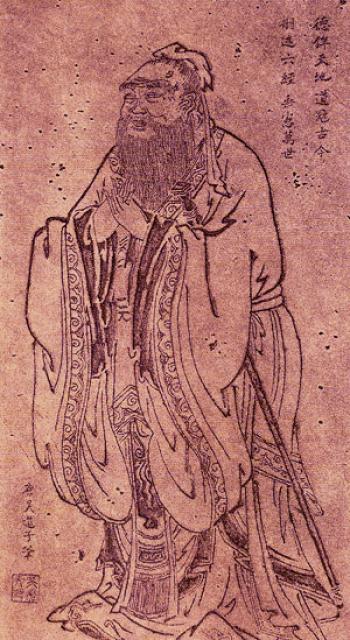
Confucius was born in 551 BCE in the small state of Lu, in what is now Shandong province. His family name was Kong and his personal name Qiu; the Latinized "Confucius" derives from Kong Fuzi, or "Master Kong." Though later tradition enshrouded him in legend — miraculous birth narratives, dragon-like features, a meeting with the infant Buddha — the historical Confucius was a man of modest origins who rose through education and determination (Chin, 2007). His father, a minor military officer, died when Confucius was young, leaving the family in reduced circumstances. This early experience of hardship may have shaped his lifelong concern with social justice and the moral obligations of those in power.
The world Confucius inhabited was one of political fragmentation and moral crisis. The Zhou dynasty, which had once unified China under a feudal order legitimated by the concept of the Mandate of Heaven, was in terminal decline. Regional lords warred with one another, ritual propriety was abandoned, and the old aristocratic codes of conduct were dissolving (Nylan & Wilson, 2010). Confucius looked back to the early Zhou as a golden age and sought to revive its values — not through nostalgia, but through a creative reinterpretation of ancient traditions for his own turbulent times. He believed that the restoration of proper ritual, music, and moral cultivation could heal a fractured society.
Confucius spent much of his adult life traveling from state to state, seeking a ruler who would implement his vision of benevolent governance. Though he held a few minor offices in Lu, he never achieved the position of real political influence he desired. His greatest legacy lay not in statecraft but in teaching. He is traditionally credited with gathering around him some seventy-two disciples, drawn from various social classes, and his insistence that education should be open to all regardless of birth was itself a revolutionary act (Slingerland, 2003). In his own lifetime, he considered himself a failure; history would judge otherwise.
"Is it not a pleasure to learn and to practice what you have learned? Is it not a joy to have friends come from afar?"
Analects (Lunyu) 1.1The Analects as Living Text
The Analects (Lunyu, literally "Collected Sayings") is not a systematic treatise but a compilation of dialogues, aphorisms, and brief narratives assembled by Confucius's students and their successors over several generations. Most scholars agree that the text took shape gradually, with the earliest layers (Books 3–9) likely dating closest to Confucius's own time and the later books reflecting the concerns of subsequent Confucian communities (Ames & Rosemont, 1998). This layered composition gives the Analects a conversational, sometimes fragmentary quality that has invited centuries of commentary and interpretation.
The format of the Analects is deceptively simple. A typical passage begins with "The Master said" (zi yue) followed by a brief statement, or records an exchange between Confucius and a student in which the Master tailors his response to the character and circumstances of the questioner. This context-sensitivity is itself a philosophical principle: Confucius believed that moral wisdom cannot be reduced to fixed rules but must be adapted to particular situations (Slingerland, 2003). When different students asked about the same virtue — say, ren (benevolence) — Confucius gave different answers, calibrated to what each student most needed to hear. This pedagogical approach has led some scholars to compare him to Socrates, another philosopher known primarily through the records of his students.
The transmission history of the Analects is itself a remarkable story. The text survived the Qin dynasty's notorious burning of books in 213 BCE, was reassembled during the Han dynasty, and became one of the Four Books that formed the core curriculum of the imperial examination system from the Song dynasty onward (Nylan, 2001). For nearly a thousand years, every aspiring government official in China was required to memorize and interpret the Analects. No other text in Chinese history has been so continuously studied, debated, and revered — a testament to the richness and adaptability of Confucius's thought.
Ren (Benevolence) and Li (Ritual)
At the heart of Confucian ethics are two interlocking concepts: ren (仁, benevolence or humaneness) and li (礼, ritual propriety). Ren is often translated as "benevolence," "goodness," or "humaneness," but none of these English words fully captures its meaning. The Chinese character itself — composed of the elements for "person" and "two" — suggests that ren is fundamentally relational: it is the quality of being fully human in one's dealings with others (Ames & Rosemont, 1998). Confucius described ren as the supreme virtue, the source from which all other virtues flow, yet he was notably reluctant to claim that he himself or anyone he knew had fully achieved it. This reticence suggests that ren is not a fixed state but an ongoing process of moral cultivation.
Li, often translated as "ritual" or "ceremony," encompasses far more than formal religious rites. In the Analects, li refers to the entire system of social norms, customs, and courtesies that structure human interaction — from elaborate state ceremonies to the everyday gestures of greeting, dining, and mourning (Slingerland, 2003). Confucius saw li as the external framework through which inner virtue is expressed and cultivated. Without li, ren remains formless intention; without ren, li degenerates into empty formalism. The two are inseparable, like the inside and outside of a vessel. A person who performs rituals without genuine feeling is, in Confucius's view, no better than a musician who plays without listening.
The relationship between ren and li has been one of the most debated topics in Confucian philosophy. Some interpreters emphasize ren as the inner moral core and see li as merely its outward expression. Others, following the philosopher Xunzi, argue that li is itself formative — that by practicing proper ritual, one gradually shapes one's character and develops ren (Chin, 2007). This debate has practical implications for education, governance, and social reform. Confucius himself seems to have held both dimensions in creative tension, insisting that neither inner virtue nor outer form can be neglected. His famous remark that "to subdue the self and return to ritual is to practice ren" (Analects 12.1) captures this dialectic in a single phrase.
"Do not impose on others what you yourself do not desire."
Analects (Lunyu) 15.24The Rectification of Names
One of Confucius's most distinctive and influential doctrines is the "rectification of names" (zhengming, 正名). When asked what he would do first if given the reins of government, Confucius replied: "Without question, it would be to rectify names" (Analects 13.3). This seemingly abstract principle has profound practical implications. Confucius argued that social disorder arises when words no longer correspond to realities — when a ruler does not rule, when a father does not act as a father, when ministers fail in their duties yet retain their titles (Ames & Rosemont, 1998). To rectify names is to restore the alignment between what things are called and what they actually are.
The doctrine rests on a deeper philosophical insight about the relationship between language and reality. For Confucius, names are not arbitrary labels but carry normative weight. To call someone a "ruler" is not merely to describe their position but to invoke a set of moral expectations: a ruler should be wise, just, and concerned for the welfare of the people. When a tyrant bears the title of king, the name itself is corrupted, and this corruption spreads through the entire social fabric (Nylan & Wilson, 2010). Confucius's concern with names anticipates modern philosophical discussions about the performative power of language and the ways in which naming shapes perception and behavior.
The practical implications of zhengming extend from politics to everyday life. In governance, it demands that officials live up to their titles and responsibilities. In family life, it requires that parents, children, spouses, and siblings fulfill the obligations that their roles entail. In scholarship, it insists on precision and honesty in the use of words (Slingerland, 2003). Confucius believed that when names are correct, speech is orderly; when speech is orderly, affairs are accomplished; when affairs are accomplished, ritual and music flourish. Conversely, when names are confused, nothing can proceed properly. This chain of reasoning reveals how deeply Confucius connected moral, linguistic, and political order into a unified vision of civilization.
The Junzi Ideal
The central figure in Confucian ethics is the junzi (君子), a term that originally meant "son of a lord" or "gentleman" in the aristocratic sense. Confucius transformed this class-based term into a moral category: the junzi is not someone born to privilege but someone who has cultivated virtue through sustained effort and self-examination (Chin, 2007). The opposite of the junzi is the xiaoren (小人), the "petty person" who is motivated by personal gain rather than moral principle. This distinction runs throughout the Analects and provides a framework for evaluating character that transcends social rank. In Confucius's vision, a farmer who cultivates virtue is more truly a junzi than a prince who neglects it.
The junzi embodies a constellation of virtues. Chief among these are ren (benevolence), yi (righteousness), li (ritual propriety), zhi (wisdom), and xin (trustworthiness). But the junzi is not a rigid moralist; Confucius emphasized the importance of flexibility, judgment, and what might be called moral imagination. The junzi knows when to speak and when to remain silent, when to act and when to wait, when to follow convention and when to depart from it (Ames & Rosemont, 1998). This capacity for nuanced moral judgment — what Aristotle would later call phronesis or practical wisdom — is what distinguishes the junzi from someone who merely follows rules. The junzi is harmonious but not conformist, principled but not dogmatic.
The junzi ideal has had an enormous influence on Chinese culture and education. For centuries, the goal of Confucian education was not merely the acquisition of knowledge but the formation of character — the transformation of the student into a junzi (Nylan, 2001). This vision shaped the imperial examination system, the curriculum of Confucian academies, and the self-cultivation practices of scholars across East Asia. Even today, the concept resonates in Chinese discussions of leadership, ethics, and personal development. The junzi remains a living ideal, invoked in contexts ranging from business ethics to political philosophy, a testament to the enduring power of Confucius's moral vision.
"The exemplary person is harmonious but does not conform; the petty person conforms but is not harmonious."
Analects (Lunyu) 13.23Legacy and Global Influence
The influence of Confucius and the Analects on Chinese civilization is difficult to overstate. From the Han dynasty (206 BCE–220 CE) onward, Confucianism became the dominant ideology of the Chinese state, shaping law, education, family structure, and political theory for over two thousand years (Nylan & Wilson, 2010). The Analects served as the foundational text of this tradition, memorized by schoolchildren, debated by scholars, and invoked by emperors. Even periods of apparent decline — the Buddhist ascendancy of the Tang dynasty, the Mongol conquest, the Qing dynasty's Manchu rulers — only deepened and broadened the Confucian tradition, as thinkers found new resources in the Analects for addressing the challenges of their times.
Beyond China, Confucian thought spread throughout East Asia, profoundly shaping the cultures of Korea, Japan, and Vietnam. Korean Neo-Confucianism, with its emphasis on ritual purity and scholarly devotion, arguably preserved certain Confucian ideals more faithfully than China itself during some periods. Japanese Confucianism influenced the samurai ethic and the Meiji-era drive for modernization. Vietnamese Confucianism shaped the country's civil service and literary traditions (Chin, 2007). In each case, the Analects served as a common reference point, a shared text that created a pan-East Asian intellectual culture comparable in scope to the influence of the Bible or the Quran in other parts of the world.
In the modern era, Confucius has become a global figure. The Analects has been translated into virtually every major language, and Confucian ethics are studied in philosophy departments worldwide. Contemporary scholars have explored connections between Confucian thought and virtue ethics, communitarianism, environmental philosophy, and democratic theory (Ames & Rosemont, 1998). In China itself, a dramatic Confucian revival has unfolded since the late twentieth century, with the government establishing hundreds of "Confucius Institutes" abroad and scholars arguing for the relevance of Confucian values to modern governance. Whether one sees this revival as genuine cultural renaissance or political instrumentalization, it testifies to the remarkable vitality of ideas first articulated by a wandering teacher in the ruins of the Zhou dynasty.
Quiz
What was Confucius's family name and personal name?
What did Confucius believe could heal a fractured society?
How is the Analects primarily structured?
What does the concept of 'ren' emphasize according to Confucius?
What does the 'rectification of names' doctrine entail?
What is the opposite of the 'junzi' in Confucian ethics?
Which dynasty's burning of books did the Analects survive?
Which concept is central to Confucian ethics and involves both inner virtue and external form?
Write your thoughts, then get feedback from Jason — you can turn any answer into a full discussion.
9. How might the concept of 'ren' be applicable in modern workplaces?
10. Why do you think the 'rectification of names' remains relevant in today's society?
Frequently Asked Questions
Common questions about Confucius and the Analects: The Teacher Who Shaped a Civilization
What are the main teachings of Confucius?
Confucius taught that social harmony depends on cultivating personal virtue, maintaining proper relationships, and practicing ritual propriety (li). His core teachings emphasize benevolence (ren), filial piety (xiao), and the pursuit of moral self-cultivation as the foundation of a just society.
What is the Analects of Confucius about?
The Analects (Lunyu) is a collection of sayings, dialogues, and anecdotes attributed to Confucius, compiled by his disciples after his death. It covers topics ranging from governance and education to personal ethics, offering practical wisdom on how to live a virtuous and meaningful life.
Why is Confucius important in Chinese history?
Confucius is considered the most influential philosopher in Chinese history, shaping the moral, political, and educational foundations of East Asian civilization for over two thousand years. His ideas became the basis for the imperial examination system and continue to influence Chinese culture, governance, and family values today.
What does ren mean in Confucian philosophy?
Ren is often translated as "benevolence," "humaneness," or "goodness" and represents the highest virtue in Confucian thought. It describes the quality of genuine care and empathy for others that arises from cultivating one's character through study, reflection, and moral practice.
How did Confucianism spread across East Asia?
Confucianism spread from China to Korea, Japan, and Vietnam through diplomatic exchanges, trade, and the adoption of Chinese writing and governance systems. In each country, Confucian principles were adapted to local cultures while remaining central to education, civil service, and social ethics for centuries.