
Podcast


Podcast: Tofu: Two Thousand Years of Transformation
Listen to Jason & Amy discuss Tofu: Two Thousand Years of Transformation
New here?
Han Dynasty Origins and the Legend of Liu An
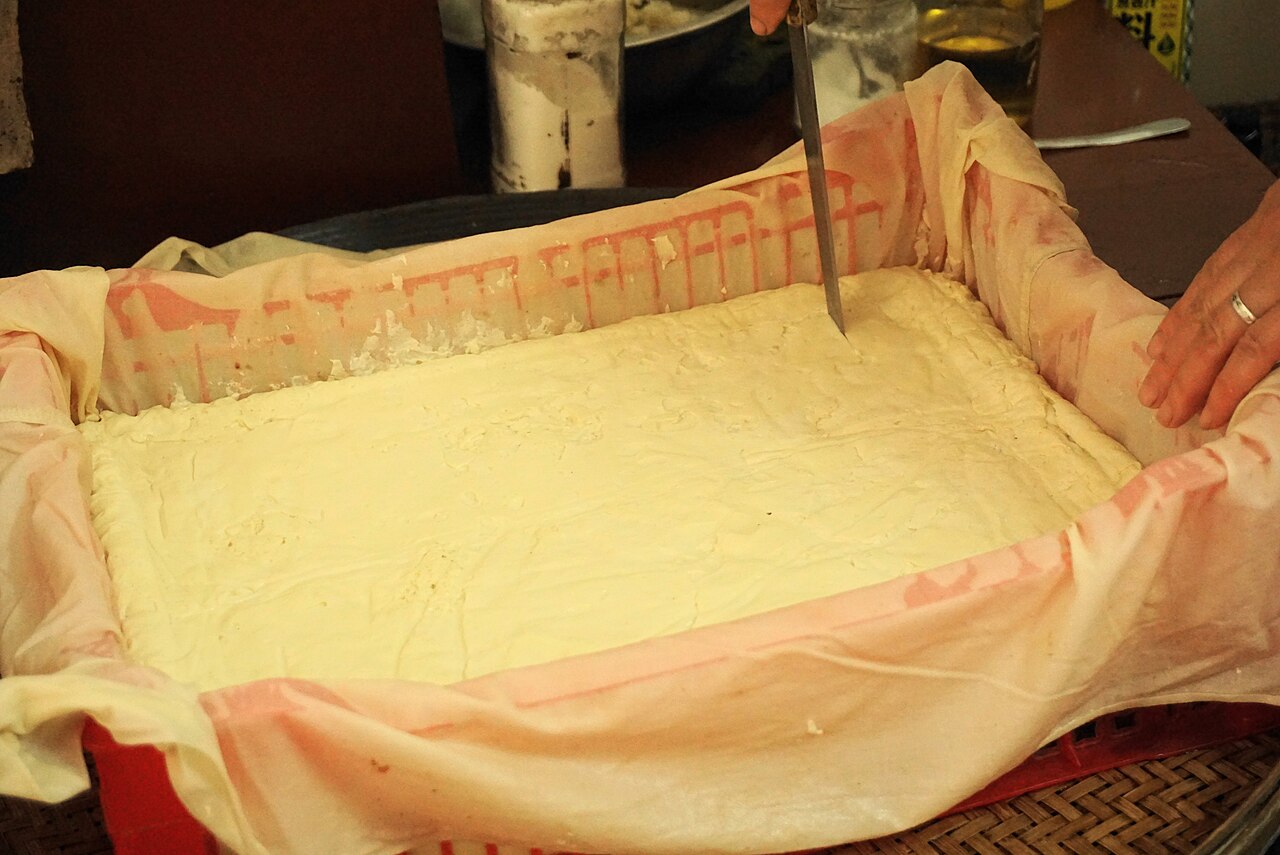
The origins of tofu are wrapped in a legend that speaks volumes about how the Chinese imagination links food, philosophy, and the pursuit of immortality. According to tradition, tofu was invented by Liu An (刘安), the prince of Huainan and grandson of the founding emperor of the Han dynasty, who ruled his fief in what is now Anhui province during the second century BCE. Liu An was a patron of Daoist alchemists and scholars, and his court produced the Huainanzi, one of the great philosophical compilations of early China. The story holds that Liu An's alchemists, in the course of their experiments with mineral salts and soybeans — seeking an elixir of immortality — accidentally coagulated soymilk into a soft, white curd. The elixir eluded them, but they had stumbled upon something arguably more consequential for human welfare: a cheap, nutritious, and infinitely adaptable source of protein that would feed billions across the centuries.
Whether or not the Liu An legend is historically accurate remains a matter of scholarly debate. The food historian H. T. Huang (2000) has argued that the earliest reliable textual evidence for tofu dates not to the Han dynasty but to the Tang, pointing to the absence of the word "doufu" in Han and Wei dynasty texts. Other scholars, including Shinoda Osamu, have maintained that circumstantial evidence — including the Han dynasty development of stone mills capable of grinding soybeans into milk and the widespread availability of nigari coagulants — makes a Han origin plausible even without explicit textual proof. What is beyond dispute is that by the Song dynasty (960–1279 CE), tofu was ubiquitous in Chinese cuisine, appearing in cookbooks, poetry, and official records as a food consumed by all social classes from peasants to emperors.
The earliest surviving depiction of tofu production appears in a stone relief from the Eastern Han period found in Henan province, showing what appears to be a soybean processing workshop with grinding stones and rectangular molds. While the identification of this relief as a tofu workshop has been contested, it aligns with the archaeological evidence for the Han dynasty's sophisticated soybean agriculture. The Han Chinese had already developed fermented soybean products such as jiang (酱, a paste) and chi (豉, fermented black beans), so the conceptual leap to coagulating soymilk was well within reach of contemporary food technology. Whether tofu emerged from deliberate experimentation or fortunate accident, its invention represented a pivotal moment in the history of human nutrition.
The Science of Coagulation
At its most elemental, tofu is the product of a remarkably simple chemical process: soybeans are soaked, ground with water to produce a milky liquid, heated, and then treated with a coagulant that causes the dissolved proteins — primarily glycinin and beta-conglycinin — to aggregate into curds, which are then pressed into blocks. The process mirrors the basic logic of cheesemaking, which transforms liquid milk into solid curd through acidification or enzymatic action, and this parallel has led some food scientists to call tofu "soy cheese." Yet the comparison understates the diversity of outcomes that different coagulants, temperatures, and pressing techniques can produce, ranging from silken tofu so delicate it trembles on the spoon to firm tofu dense enough to be grilled over charcoal.
The choice of coagulant is the single most important variable in determining the character of the finished tofu. Traditional Chinese tofu-makers have historically used two principal agents: nigari (卤水, lǔshuǐ), a magnesium chloride–rich brine derived from seawater, and gypsum (石膏, shígāo), a naturally occurring calcium sulfate mineral. Nigari produces a tofu with a slightly coarse, rustic texture and a faintly sweet, mineral flavor — it is favored in northern China and Japan for firm tofu. Gypsum yields a smoother, more tender curd and is the standard coagulant in southern Chinese tofu production. As noted by the food chemist Shurtleff and Aoyagi (1975) in their encyclopedic study of soybean foods, the coagulant does not merely trigger a chemical reaction; it imparts a subtle but perceptible flavor signature that experienced tofu connoisseurs can identify.
A third coagulant, glucono delta-lactone (GDL), was introduced in the twentieth century and is now widely used in industrial tofu production, particularly for the silken or soft tofu popular in Japanese and Korean cuisines. GDL produces an exceptionally smooth, custard-like curd by lowering the pH uniformly throughout the soymilk, rather than creating localized pockets of coagulation as salt-based agents do. The resulting tofu holds more water and has a more delicate flavor but lacks the mineral complexity of nigari or gypsum tofu. For artisanal tofu-makers in China, Japan, and increasingly in the West, the revival of traditional coagulants has become a point of pride and a marker of quality — a quiet rebellion against the homogenizing tendencies of industrial food production.
"Tofu well-seasoned surpasses even bird's nest soup."
Yuan Mei, Suiyuan Shidan (随园食单)Tofu in Buddhist Vegetarian Cuisine
No institution did more to elevate tofu from a common food to a culinary art form than Chinese Buddhism. When Buddhism arrived in China from India during the first century CE, it brought with it a tradition of ahimsa — non-violence toward living beings — that, in its Chinese adaptation, crystallized into a strict vegetarian diet for monastic communities. This presented a formidable nutritional challenge: how could monks and nuns sustain themselves on a diet free of meat, fish, eggs, and, in some traditions, even pungent vegetables like garlic and onion? Tofu provided the answer. Rich in protein, versatile in texture, and bland enough to absorb any flavor, it became the cornerstone of Chinese Buddhist vegetarian cuisine (素菜, sùcài), a tradition that would eventually produce some of the most sophisticated and inventive cooking in the Chinese repertoire.
The Buddhist kitchen's genius lay in transforming tofu into convincing imitations of the very foods that monastic discipline forbade. Through techniques of pressing, freezing, layering, frying, and seasoning, temple cooks created "mock meat" dishes — faux duck, faux pork, faux fish — that replicated the textures and flavors of animal products with astonishing fidelity. As Dunlop (2001) has documented, the skill of these preparations lies not in deception for its own sake but in demonstrating that compassion need not mean deprivation. A banquet at a prosperous Chan Buddhist temple could rival any secular feast in its variety and refinement, with dozens of courses made entirely from soybeans, wheat gluten, mushrooms, and vegetables, each shaped and flavored to evoke a different animal dish.
The influence of Buddhist vegetarian cooking extended far beyond the monastery walls. During the Song dynasty, vegetarian restaurants flourished in the commercial capitals of Kaifeng and Hangzhou, catering to devout Buddhists, curious epicures, and the simply frugal. The Dongjing Meng Hua Lu (东京梦华录), a memoir of life in Northern Song Kaifeng, records the existence of specialized vegetarian eateries offering elaborate menus. By the Ming and Qing dynasties, vegetarian cooking had become a recognized branch of Chinese haute cuisine, with its own cookbooks, its own master chefs, and its own aesthetic philosophy — centered on the ideal of transforming humble ingredients into something extraordinary through skill, patience, and ingenuity.
Regional Tofu Specialties
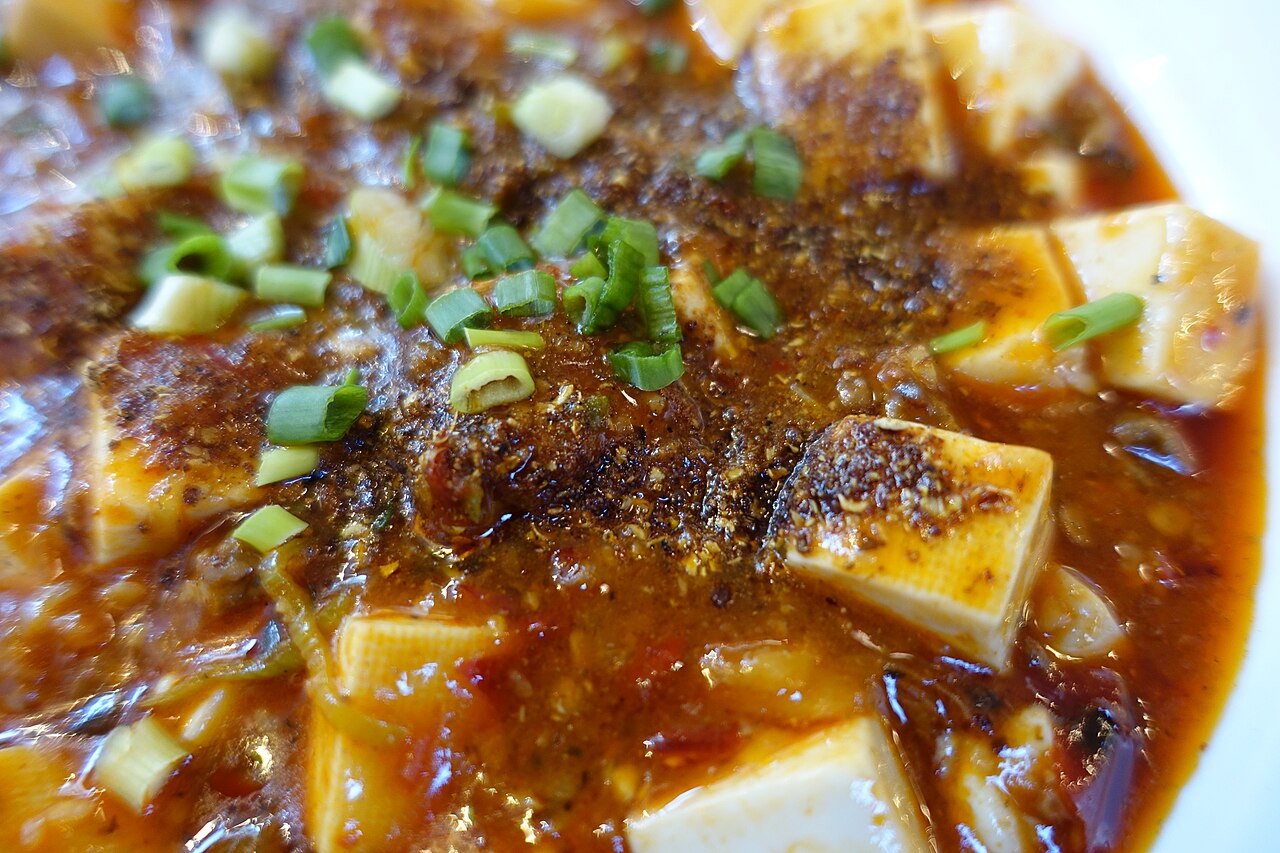
The genius of tofu lies in its protean nature — the same basic ingredient, treated differently, produces foods so diverse that they seem to share no common ancestor. In Sichuan province, the iconic mapo doufu (麻婆豆腐) — silken tofu braised in a sauce of fermented broad bean paste, chili oil, Sichuan peppercorn, and minced pork — exemplifies the cuisine's philosophy of layered heat and numbing spice. The dish was reportedly created in the 1860s by a pockmarked woman (麻婆, mápó) surnamed Chen who ran a small restaurant near the Wanfu Bridge in Chengdu. Whatever the truth of the origin story, mapo doufu has become perhaps the single most famous tofu dish in the world, its combination of fiery, numbing, and savory flavors representing Sichuan cuisine at its most characteristic.
In the fermented realm, tofu undergoes transformations that rival the complexity of aged cheese. Fermented tofu (腐乳, fǔrǔ), also known as preserved bean curd, is made by inoculating fresh tofu cubes with mold — typically Actinomucor elegans — and then aging them in a brine of rice wine, salt, and various seasonings. The result ranges from the creamy, mildly pungent white fermented tofu of southern China to the aggressively funky red fermented tofu of Guangdong, colored and flavored with red yeast rice. Stinky tofu (臭豆腐, chòu dòufu), perhaps the most polarizing food in all of Chinese cuisine, is produced by marinating fresh tofu in a brine of fermented vegetables, shrimp, and herbs for periods ranging from hours to months. The resulting product, typically deep-fried and served with chili sauce and pickled cabbage, is a beloved street food across Taiwan, Hunan, and Zhejiang, prized for the contrast between its pungent exterior and its tender, relatively mild interior.
At the opposite end of the spectrum, the silken tofu (嫩豆腐, nèn dòufu) of Jiangnan — the lush region south of the Yangtze — represents tofu at its most refined and delicate. Barely coagulated, almost liquid in texture, it is served chilled in summer with a drizzle of soy sauce, sesame oil, and a scattering of scallions and preserved eggs. This preparation, called liangban doufu (凉拌豆腐), demands tofu of exceptional quality — freshly made, with a faint sweetness and a trembling, custard-like consistency. Thousand-sheet tofu (千张, qiānzhāng), pressed into paper-thin sheets, is rolled around fillings or sliced into noodle-like strips. Dried tofu sticks (腐竹, fǔzhú), formed from the skin that rises on heated soymilk, add chewy texture to soups and stews. Each variant represents a distinct culinary solution wrung from the same humble bean.
"Green vegetables and tofu ensure peace and health."
Chinese proverb (民间谚语)Tofu in Japanese and Korean Adaptation
Tofu's journey beyond China is one of the great stories of culinary diffusion. The food arrived in Japan, most scholars agree, during the Nara period (710–794 CE), carried by Buddhist monks returning from study in Tang dynasty China. In Japan, tofu — rendered as 豆腐 (tōfu) in the same characters — underwent a transformation that reflected Japanese aesthetic sensibilities. Where Chinese cooks prized tofu for its versatility and its ability to absorb bold flavors, Japanese cooks celebrated its purity and subtlety. The Tofu Hyakuchin (豆腐百珍, "One Hundred Tofu Delicacies"), published in 1782, catalogued one hundred preparations of tofu and became a bestseller in Edo-period Japan, testifying to the ingredient's centrality in Japanese cuisine. As food historian Rath (2010) has noted, this single-ingredient cookbook reflected a broader Japanese culinary philosophy that valued depth of engagement with simple materials over the diversity of ingredients.
Korean tofu (두부, dubu) took a different developmental path. In Korea, tofu was embraced not only by Buddhist monks but by the general population, becoming a staple of home cooking and ceremonial food. The Korean tradition of sundubu-jjigae (순두부찌개) — a bubbling stew of uncurdled, silken-soft tofu in a fiery broth of chili flakes, seafood, and egg — represents a fundamentally different approach from either the Chinese or Japanese traditions: here, tofu is not a canvas for other flavors but the star of the dish, its trembling softness contrasting dramatically with the aggressive heat of the broth. Korean cuisine also developed distinctive fermented tofu preparations, including meju (메주), fermented soybean blocks that serve as the foundation for doenjang (된장) paste and ganjang (간장) soy sauce.
The adaptation of tofu in Japan and Korea illuminates a broader principle of culinary history: that a food's meaning and status are not fixed properties but products of the cultural context in which it is consumed. In China, tofu was a food of the people — nutritious, cheap, democratic. In Japan, it became an object of aesthetic contemplation, linked to Zen Buddhist ideals of simplicity and mindfulness. In Korea, it became a vehicle for the culture's love of fermentation and bold seasoning. Each nation took the same basic technology — the coagulation of soymilk — and bent it to the demands of its own palate, its own philosophy, and its own sense of what food should be and do.
Tofu as Global Protein
The twentieth century brought tofu to the attention of the wider world, driven initially by the health food movement and more recently by urgent concerns about the environmental sustainability of animal agriculture. The American encounter with tofu began in earnest with William Shurtleff and Akiko Aoyagi's landmark publication The Book of Tofu (1975), which introduced Western readers to the history, nutrition, and preparation of soybean foods with missionary zeal. Shurtleff and Aoyagi documented hundreds of traditional Asian tofu preparations and argued that tofu offered a solution to world hunger: soybeans yield roughly ten times more usable protein per acre than beef cattle, a ratio that has only become more significant as global population has grown and the ecological costs of meat production have become harder to ignore.
The early reception of tofu in the West was hampered by cultural unfamiliarity and, frankly, by bad cooking. Tofu earned a reputation as bland, mushy, and joyless — the culinary equivalent of penance. This reputation was largely undeserved but understandable: Western cooks, unfamiliar with Asian seasoning techniques, often treated tofu as a direct substitute for meat rather than as an ingredient with its own requirements and possibilities. The turning point came with the mainstreaming of Asian cuisines in Western cities during the 1990s and 2000s, when diners encountered tofu as the Chinese, Japanese, and Korean traditions actually prepared it — in mapo doufu, in miso soup, in sundubu-jjigae — and discovered that the problem had never been the ingredient but the cooking.
Today, tofu stands at the intersection of several powerful global trends: the rise of plant-based diets, the search for sustainable protein sources, and a growing appreciation for the depth and sophistication of Asian culinary traditions. Global tofu production was estimated at over 4.5 million metric tons annually as of 2020, with significant growth in Europe and North America. Artisanal tofu shops have appeared in cities from Brooklyn to Berlin, often run by young makers inspired by Japanese or Chinese craft traditions. The irony is not lost on historians: a food that Liu An's alchemists supposedly discovered while searching for immortality has achieved something close to it — an unbroken presence at the human table for over two thousand years, with no sign of decline.
"Impatience cannot eat hot tofu — haste makes waste."
Chinese proverb (民间谚语)Quiz
Who is credited with the invention of tofu according to legend?
What is the primary variable that determines the character of tofu?
What role did Buddhism play in the development of tofu cuisine?
Which region is associated with the creation of mapo doufu?
How did tofu first arrive in Japan?
What is stinky tofu known for?
Which coagulant is commonly used for silken tofu?
What major shift helped improve the perception of tofu in the West?
Write your thoughts, then get feedback from Jason — you can turn any answer into a full discussion.
9. Why do you think tofu became a staple in Buddhist vegetarian cuisine?
10. How does the adaptation of tofu in Japan and Korea reflect their cultural values?
Frequently Asked Questions
Common questions about Tofu: Two Thousand Years of Transformation
How long has tofu been a part of Chinese cuisine?
Tofu has been a staple of Chinese cuisine for roughly two thousand years, with its invention traditionally attributed to Liu An, the Prince of Huainan, around 164 BCE during the Han dynasty. Archaeological and textual evidence confirms that tofu production was well established in China by the Tang dynasty (618-907 CE), making it one of the oldest continuously produced foods in the world.
How is tofu made from soybeans?
Tofu is made by soaking dried soybeans, grinding them with water, boiling the resulting slurry to make soy milk, and then adding a coagulant such as nigari (magnesium chloride) or gypsum (calcium sulfate) to curdle the milk into curds. The curds are then pressed into blocks of varying firmness, from silken tofu to extra-firm, depending on how much liquid is removed.
What are the different types of tofu used in Chinese cooking?
Chinese cooking employs a remarkable variety of tofu types, including silken tofu (嫩豆腐) for soups and desserts, firm tofu (老豆腐) for stir-frying, dried tofu sheets (豆腐皮) for wrapping, fermented tofu (腐乳) as a condiment, frozen tofu (冻豆腐) for hot pot, and stinky tofu (臭豆腐) as a beloved street food. Each form has distinct textures and culinary applications.
Is tofu actually healthy for you?
Tofu is widely regarded as a nutritious food, providing complete plant protein, all essential amino acids, and significant amounts of calcium, iron, and isoflavones. Traditional Chinese medicine has valued tofu for centuries as a cooling food that nourishes yin energy, and modern research supports its role in heart health and as a sustainable protein source.
What is the most famous tofu dish in Chinese cuisine?
Mapo tofu (麻婆豆腐) from Sichuan province is arguably the most famous Chinese tofu dish worldwide, featuring silken tofu in a fiery sauce of chili bean paste, fermented black beans, Sichuan peppercorn, and minced meat. Created in the 1860s by a pockmarked woman (麻婆) at a small Chengdu restaurant, it perfectly demonstrates how tofu absorbs and amplifies surrounding flavors.