
Podcast


Podcast: Tea: The Soul of Chinese Culture
Listen to Jason & Amy discuss Tea: The Soul of Chinese Culture
New here?
Mythical Origins: The Emperor Who Tasted a Hundred Herbs
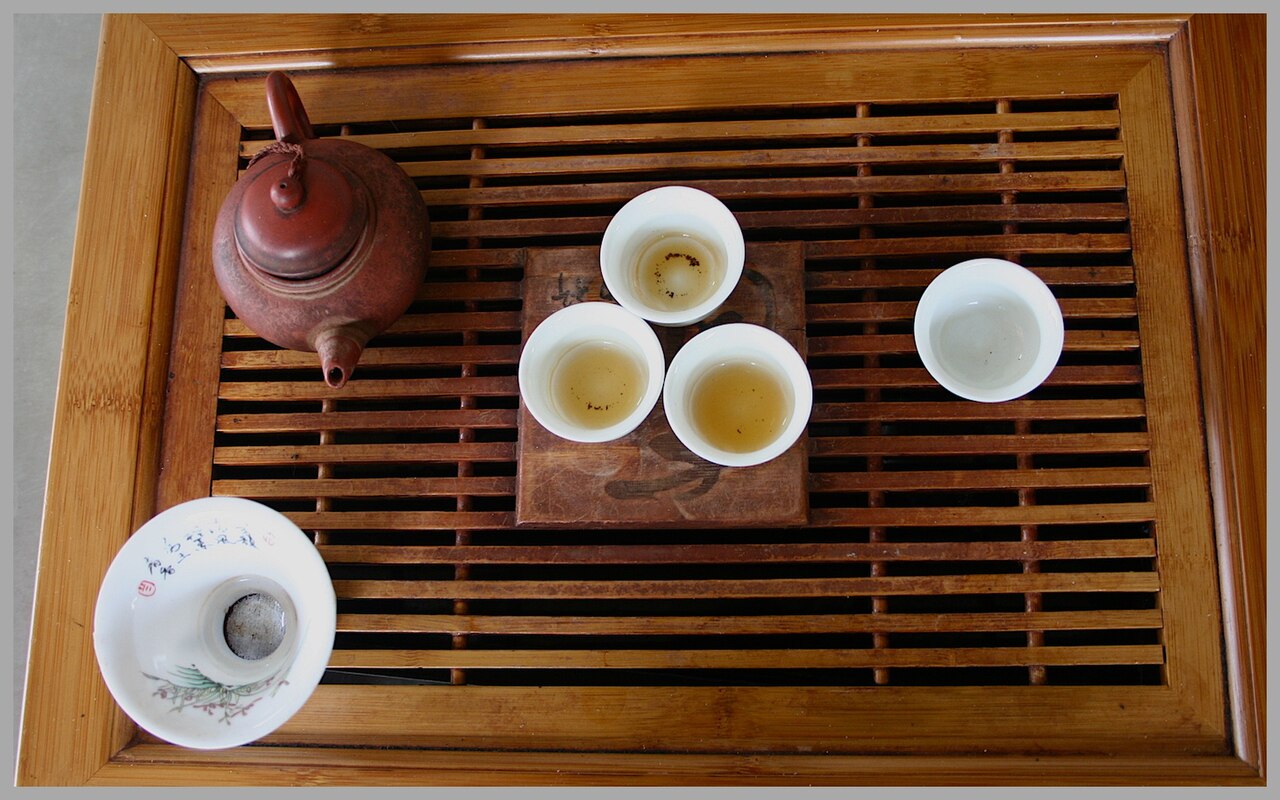
Chinese tradition attributes the discovery of tea to Shennong (神农), the Divine Farmer — a mythical emperor said to have ruled around 2737 BCE. According to the legend, Shennong was a tireless experimenter who personally tasted hundreds of plants to determine their medicinal properties, using his own body as a laboratory. One day, while boiling water beneath a wild tea tree, a few leaves drifted into his pot. The resulting infusion was bitter but invigorating, and Shennong immediately recognized its value as a stimulant and detoxicant. A later embellishment of the myth, recorded in texts from the Tang dynasty, claims that Shennong poisoned himself seventy-two times in a single day while testing plants, and each time used tea to neutralize the toxin. Whether any historical figure lies behind the Shennong legend is unknowable, but the myth encodes a genuine truth: the Chinese discovery of tea was inseparable from the tradition of herbal medicine, and tea's identity as both beverage and remedy has persisted for millennia.
The earliest reliable historical evidence of tea consumption dates not to the mythical age of Shennong but to the Han dynasty (206 BCE–220 CE), when the physician Hua Tuo described a bitter beverage made from leaves. The word "tea" (茶, chá) did not acquire its current written form until the Tang dynasty; earlier texts used the character 荼 (tú), which also referred to a type of bitter herb. Archaeological evidence has pushed the timeline further back: in 2016, researchers from the Chinese Academy of Sciences announced the discovery of physical tea residues in the tomb of Emperor Jing of the Western Han dynasty (r. 157–141 BCE), proving that tea was consumed by the Chinese elite more than two thousand years ago. As historian Victor Mair documents in The True History of Tea (2009), the plant Camellia sinensis is native to the mountainous border region between China's Yunnan and Sichuan provinces and northeastern India, and its use as a beverage may well extend back to prehistoric times.
What set China apart from other tea-drinking cultures was the elevation of tea consumption from a simple habit into a philosophical and aesthetic practice. By the Six Dynasties period (220–589 CE), tea had become associated with the reclusive scholars and Buddhist monks who retreated to mountain hermitages to cultivate spiritual clarity. The act of preparing and drinking tea was reconceived as a form of meditation — a practice of mindfulness, simplicity, and attunement to nature that resonated with both Daoist and Buddhist values. This philosophical dimension would reach its fullest expression in the work of Lu Yu, whose Classic of Tea transformed a common beverage into the centerpiece of one of China's most enduring cultural traditions.
The Classic of Tea: Lu Yu and the Birth of Tea Culture
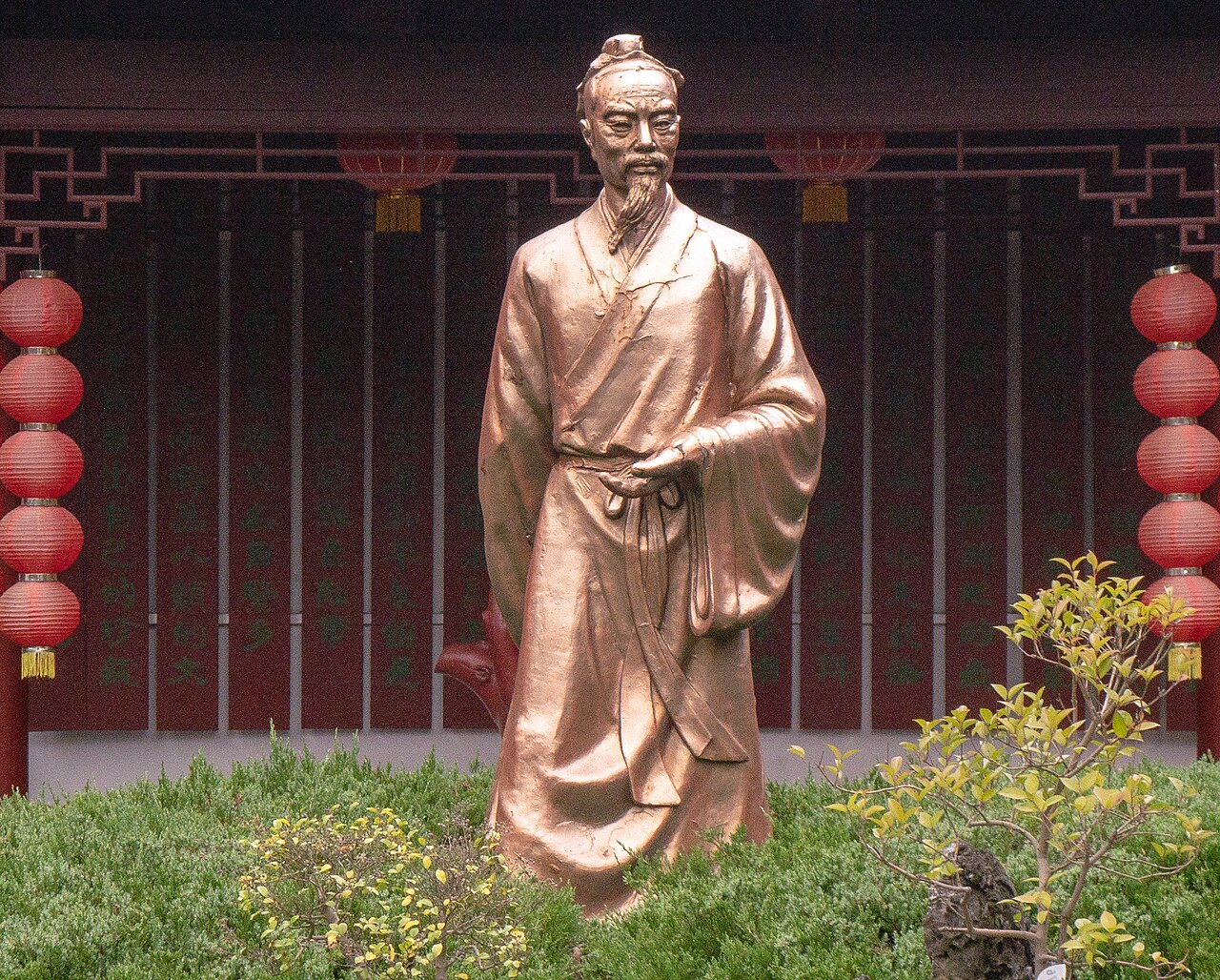
No single text has shaped the culture of tea more profoundly than the Chajing (茶经), The Classic of Tea, written by Lu Yu (陆羽, 733–804 CE) during the Tang dynasty. Lu Yu was an orphan, raised by the Buddhist monk Zhiji at the Dragon Cloud Monastery in Hubei province. Despite his monastic upbringing, Lu Yu chose a secular life, becoming a scholar, poet, and eventually the most famous tea expert in Chinese history. His Chajing, completed around 760 CE, is a remarkable work: part botanical treatise, part manufacturing manual, part aesthetic philosophy, and part spiritual guide. In three short volumes comprising barely ten thousand characters, Lu Yu codified every aspect of tea — from the cultivation of the plant to the selection of water, from the design of tea utensils to the proper method of brewing — and in doing so created the framework for what would become one of the world's great cultural traditions.
The Chajing is organized into ten chapters, each addressing a specific dimension of tea. The first chapter discusses the plant itself — its botanical characteristics, its native habitats, and the qualities of soil and climate that produce the finest leaves. Subsequent chapters describe the tools used for harvesting and processing tea, the methods of roasting and grinding compressed tea cakes (the standard form of Tang dynasty tea), the twenty-four utensils required for proper tea preparation, the technique of brewing, and the criteria for evaluating water. Lu Yu was famously opinionated about water quality, ranking specific springs and rivers in order of their suitability for tea — mountain spring water was best, river water acceptable, and well water the least desirable. As translated by Francis Ross Carpenter in The Classic of Tea (1974), Lu Yu's prose combines scientific precision with lyrical beauty, establishing a literary standard for tea writing that persists to this day.
Lu Yu's greatest contribution was not technical but philosophical: he transformed tea from a commodity into a vehicle for moral cultivation. The Chajing insists that the preparation of tea demands the same virtues that Confucian philosophy demands of a gentleman — patience, attentiveness, modesty, and respect for materials. A person who rushes the brewing or neglects the quality of the water is not merely making bad tea; they are revealing a flaw of character. This ethical dimension elevated tea culture above mere gastronomy and gave it a seriousness of purpose that attracted the attention of emperors, poets, and monks alike. Lu Yu himself became a cult figure — literally: after his death, tea merchants erected shrines to him and prayed to his image for good business. He remains the "Tea Sage" (茶圣, Cháshèng), honored in tea shops and teahouses across China and East Asia to this day.
"Tea is a magnificent tree of the south."
Lu Yu, The Classic of Tea (茶经), Chapter 1The Six Types of Chinese Tea
All tea comes from a single plant species — Camellia sinensis — yet the range of flavors, aromas, and colors that Chinese tea producers extract from this one plant is breathtaking. Chinese tea classification recognizes six fundamental types, distinguished primarily by the degree of oxidation the leaves undergo during processing. Green tea (绿茶, lǜchá) is unoxidized, its leaves heated immediately after picking to halt enzymatic activity, preserving the vegetal freshness and bright color of the living leaf. White tea (白茶, báichá) undergoes minimal processing — the leaves are simply withered and dried — producing a delicate, almost ethereal infusion. Yellow tea (黄茶, huángchá), the rarest of the six types, is processed like green tea but with an additional step of gentle smothering that gives the leaves a mellow, sweet character unique among teas. These three types represent the lighter end of the tea spectrum, valued for their subtlety and their ability to reveal the influence of terroir.
At the opposite end of the spectrum, black tea (红茶, hóngchá — literally "red tea" in Chinese, named for the color of the liquor rather than the leaf) is fully oxidized, producing a robust, malty brew that became the foundation of British tea culture after its introduction to Europe in the seventeenth century. Oolong tea (乌龙茶, wūlóngchá), one of China's most sophisticated productions, is partially oxidized — anywhere from roughly 15 to 85 percent — creating a vast spectrum of flavors that ranges from the floral lightness of Tieguanyin to the deep, roasted richness of Da Hong Pao. The sixth type, dark tea (黑茶, hēichá), undergoes a microbial fermentation process that can continue for years or even decades, producing a smooth, earthy brew that improves with age like fine wine. Pu'er tea, from Yunnan province, is the most famous dark tea and has become an object of intense collector interest, with vintage cakes from the 1950s and 1960s fetching prices comparable to first-growth Bordeaux.
The geography of Chinese tea is as complex as the geography of French wine. Specific mountains, valleys, and even individual gardens are famous for producing teas of particular character, and the concept of terroir — the influence of soil, altitude, microclimate, and human technique on flavor — is as central to Chinese tea culture as it is to European viticulture. West Lake Longjing (西湖龙井), the most celebrated green tea, is grown on the hillsides surrounding Hangzhou's West Lake, where the combination of mild climate, acidic soil, and morning mists produces a tea of incomparable sweetness and chestnut fragrance. As Mary Lou Heiss and Robert Heiss document in The Story of Tea (2007), the finest Longjing is harvested before the Qingming Festival in early April, when the tiny, tender buds contain the highest concentration of amino acids and the lowest levels of bitter catechins — a distinction that can multiply the price by a factor of ten compared to leaves harvested just two weeks later.
Gongfu Tea: The Art of Attentive Brewing
The gongfu tea ceremony — 工夫茶 (gōngfū chá), literally "tea with great skill" — is China's most elaborate method of tea preparation and the tradition that most fully realizes Lu Yu's vision of tea as a vehicle for mindfulness and aesthetic cultivation. Originating in the Chaoshan region of eastern Guangdong and the neighboring Minnan region of southern Fujian, gongfu tea developed during the late Ming and Qing dynasties as a method of brewing oolong tea that maximized flavor extraction through small vessels, high leaf-to-water ratios, and multiple short infusions. The technique spread throughout southern China and to Taiwan, where it was further refined during the twentieth century into the elegant practice known today.
The equipment for gongfu tea is specific and purposeful. The centerpiece is a small teapot — traditionally made from the purple clay (紫砂, zǐshā) of Yixing in Jiangsu province — with a capacity of just 100 to 200 milliliters. Yixing clay is prized for its porous structure, which absorbs the oils and aromas of tea over years of use, gradually developing a patina that enhances the flavor of every subsequent brew. The other essential vessels include a fairness pitcher (公道杯, gōngdào bēi) for equalizing the concentration of the brew before serving, small tasting cups barely larger than a thimble, and a tea tray with a drainage system to catch the considerable amount of water that is poured over the pot and cups during the ceremony. As writer and tea master Jason C. S. Chen describes in The Art and Technique of Gongfu Tea (2020), every element of the gongfu setup serves a functional purpose — there is no empty ritual here, only precise technique directed toward the extraction of maximum flavor.
A gongfu session unfolds through multiple infusions of the same leaves — typically six to ten, though exceptional teas may yield fifteen or more. The first infusion is often discarded, serving to "rinse" the leaves and awaken their flavor. Subsequent infusions are brewed for progressively longer periods, usually beginning at ten to fifteen seconds and extending to a minute or more as the leaves gradually release their compounds. Each infusion reveals a different aspect of the tea: the first steeped cups may be bright, floral, and aromatic; the middle infusions develop body, sweetness, and complexity; the final infusions yield a gentle, lingering sweetness that the Chinese call "returning sweetness" (回甘, huígān). The experience of drinking through multiple infusions transforms tea from a single static flavor into a narrative that unfolds over time — a journey through the full expressive range of a single handful of leaves. This temporal dimension is what distinguishes gongfu tea from all other brewing methods and gives it its meditative quality: the drinker is invited not merely to taste but to pay attention, to notice change, and to be present in the passing moment.
"Tea and Zen share one taste."
Chan Buddhist saying, attributed to the monk Yuanwu Keqin (圜悟克勤)Tea, Buddhism, and Daoism
The intertwining of tea with Chinese spiritual life is one of the most profound cultural fusions in human history. Buddhism, which arrived in China from India during the Han dynasty, found in tea a perfect ally. Monks who spent long hours in seated meditation needed a stimulant to maintain alertness, and tea — with its gentle caffeine lift, its calming L-theanine, and its association with the purity of mountain springs — was ideally suited. By the Tang dynasty, tea had become so integral to monastic life that the phrase "tea and Chan (Zen) share one taste" (茶禅一味, chá chán yī wèi) was a common saying. The great Chan masters drank tea before meditation, served tea to visiting scholars, and used the preparation of tea as a form of spiritual practice — an exercise in mindfulness, humility, and attention to the present moment that was, in essence, meditation by other means.
The Daoist influence on tea culture is equally deep but subtler. Daoism's reverence for nature, simplicity, and spontaneity shaped the aesthetic values of Chinese tea from the earliest period. The ideal tea, in the Daoist sensibility, is not the most expensive or the most rare but the one that most perfectly expresses the character of its origin — the mountain where it grew, the mist that nourished it, the hands that processed it. The concept of "mountain character" (山韵, shānyùn), used by connoisseurs to describe the unique flavor signature of a specific tea garden, is essentially a Daoist idea: the belief that place has a spirit that can be tasted. Lu Yu's insistence on the importance of water quality — his ranking of mountain springs, his disgust at the use of well water — reflects the Daoist conviction that the best tea is a collaboration between human art and natural forces, not a triumph of technique over materials.
The Japanese tea ceremony (茶道, chadō), the world's most famous formalization of tea culture, is itself a descendant of Chinese Chan Buddhist tea practice. The Japanese monk Eisai brought tea seeds and Chan meditation techniques from China to Japan in the twelfth century, and the subsequent development of Japanese tea ceremony — with its emphasis on wabi-sabi (rustic simplicity), seasonal awareness, and spiritual discipline — can be understood as a Japanese elaboration of principles first articulated by Chinese monks and scholars. As scholar of religion James Benn documents in Tea in China: A Religious and Cultural History (2015), the flow of tea culture from China to Japan, Korea, and eventually the entire world was inseparable from the flow of Buddhist ideas and practices. Tea was never merely a beverage in East Asia; it was, and remains, a spiritual technology — a means of cultivating awareness, gratitude, and connection to the natural world through the simple, repeatable act of preparing and drinking a cup of hot water infused with leaves.
Tea on the Silk Road and Beyond
Tea's journey from a Chinese medicinal herb to the world's most consumed beverage (after water) is one of the great stories of global cultural exchange. The earliest international tea trade followed the ancient Tea Horse Road (茶马古道, Chámǎ Gǔdào), a network of caravan paths linking the tea-producing regions of Yunnan and Sichuan to Tibet, where tea was an indispensable dietary supplement for nomadic peoples whose high-altitude, meat-heavy diets lacked essential vitamins. The Tibetans mixed compressed Chinese tea with yak butter and salt to create po cha (བོད་ཇ), a calorie-rich beverage that served as both food and drink in the harsh mountain climate. This trade, which exchanged Chinese tea for Tibetan warhorses, operated continuously for over a thousand years and was one of the longest-sustained commercial relationships in human history.
The maritime tea trade transformed global geopolitics. Portuguese traders first encountered tea in Macau in the sixteenth century, and the marriage of the Portuguese princess Catherine of Braganza to England's Charles II in 1662 introduced tea-drinking to the English court. By the eighteenth century, Britain's appetite for Chinese tea had become so voracious that it created a massive trade imbalance: silver flowed eastward to pay for tea, and Britain struggled to find any commodity that the Chinese would accept in return. The desperate solution — the export of Indian-grown opium to China — led to the Opium Wars of 1839–1842 and 1856–1860, which humiliated China, opened its ports to foreign trade by force, and inaugurated the "century of humiliation" that profoundly shaped modern Chinese nationalism. As historian Sarah Rose recounts in For All the Tea in China (2010), the British East India Company eventually resolved the tea dependency by commissioning the botanist Robert Fortune to steal tea plants and manufacturing secrets from China and transplant them to the colonial plantations of Darjeeling and Assam — one of the most consequential acts of industrial espionage in history.
Today, China remains the world's largest tea producer, cultivating approximately 3 million metric tons annually across provinces from Yunnan to Fujian to Zhejiang. The domestic tea market has undergone a remarkable renaissance since the economic reforms of the 1980s, with consumers rediscovering traditional varieties and preparation methods that had been neglected during the political upheavals of the twentieth century. The gongfu tea tradition, once confined to southern China, has spread nationwide, and the appreciation of fine tea has become a marker of cultural sophistication among China's growing middle class. At the same time, China's tea culture continues to evolve: bubble tea (珍珠奶茶, zhēnzhū nǎichá), invented in Taiwan in the 1980s, has become a global phenomenon, and Chinese tea brands are experimenting with cold-brew techniques, fruit infusions, and other innovations that would have bewildered Lu Yu. The Tea Sage, however, might have understood the underlying impulse: tea has always been a living tradition, and its genius lies not in static preservation but in endless adaptation to new times, new tastes, and new worlds.
"Firewood, rice, oil, salt, sauce, vinegar, and tea — the seven necessities of daily life."
Traditional Chinese proverb, originating in the Song dynastyQuiz
Who is credited with the discovery of tea in Chinese tradition?
What was the primary contribution of Lu Yu's 'The Classic of Tea'?
Which type of Chinese tea is fully oxidized?
What is the significance of the Tea Horse Road?
What is the main focus of the gongfu tea ceremony?
Which dynasty is associated with the earliest reliable evidence of tea consumption?
What does the phrase 'tea and Chan (Zen) share one taste' signify?
What role did the British East India Company play in the history of tea?
Write your thoughts, then get feedback from Jason — you can turn any answer into a full discussion.
9. How do you think the philosophical and aesthetic dimensions of tea culture have influenced its global appeal?
10. In what ways might the historical trade routes of tea have affected cultural exchanges between regions?
Frequently Asked Questions
Common questions about Tea: The Soul of Chinese Culture
What are the main types of Chinese tea?
Chinese tea is classified into six major categories based on oxidation level: green tea (绿茶, unoxidized), white tea (白茶, minimally oxidized), yellow tea (黄茶, lightly oxidized), oolong tea (乌龙茶, partially oxidized), black tea (红茶, fully oxidized), and dark tea (黑茶, post-fermented, including pu-erh). Each type offers distinct flavors, aromas, and health properties.
Why is tea so important in Chinese culture?
Tea has been central to Chinese civilization for over two thousand years, serving as medicine, meditation aid, diplomatic tool, and social lubricant. The Tang dynasty scholar Lu Yu elevated tea preparation to an art form in his Classic of Tea (茶经), and the beverage became intertwined with Buddhist practice, Confucian ceremony, and Daoist philosophy of harmony with nature.
What is a traditional Chinese tea ceremony?
The Chinese tea ceremony, known as gongfu cha (功夫茶, "tea with great skill"), is a meditative practice emphasizing the precise preparation and mindful appreciation of tea. It involves warming small clay teapots, carefully measuring leaf quantities, controlling water temperature, and performing multiple short infusions to draw out the evolving flavors of fine tea leaves.
How did tea spread from China to the rest of the world?
Tea remained a Chinese secret for centuries before spreading to Japan through Buddhist monks in the ninth century and reaching Europe via Portuguese and Dutch traders in the sixteenth century. Britain's insatiable demand for Chinese tea ultimately triggered the Opium Wars, and Robert Fortune's smuggling of tea plants and expertise to India in the 1840s broke China's monopoly forever.
What is pu-erh tea and why is it so expensive?
Pu-erh (普洱) is a post-fermented dark tea from Yunnan province that improves with age, much like fine wine. Vintage pu-erh cakes from renowned producers can sell for thousands of dollars because the microbial fermentation process creates increasingly complex, smooth flavors over decades, making well-stored aged pu-erh a prized collector's item.