
Podcast


Podcast: From Mao to Market: China's Economic Transformation
Listen to Jason & Amy discuss From Mao to Market: China's Economic Transformation
New here?
Deng Xiaoping and the Decision to Reform
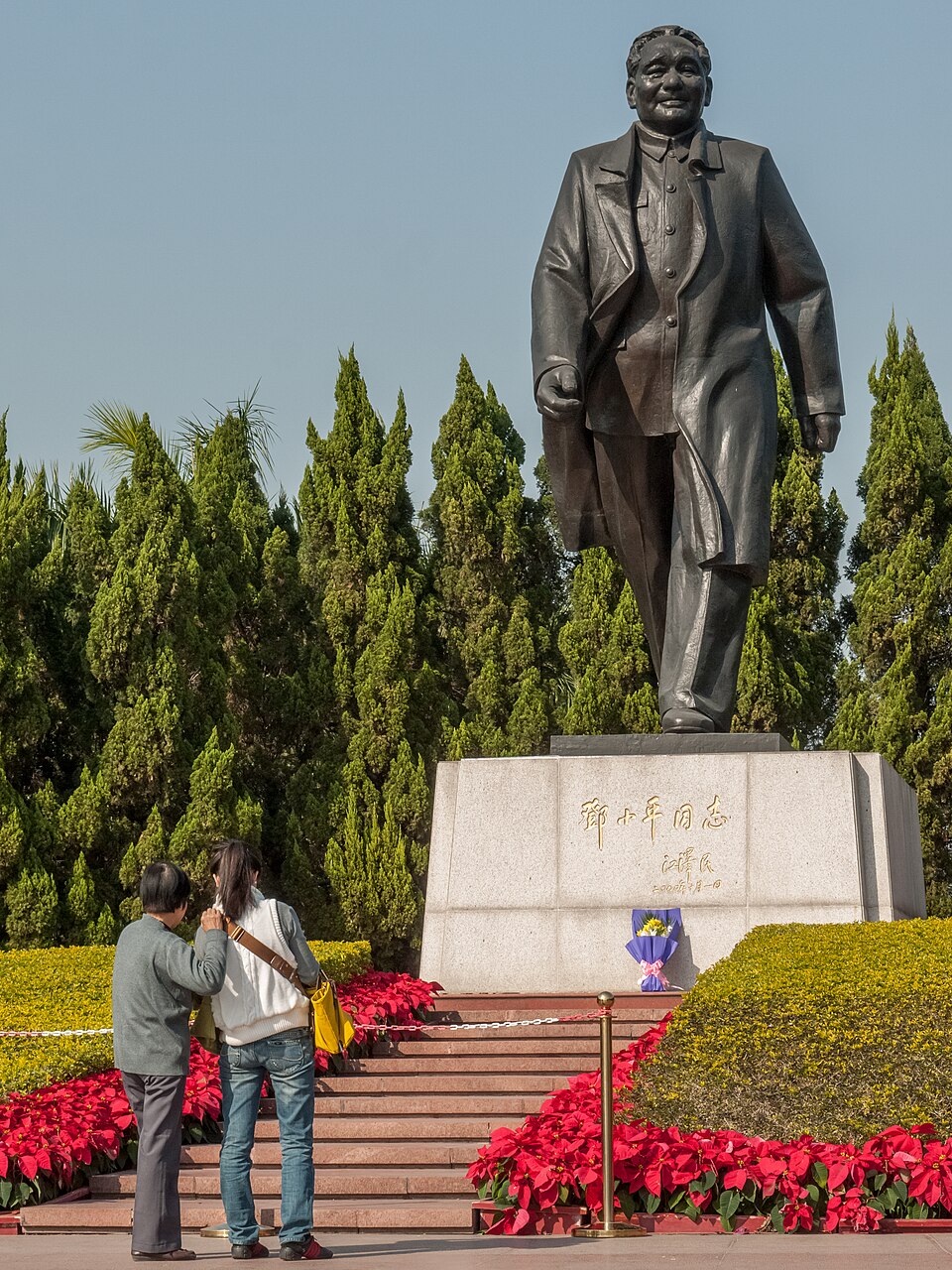
When Deng Xiaoping consolidated power at the Third Plenum of the Eleventh Central Committee in December 1978, China was a country in crisis. The Cultural Revolution (1966–1976) had devastated the economy, destroyed the education system, and traumatized an entire generation. Per capita GDP was approximately $155 — lower than most sub-Saharan African countries. Agricultural output had stagnated despite decades of collectivization, and an estimated 250 million people lived in absolute poverty. Urban workers earned wages that had barely changed since the 1950s, and consumer goods beyond the most basic necessities were virtually unavailable. The planned economy, modeled on the Soviet system, was crippled by inefficiency, waste, and the absence of incentives (Naughton, 2007). The state allocated all resources — capital, labor, raw materials, and finished goods — through an elaborate system of quotas and plans that bore little relationship to actual supply and demand. Factories produced what the plan demanded, regardless of quality or whether anyone wanted the products, and workers received the same pay regardless of effort or output — the system that reformers would later derisively call the "iron rice bowl" (铁饭碗, tiě fànwǎn).
Deng's genius lay not in having a master plan for reform but in his willingness to experiment, adapt, and allow bottom-up innovation to guide policy. His approach was captured in two famous maxims: "It doesn't matter whether the cat is black or white, as long as it catches mice" (不管黑猫白猫,能捉老鼠就是好猫) — a declaration that ideological purity was less important than practical results — and "crossing the river by feeling for stones" (摸着石头过河, mōzhe shítou guò hé) — a metaphor for incremental, experimental reform rather than shock therapy. Unlike the Soviet Union under Gorbachev, which attempted rapid, comprehensive reform and disintegrated, Deng's China reformed gradually, maintaining political stability and state control while progressively introducing market mechanisms (Vogel, 2011). The Communist Party retained its monopoly on political power, its control of the military and security apparatus, and its ability to set the broad direction of economic policy, while progressively loosening its grip on the detailed allocation of resources that characterized the planned economy.
The first and most consequential reform was agricultural decollectivization. Beginning in Anhui province in late 1978, where desperate farmers in the village of Xiaogang secretly divided collective land among individual households — an act of defiance that could have earned them prison sentences — the "household responsibility system" (家庭联产承包责任制) spread rapidly across rural China with tacit and eventually explicit government approval. Under this system, families contracted to deliver a fixed quota of grain to the state at the plan price and were free to sell any surplus on the market at whatever price it would fetch. The incentive effects were immediate and dramatic: grain output increased by over one-third between 1978 and 1984, the most rapid sustained increase in Chinese agricultural history (Naughton, 2007). The success of agricultural reform demonstrated two principles that would guide the entire reform process: first, that Chinese people were capable of extraordinary productivity when given appropriate incentives; and second, that reform could be introduced incrementally, without dismantling existing institutions, by creating new market opportunities alongside the planned economy — a strategy that economists would later call the "dual-track" approach.
"It doesn't matter whether the cat is black or white, as long as it catches mice."
Deng Xiaoping (邓小平)Special Economic Zones: Laboratories of Capitalism
If agricultural reform demonstrated the power of incentives, the Special Economic Zones (SEZs) demonstrated the power of strategic openness. In 1979 and 1980, the Chinese government designated four coastal areas as SEZs: Shenzhen (adjacent to Hong Kong), Zhuhai (adjacent to Macao), Shantou (in northeastern Guangdong), and Xiamen (across the strait from Taiwan). These zones were designed as controlled experiments in market economics and foreign investment — laboratories where capitalist practices could be tested without contaminating the rest of the economy. Enterprises in the SEZs enjoyed preferential tax rates, streamlined bureaucratic procedures, the ability to hire and fire workers, and freedom from many of the regulations that governed economic activity in the rest of China (Vogel, 2011). Foreign companies were invited to establish factories, initially through joint ventures with Chinese partners and later through wholly foreign-owned enterprises, bringing with them not just capital but technology, management expertise, and access to global markets.
Shenzhen's transformation was the most spectacular. In 1979, Shenzhen was a sleepy fishing village of 30,000 people, separated from the glittering towers of Hong Kong by a narrow river and an ideological chasm. By 1990, it was a city of over two million with a GDP that had grown by a factor of fifty. By 2000, it had surpassed five million inhabitants and had become one of China's most productive and innovative cities. The speed and scale of this transformation had no precedent in economic history. Hong Kong manufacturers, facing rising land and labor costs at home, flooded across the border to take advantage of Shenzhen's cheap labor, low taxes, and eager government officials. They brought sewing machines and shoe molds, assembly lines and quality control systems, order books and shipping contacts — everything needed to transform millions of former peasants into factory workers producing goods for the world market (Naughton, 2007). The Shenzhen model — attract foreign investment with preferential policies, use cheap labor to manufacture exports, and reinvest the resulting capital in infrastructure and industrial upgrading — became the template for Chinese economic development, replicated in dozens of cities along the coast and eventually in the interior.
The SEZ experiment was not without controversy. Conservative critics within the Communist Party warned that the zones were breeding grounds for capitalist values, corruption, and social instability — concerns that were not entirely unfounded, as the rapid influx of migrant workers and foreign capital created social disruptions and opportunities for graft that the existing governance structures were ill-equipped to handle. The most dramatic moment came in January 1992, when Deng Xiaoping, then 87 years old and officially retired, undertook his famous "Southern Tour" (南巡, nánxún) to Shenzhen and other southern cities, delivering speeches that emphatically endorsed the SEZ model and called for faster, bolder reform. "If we don't reform, we'll be at a dead end," Deng declared. His tour broke the political logjam that had slowed reform since the Tiananmen Square crisis of 1989 and launched a new wave of market-oriented reform that would accelerate China's integration into the global economy (Vogel, 2011). The SEZs had served their purpose as laboratories — the experiment had succeeded, and now the lessons would be applied nationwide.
Township and Village Enterprises: The Unexpected Engine of Growth
One of the most distinctive and least anticipated features of China's economic transformation was the explosive growth of Township and Village Enterprises (TVEs, 乡镇企业, xiāngzhèn qǐyè) — collectively owned industrial firms in rural areas that became the fastest-growing sector of the Chinese economy during the 1980s and early 1990s. TVEs were not part of any reform blueprint; they emerged organically from the interaction of market opportunities, entrepreneurial energy, and the peculiar institutional landscape of rural China. Under the collective ownership system inherited from the Mao era, township and village governments controlled land, buildings, and other assets that could be repurposed for industrial production. Local officials, incentivized by a fiscal reform that allowed them to retain a share of locally generated tax revenue, became de facto entrepreneurs, establishing factories that produced everything from bricks and textiles to electronics and auto parts (Naughton, 2007). By 1996, TVEs employed over 135 million workers — more than the entire state-owned enterprise sector — and produced roughly one-third of China's industrial output.
The TVE phenomenon puzzled economists because it violated nearly every prescription of standard economic theory. TVEs were collectively owned, not privately owned, yet they behaved competitively and innovatively. They operated in an environment with weak property rights, underdeveloped legal institutions, and pervasive government intervention, yet they generated spectacular growth. The explanation, as the economists Martin Weitzman and Chenggang Xu argued in an influential paper, lay in the specific institutional context of Chinese reform: in an environment where private property rights were politically illegitimate and legally insecure, collective ownership by local governments provided a pragmatic middle ground that gave entrepreneurs enough security to invest while maintaining political acceptability (Weitzman and Xu, 1994). Local government officials had strong incentives to support "their" enterprises because the enterprises generated tax revenue, employment, and political credit — creating an alignment of interests between officials and entrepreneurs that substituted for the formal property rights and contract enforcement that a mature market economy would provide.
The TVE model was inherently transitional, and by the late 1990s, it had largely run its course. As China's legal framework for private enterprise developed and political constraints on private ownership relaxed, many TVEs were privatized — often sold to their managers at below-market prices in a process that enriched local elites and generated significant corruption. Others were merged into larger enterprises or simply shut down as competition from private firms and foreign-invested enterprises intensified. The fiscal reform of 1994, which recentralized tax revenue collection, also reduced the incentives for local governments to support TVEs (Naughton, 2007). By 2000, the TVE sector had shrunk dramatically, and the Chinese economy was increasingly dominated by private firms, state-owned enterprises, and foreign-invested companies. But the TVE episode remains one of the most fascinating chapters in China's economic transformation — a demonstration that economic growth can occur through institutional arrangements that bear little resemblance to the textbook models of capitalist development, and that the path from planned economy to market economy need not follow the script that Western economists prescribed.
"Development is the only hard truth."
Deng Xiaoping, Southern Tour (1992)WTO Accession: China Joins the World
China's accession to the World Trade Organization on December 11, 2001, was the culmination of fifteen years of grueling negotiations and represented the most consequential event in the global economy since the end of World War II. The terms of accession required China to make sweeping commitments to open its markets to foreign competition, reduce tariffs and non-tariff barriers, protect intellectual property rights, and accept the WTO's dispute resolution mechanisms — commitments that went far beyond what most developing countries had accepted and that many Chinese officials and intellectuals regarded as onerous and potentially dangerous. The chief Chinese negotiator, Long Yongtu, later described the process as "the most difficult negotiation in WTO history," and Premier Zhu Rongji's decision to accept terms that many in the Chinese government considered too generous was a calculated gamble that external competitive pressure would accelerate domestic reform (Lardy, 2002). The gamble paid off spectacularly: in the decade following WTO accession, China's exports grew by over 500 percent, foreign direct investment surged, and China became the world's largest exporter — a transformation that earned it the sobriquet "the workshop of the world."
The domestic politics of WTO accession were fierce. Opponents argued that opening China's markets to foreign competition would devastate domestic industries — particularly agriculture, where millions of small-scale farmers would be unable to compete with subsidized American and European agricultural products, and the automotive and financial sectors, where state-owned enterprises would face competition from global giants with vastly superior technology and management expertise. Supporters countered that competitive pressure was exactly what Chinese industries needed to modernize, that access to the global market would create far more jobs than it destroyed, and that WTO membership would provide China with the rules-based framework and dispute resolution mechanisms it needed to protect its interests in the global economy (Lardy, 2002). The debate reflected a fundamental tension within China's reform strategy between the desire to protect domestic industries and the recognition that protection bred inefficiency and corruption. Zhu Rongji and the reformists ultimately prevailed, but they did so by framing WTO accession not as a capitulation to Western demands but as a strategic tool for advancing China's own development agenda — using external rules to drive internal reform that would have been politically impossible to impose domestically.
The impact of WTO accession on the global economy was seismic. The integration of China's enormous labor force — hundreds of millions of workers willing to work for wages that were a fraction of those in developed countries — into the global trading system created what economists call the "China shock": a massive increase in the global supply of manufactured goods that lowered prices for consumers worldwide while devastating manufacturing employment in the United States, Europe, and other developed economies. The economist David Autor and his colleagues estimated that competition from Chinese imports directly eliminated approximately 2.4 million American manufacturing jobs between 1999 and 2011 — a finding that transformed both academic economics and American political discourse (Naughton, 2007). For China, however, the consequences were overwhelmingly positive: the export boom that followed WTO accession generated the revenues that funded massive investments in infrastructure, education, and technology, accelerating China's ascent to great-power status. The question of whether WTO accession was, on balance, good for the global economy — as opposed to good for China and good for consumers but devastating for manufacturing workers in developed countries — remains one of the most contested questions in contemporary economics and politics.
"Cross the river by feeling for the stones."
Chinese reform-era proverb, attributed to Chen Yun (陈云)The Greatest Poverty Reduction in Human History
The most remarkable achievement of China's economic transformation — and the one most often overlooked in Western discussions that focus on trade disputes and geopolitical competition — is the scale of poverty reduction it accomplished. When Deng Xiaoping launched his reforms in 1978, approximately 88 percent of China's population lived below the international poverty line of $1.90 per day (in 2011 purchasing power parity terms). By 2001, the year of WTO accession, this figure had fallen to approximately 40 percent. By 2015, it had fallen to below 1 percent. In absolute numbers, over 800 million Chinese people were lifted out of extreme poverty between 1978 and 2015 — a number that accounts for over 70 percent of the global reduction in extreme poverty during this period (World Bank, 2022). No other country in human history has lifted so many people out of poverty so quickly. This achievement, whatever one's views of the Chinese political system, represents an extraordinary advance in human welfare that deserves recognition and analysis.
The mechanisms of poverty reduction in China were diverse and evolved over time. In the first phase (1978–1985), agricultural reform was the primary driver: decollectivization and the household responsibility system increased agricultural productivity and rural incomes dramatically, lifting hundreds of millions of farmers above the poverty line. In the second phase (1985–2000), industrialization became the main engine, as rural workers migrated to the cities and coastal manufacturing zones in search of higher wages — the largest peacetime migration in human history, involving over 300 million people. In the third phase (2000–2015), continued economic growth was supplemented by increasingly targeted government poverty-alleviation programs, including rural infrastructure investment, education subsidies, healthcare provision, and, under Xi Jinping, a massive "targeted poverty alleviation" (精准扶贫, jīngzhǔn fúpín) campaign that deployed cadres to identify and assist the remaining poor households on an individual basis (Ravallion, 2009). Each phase addressed a different dimension of poverty — agricultural, industrial, and social — and each required different policy instruments and institutional capacities.
The lessons of China's poverty reduction for the rest of the developing world are both inspiring and sobering. The inspiring lesson is that extreme poverty is not an intractable condition but a problem that can be solved through sustained economic growth, strategic government investment, and pragmatic policy experimentation. The sobering lesson is that China's success depended on a unique combination of factors — a strong, capable state; a massive, disciplined labor force; enormous diaspora investment from Hong Kong, Taiwan, and Southeast Asia; a favorable global trading environment; and a political leadership willing to prioritize economic development over ideological purity — that may not be replicable in other contexts. Moreover, China's poverty reduction has been accompanied by a dramatic increase in inequality: the Gini coefficient, a standard measure of income inequality, rose from approximately 0.30 in 1980 to over 0.47 by the early 2000s, making China one of the most unequal societies in Asia (Naughton, 2007). The rapid creation of a vast middle class has been accompanied by the equally rapid creation of a class of billionaires whose wealth rivals that of their American and European counterparts. The question of whether China can sustain its economic growth while reducing inequality — whether it can achieve the "common prosperity" that President Xi has promised — is the central challenge of the next phase of China's economic transformation.
Quiz
What was a key feature of Deng Xiaoping's approach to economic reform?
What was the primary outcome of the agricultural reforms initiated in Anhui province?
What was the purpose of establishing Special Economic Zones (SEZs) in China?
What was a major consequence of China's accession to the WTO?
How did Township and Village Enterprises (TVEs) contribute to China's economic growth?
What was the 'dual-track' pricing system?
What was a concern critics had about the Special Economic Zones?
How did China's poverty levels change from 1978 to 2015?
Write your thoughts, then get feedback from Jason — you can turn any answer into a full discussion.
9. How did the concept of the 'socialist market economy' help China reconcile market reforms with Communist Party rule?
10. What lessons might other developing countries learn from China's approach to poverty reduction?
Frequently Asked Questions
Common questions about From Mao to Market: China's Economic Transformation
How did China transform from a planned economy to a market economy?
China's transformation began in 1978 under Deng Xiaoping's "Reform and Opening Up" policy, which gradually introduced market mechanisms while maintaining state control over strategic sectors. Rather than the "shock therapy" approach used by the Soviet Union, China adopted a gradualist strategy of incremental reforms, starting with agricultural decollectivization and expanding to include Special Economic Zones, private enterprise, and eventually WTO membership in 2001.
What were Deng Xiaoping's economic reforms in China?
Deng Xiaoping's reforms dismantled the collective farming system, allowed private businesses to operate, established Special Economic Zones to attract foreign investment, and decentralized economic decision-making to local governments. His pragmatic approach, famously captured in the phrase "it doesn't matter if a cat is black or white as long as it catches mice," prioritized economic results over ideological purity.
What role did Special Economic Zones play in China's growth?
Special Economic Zones (SEZs), first established in 1980 in cities like Shenzhen, Zhuhai, and Xiamen, served as controlled laboratories for capitalist experimentation within China's socialist system. These zones offered tax incentives, relaxed regulations, and modern infrastructure to attract foreign investment, and their dramatic success provided the template for market reforms that were gradually extended across the entire country.
How many people did China lift out of poverty during its economic reform?
China's economic reforms lifted approximately 800 million people out of extreme poverty between 1978 and 2020, representing the largest and fastest poverty reduction in human history. The country's GDP grew from approximately $150 billion in 1978 to over $17 trillion by the 2020s, transforming China from one of the world's poorest nations into its second-largest economy.
What were the challenges of China's economic transformation?
China's rapid economic transformation created significant challenges including rising income inequality between coastal and inland regions, environmental degradation from industrial expansion, corruption fueled by the intersection of political power and market opportunities, and social disruption as hundreds of millions of rural workers migrated to cities. Balancing continued growth with these social and environmental costs remains one of China's central policy challenges.
The "Socialist Market Economy": Squaring the Ideological Circle
The most intellectually audacious aspect of China's economic reform was the development of a theoretical framework that reconciled market economics with Communist Party rule — a framework that the Party officially adopted in 1992 under the label "socialist market economy" (社会主义市场经济, shèhuì zhǔyì shìchǎng jīngjì). This phrase, which would have been an oxymoron in orthodox Marxist-Leninist theory, represented the Party's pragmatic recognition that markets were not inherently capitalist but could serve socialist goals when guided by state policy and Party leadership. The theoretical groundwork had been laid by reformist economists like Xue Muqiao and Wu Jinglian, who argued that the market was a tool — a mechanism for allocating resources efficiently — that could be employed by any economic system, just as a knife could be used by a chef or a surgeon regardless of their political beliefs (Naughton, 2007). This seemingly simple insight was, in the Chinese political context, genuinely revolutionary, because it separated the question of economic mechanism (plan vs. market) from the question of political system (socialism vs. capitalism), freeing the Party to adopt market mechanisms while maintaining its claim to socialist legitimacy.
The practical implementation of the socialist market economy involved a series of interconnected reforms that progressively dismantled the planned economy while building market institutions. Price reform was perhaps the most consequential: the "dual-track" pricing system, which allowed enterprises to sell above-plan output at market prices while maintaining plan prices for quota output, was gradually tilted toward market prices by reducing quotas and expanding the scope of market transactions. By the mid-1990s, the vast majority of consumer goods and most industrial inputs were priced by the market rather than the plan. Enterprise reform was equally important: state-owned enterprises (SOEs) were given increasing autonomy over production, pricing, and employment decisions, and a program of "grasping the large and releasing the small" (抓大放小, zhuā dà fàng xiǎo) led to the privatization or closure of tens of thousands of small and medium-sized SOEs while consolidating the largest enterprises into national champions in strategic industries (Lardy, 2014). The human cost of SOE reform was enormous: an estimated 40 to 60 million workers were laid off from state-owned enterprises during the 1990s, losing not just their jobs but the housing, healthcare, pensions, and social services that the "work unit" (单位, dānwèi) system had provided. This was the hidden cost of China's economic miracle.
The creation of market-supporting institutions was a massive undertaking that is still incomplete. Banking reform transformed the People's Bank of China from a combined central bank and commercial bank into a modern central bank, while establishing four large state-owned commercial banks (the "Big Four") that, despite persistent problems with non-performing loans and political lending, provided the financial infrastructure for economic growth. Legal reform produced a Company Law (1993), a Securities Law (1998), and a Contract Law (1999) that provided basic legal frameworks for corporate governance, capital markets, and commercial transactions — frameworks that were often honored more in the breach than the observance but that represented enormous progress from the legal vacuum of the Mao era (Naughton, 2007). Tax reform, labor reform, housing reform, and social security reform followed in rapid succession, each addressing a different dimension of the transition from planned to market economy. The sheer scope and speed of institutional transformation was without precedent — China was not just reforming an economy but building one, constructing in two decades the institutional infrastructure that Western economies had developed over two centuries.