
Podcast


Podcast: Confucian Business Ethics: Virtue, Trust, and the Merchant's Dilemma
Listen to Jason & Amy discuss Confucian Business Ethics: Virtue, Trust, and the Merchant's Dilemma
New here?
The Merchant's Dilemma: Profit vs. Virtue in Classical Chinese Thought
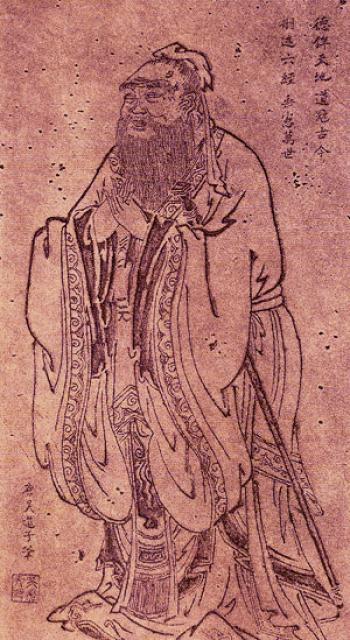
The relationship between commerce and morality in Chinese thought has been fraught since the very beginning of China's philosophical tradition. Confucius himself rarely discussed trade directly, but his emphasis on moral cultivation, social hierarchy, and the subordination of personal gain to collective harmony created a framework that was deeply suspicious of commercial activity. The traditional Chinese social hierarchy — the "four occupations" (四民, sìmín) — ranked scholars (士, shì) first, farmers (农, nóng) second, artisans (工, gōng) third, and merchants (商, shāng) last. This ranking reflected a moral judgment: scholars served the state through wisdom, farmers through labor, and artisans through skill, but merchants produced nothing and merely profited from the exchange of others' products (Yu, 2016). The great Confucian thinker Mencius (372–289 BCE) sharpened this moral critique, arguing that the pursuit of profit (利, lì) was fundamentally opposed to the pursuit of righteousness (义, yì): "Why must Your Majesty speak of profit?" he famously challenged King Hui of Liang. "I have only righteousness and benevolence to offer."
This anti-commercial bias in Confucian thought had profound consequences for Chinese economic history. Throughout the imperial period, merchants were subject to discriminatory sumptuary laws that prohibited them from wearing silk, riding horses, or displaying other markers of high status. Their sons were frequently barred from sitting for the civil service examinations, the primary route to social advancement and political power. Successful merchants were expected to invest their wealth in land and education, aiming to transform their families from commercial into scholarly households within a generation or two — a pattern that sociologists call "status conversion" (Yu, 2016). The ideal trajectory was encapsulated in the proverb "the merchant's grandson reads books" (商人之孙读书, shāngrén zhī sūn dúshū), reflecting the expectation that wealth earned through trade should be invested in the Confucian education that would elevate the family into the gentry class. This pattern had the economic effect of continuously draining capital out of commerce and into land and education, which some historians argue inhibited the development of sustained capitalist accumulation in China.
Yet the reality of Chinese economic life was far more complex than the Confucian hierarchy suggested. Despite their low official status, merchants in imperial China built enormous commercial empires, developed sophisticated financial instruments, and created business networks that spanned the entire country and extended across East and Southeast Asia. The tension between the Confucian disdain for commerce and the economic necessity of commercial activity created what historians call the "merchant's dilemma" — the challenge of pursuing profit while maintaining moral legitimacy in a culture that regarded profit-seeking as inherently suspect (Brook, 1998). The resolution of this dilemma, as we shall see, produced some of the most innovative and distinctive features of Chinese business culture, including the concept of the "Confucian merchant" (儒商, rúshāng) who combined commercial success with moral cultivation and social responsibility.
"The superior person understands righteousness; the petty person understands profit."
Confucius, Analects (论语)The Shanxi Bankers: Proving That Merchants Could Be Virtuous

No group in Chinese history more thoroughly refuted the Confucian prejudice against merchants than the Shanxi bankers (晋商, Jìnshāng) — the remarkable network of financial entrepreneurs from the northern province of Shanxi who created China's first nationwide banking system and dominated Chinese finance for over five centuries. The Shanxi merchants rose to prominence during the Ming dynasty (1368–1644), initially as traders in salt, grain, and tea along the northern frontier, where they provisioned military garrisons in exchange for government salt monopoly licenses. By the Qing dynasty, they had evolved from commodity traders into sophisticated financial operators, establishing the piaohao (票号, draft banks) that provided remittance services, credit facilities, and currency exchange across the entire Chinese empire (Huang, 2001). At their peak in the nineteenth century, the Shanxi piaohao handled the majority of government fiscal transfers, maintained branch offices in every major Chinese city and several foreign countries, and managed financial flows of a scale that rivaled the great banking houses of Europe.
What distinguished the Shanxi bankers from other Chinese merchant groups was not merely their commercial success but the elaborate ethical framework within which they operated. The Shanxi banking culture placed extraordinary emphasis on trust (信, xìn), righteousness (义, yì), and personal integrity (德, dé) — Confucian virtues that the bankers explicitly adopted as business principles. The piaohao operated on a system of unlimited personal liability: the owner's entire personal fortune guaranteed the bank's obligations, creating a powerful incentive for prudent management. Employees were selected through rigorous personal evaluations that weighed moral character as heavily as commercial ability, and they were bound by strict codes of conduct that prohibited gambling, opium use, excessive drinking, and visits to brothels (Huang, 2001). The punishment for violating these codes was instant dismissal and permanent exclusion from the Shanxi banking network — a devastating sanction in a culture where professional reputation was everything. This system of internalized ethical controls, enforced by community sanctions rather than legal mechanisms, enabled the Shanxi banks to operate across vast distances with minimal fraud or default for over two centuries.
The physical legacy of the Shanxi bankers is visible today in the magnificent courtyard houses (大院, dàyuàn) that still stand in towns like Pingyao, Qixian, and Taigu — architectural monuments to commercial wealth that are now UNESCO World Heritage sites and major tourist attractions. These compounds, with their intricate wood carvings, painted eaves, and fortress-like walls, were designed to display the wealth and taste of their merchant owners while also expressing Confucian values of family solidarity, filial piety, and cultural refinement. The courtyards were organized according to strict hierarchical principles, with the patriarch's quarters at the center and subsidiary buildings radiating outward in order of familial rank — a physical embodiment of the Confucian family order that the merchants regarded as the foundation of their business success (Yu, 2016). The Shanxi bankers demonstrated that the "merchant's dilemma" could be resolved not by abandoning Confucian values but by embracing them more fully than any scholar or official — by proving that commercial success and moral virtue were not contradictory but complementary, and that the merchant class could exemplify the Confucian ideals of righteousness, trust, and social responsibility that the scholarly elite claimed as their exclusive domain.
Yi and Li: Righteousness and Profit in Chinese Commercial Ethics
The central tension in Chinese business ethics has always been the relationship between yi (义, righteousness) and li (利, profit) — a tension that Confucian thinkers debated for centuries and that remains unresolved in contemporary Chinese business culture. The orthodox Confucian position, associated with Mencius, held that yi and li were fundamentally opposed: a virtuous person pursued righteousness without regard for personal gain, and the pursuit of profit inevitably corrupted moral character. This position was challenged by the Legalist school, which argued that self-interest was the primary driver of human behavior and that effective governance required harnessing rather than suppressing the profit motive. The most nuanced position was articulated by the Confucian thinker Xunzi (310–235 BCE), who argued that yi and li were not inherently contradictory but that yi must always take precedence: profit pursued within the bounds of righteousness was legitimate, but profit pursued at the expense of righteousness was destructive (Yu, 2016).
This Xunzian synthesis — profit is acceptable as long as it is pursued righteously — became the implicit ethical framework of the most successful Chinese merchant groups. The great merchant guilds of the Ming and Qing dynasties, including the Shanxi bankers, the Huizhou merchants of Anhui, and the Ningbo merchants of Zhejiang, all articulated versions of this principle in their guild regulations, business codes, and family instructions. The Huizhou merchants, in particular, developed a sophisticated ethical discourse that explicitly reconciled Confucian virtue with commercial activity, arguing that commerce was a legitimate form of service to society — that feeding the people through trade was as meritorious as governing them through administration (Brook, 1998). Their guild halls (会馆, huìguǎn), found in commercial centers throughout China, served as both business associations and moral communities, providing commercial services, mediating disputes, and enforcing ethical standards among their members. The inscription above the entrance to many guild halls — "以义取利" (yǐ yì qǔ lì, "to obtain profit through righteousness") — encapsulated the ethical ideal that the most admired Chinese merchants aspired to embody.
The practical implications of the yi-li ethic extended to every aspect of commercial conduct. Honest dealing was not merely a business strategy but a moral obligation: merchants who sold adulterated goods, used false weights and measures, or broke their word were not just bad businesspeople but bad people, deserving of social ostracism and divine punishment. The concept of xinyong (信用, creditworthiness or trustworthiness) captured this fusion of moral and commercial reputation — a merchant with high xinyong was both morally upright and commercially reliable, and the two qualities were understood as inseparable (Zelin, 2009). Commercial oaths, guild regulations, and family instructions all reinforced this equation, threatening dishonest merchants with supernatural punishments — typically formulated as the extinction of one's family line — as well as earthly sanctions of fines, expulsion, and loss of reputation. This ethical infrastructure, maintained by community enforcement rather than state regulation, created a remarkably effective system of commercial governance that enabled Chinese merchants to conduct business over vast distances with high levels of trust and low levels of fraud — a premodern achievement that modern economists, with their theories of institutional trust and transaction costs, are only beginning to appreciate.
"Obtain profit through righteousness; use profit to benefit the world."
Huizhou merchant guild inscription (徽商会馆)Weber's Ghost: Confucian Ethics and the Capitalist Spirit
No discussion of Confucian business ethics can avoid reckoning with Max Weber's influential thesis that Confucianism was fundamentally hostile to capitalist development. In his 1915 work The Religion of China: Confucianism and Taoism, Weber argued that while the Protestant ethic had created the psychological preconditions for capitalism in Europe — particularly the notion of work as a "calling" and the systematic, rational pursuit of profit — Confucianism had inhibited capitalist development in China by promoting adjustment to the world rather than mastery over it, by valuing humanistic cultivation over technical specialization, and by embedding economic activity within a web of personal relationships that prevented the development of impersonal market institutions (Weber, 1951). Weber's thesis was enormously influential in Western scholarship, providing an intellectual framework for explaining why the Industrial Revolution occurred in Europe rather than China — even though China had been the world's largest and most commercially sophisticated economy for most of recorded history.
Weber's thesis has been subjected to devastating criticism from multiple directions over the past century. Historians of China have demonstrated that Weber's understanding of Confucianism was superficial, based largely on Western translations and secondary sources, and that he fundamentally mischaracterized both Confucian attitudes toward commerce and the actual commercial practices of imperial China. The economic historian Yu Ying-shih, in a landmark series of studies, showed that from the Song dynasty onward, Chinese Confucian thinkers had developed a sophisticated pro-commercial discourse that explicitly revalued the merchant's role in society and argued that commercial activity could be a vehicle for moral cultivation (Yu, 2016). The sociologist S. Gordon Redding, studying overseas Chinese entrepreneurs in Southeast Asia, demonstrated that Confucian values of thrift, hard work, family solidarity, and long-term relationship-building were not obstacles to capitalist development but powerful enablers of it — a finding that echoed the broader East Asian economic miracle of the late twentieth century (Redding, 1993). The spectacular economic growth of Japan, South Korea, Taiwan, Singapore, and eventually mainland China — all societies deeply influenced by Confucian culture — effectively refuted Weber's empirical prediction, even if the theoretical debate continues.
The most productive way to engage with Weber's thesis today is not to ask whether Confucianism promotes or inhibits capitalism but to ask how Confucian values shape the distinctive character of Chinese capitalism — how they influence the kinds of firms that Chinese entrepreneurs build, the ways they manage relationships with employees, customers, and the state, and the balance they strike between profit maximization and social responsibility. From this perspective, Confucian business ethics are neither a relic of the past nor a simple analogue of the Protestant ethic but a living tradition that continues to evolve and to shape economic behavior in distinctive ways. The emphasis on relationships over contracts, on trust over legal enforcement, on long-term reputation over short-term gain, and on the moral obligations of wealth — these Confucian themes remain powerful forces in contemporary Chinese business culture (Redding, 1993). Understanding them is essential not only for doing business in China but for understanding the emerging Chinese model of capitalism that is increasingly shaping the global economy.
The Modern Revival: Confucian Business Ethics in Contemporary China
After decades of suppression during the Mao era, when Confucianism was denounced as a feudal ideology and merchants were classified as class enemies, Confucian business ethics have experienced a remarkable revival in reform-era China. This revival has been driven by multiple forces: the search for an indigenous ethical framework to replace the discredited Marxist-Leninist morality of the Mao era; the desire to differentiate Chinese capitalism from its Western counterpart; the practical recognition that trust, relationships, and ethical conduct are valuable business assets; and the Chinese government's strategic promotion of Confucianism as a source of cultural soft power and social stability. Since the early 2000s, "Confucian merchant" (儒商, rúshāng) has become an aspirational identity for Chinese business leaders, who study the Confucian classics, attend Confucian academies, and invoke Confucian principles in their corporate philosophies and public statements (Bell, 2008). Major Chinese corporations, including Haier, Huawei, and Alibaba, have explicitly incorporated Confucian values into their management systems and corporate cultures.
The most visible manifestation of this revival is the proliferation of "national studies" (国学, guóxué) programs and Confucian business academies that cater to Chinese executives and entrepreneurs. These programs, offered by prestigious universities and private institutions alike, combine the study of classical Confucian texts — the Analects, the Mencius, the Great Learning, the Doctrine of the Mean — with modern management theory and practical business case studies. Participants, who typically pay substantial fees for the privilege, read the ancient texts in classical Chinese, discuss their application to contemporary business challenges, and network with fellow executives in a setting that blends traditional Chinese culture with modern professional development. The popularity of these programs reflects a genuine hunger among Chinese business leaders for a moral framework that can guide their decisions in an era of rapid change, intense competition, and pervasive ethical ambiguity (Bell, 2008). Critics argue that the "Confucian merchant" identity is often more performative than substantive — a form of cultural capital that executives deploy for status and networking rather than a genuine commitment to ethical conduct — but even the performance of Confucian values creates social expectations that have real effects on behavior.
The future of Confucian business ethics in China is closely tied to the broader question of what kind of capitalism China is building. The Chinese model has always differed from Anglo-American capitalism in its emphasis on state guidance, long-term planning, and the subordination of individual profit maximization to national development goals — all of which resonate, to varying degrees, with Confucian principles of hierarchical order, collective harmony, and the moral obligations of those who hold power. The concept of "common prosperity" (共同富裕, gòngtóng fùyù), promoted by the Xi Jinping government since 2021, explicitly invokes the Confucian ideal that wealth should serve the common good rather than individual accumulation (Yu, 2016). Whether this rhetoric translates into genuine policy — and whether Confucian business ethics can provide a meaningful counterweight to the pressures of global competition, shareholder expectations, and the relentless logic of profit maximization — remains an open question. What is clear is that the conversation between Confucian ethics and commercial practice, which began over two thousand years ago when Confucius warned against the pursuit of profit, is far from over.
"A person without trust cannot stand; an enterprise without trust cannot thrive."
Chinese commercial proverb (商谚)Global Implications: What the World Can Learn from Confucian Business Ethics
The global financial crisis of 2008 and the subsequent series of corporate scandals, from Enron to Wirecard, have prompted renewed interest in alternative ethical frameworks for business — frameworks that might supplement or correct the shareholder-value maximization model that has dominated Western business thinking since the 1970s. Confucian business ethics, with their emphasis on stakeholder relationships, long-term orientation, moral cultivation, and the social obligations of wealth, offer a compelling alternative that is not merely theoretical but has been tested in practice over millennia. The concept of "harmony between righteousness and profit" (义利合一, yì lì héyī) — the idea that sustainable business success requires the alignment of profit-seeking with ethical conduct and social responsibility — anticipates by centuries the modern Western concepts of stakeholder capitalism, corporate social responsibility, and ESG (Environmental, Social, and Governance) investing (Yu, 2016). The Confucian framework goes further than these Western concepts, however, in arguing that ethical conduct is not merely instrumental — not just a means to long-term profitability — but an end in itself, a dimension of human excellence that gives meaning and dignity to commercial activity.
The Confucian emphasis on trust as the foundation of commercial relationships also offers lessons for a global economy in which institutional trust is increasingly fragile. In an era of algorithmic trading, anonymous digital transactions, and supply chains that span dozens of countries, the question of how to create and maintain trust between parties who may never meet face to face is one of the central challenges of contemporary commerce. The Confucian answer — that trust is built through sustained personal relationships, demonstrated through consistent ethical behavior over time, and maintained through reciprocal obligations that transcend any individual transaction — is not directly applicable to the impersonal transactions of modern global finance, but it points toward a fundamental truth that modern economic theory often obscures: that markets do not function on the basis of rational self-interest alone but require a substrate of social trust that is built and maintained through moral practice (Redding, 1993). The extraordinary success of Chinese business networks across East and Southeast Asia, which have been built primarily on guanxi-based trust rather than formal legal institutions, provides empirical evidence for this claim.
The dialogue between Confucian and Western business ethics is not a competition to determine which tradition is superior but an opportunity for mutual enrichment. Western business ethics, with their emphasis on individual rights, transparency, rule of law, and institutional accountability, address real and important concerns that Confucian ethics have historically underemphasized — concerns about the rights of individuals against the collective, the need for impartial institutions that are not dependent on personal relationships, and the dangers of a system in which trust is concentrated in personal networks rather than distributed through transparent processes. Conversely, Confucian business ethics highlight dimensions of commercial life that Western ethics have often neglected — the importance of relationships, the moral significance of reciprocity and obligation, the value of long-term orientation over quarterly earnings, and the idea that commercial activity should serve human flourishing rather than merely shareholder value (Bell, 2008). In an era when the inadequacies of both the Western and Chinese business models are increasingly apparent, a genuine synthesis of these two great ethical traditions might offer the best hope for creating a global economy that is both prosperous and humane.
Quiz
What is the 'merchant's dilemma' as described in the article?
What was the role of the Shanxi bankers in Chinese history?
How did the Shanxi bankers reconcile Confucian values with business practices?
What does the phrase 'the merchant's grandson reads books' signify?
Which Confucian thinker argued that profit and righteousness are not inherently contradictory?
What was Max Weber's thesis about Confucianism and capitalism?
How has Confucian business ethics been revived in contemporary China?
What is the significance of 'harmony between righteousness and profit' in Confucian business ethics?
Write your thoughts, then get feedback from Jason — you can turn any answer into a full discussion.
9. Why do you think the Shanxi bankers were able to maintain high levels of trust in their business operations?
10. How might Confucian business ethics influence global business practices today?
Frequently Asked Questions
Common questions about Confucian Business Ethics: Virtue, Trust, and the Merchant's Dilemma
How did Confucianism influence Chinese business ethics?
Confucianism shaped Chinese business ethics by emphasizing virtues such as ren (benevolence), yi (righteousness), and xin (trustworthiness) as the foundation of commercial conduct. Merchants were expected to balance profit-seeking with moral responsibility, maintaining fair dealings and contributing to social harmony rather than pursuing wealth at the expense of others.
Why were merchants ranked low in traditional Chinese society?
In the Confucian social hierarchy, merchants were ranked at the bottom of the four traditional occupations (scholars, farmers, artisans, merchants) because they were seen as profiting from the labor of others without producing tangible goods. This ranking reflected the belief that commerce, while necessary, was morally inferior to scholarly pursuit, agriculture, and craftsmanship.
What is the Confucian concept of yi in business?
Yi (义) means righteousness or moral duty, and in a business context it refers to the obligation to conduct commerce ethically and fairly, even when dishonesty might be more profitable. Chinese merchant guilds historically enforced codes of conduct based on yi, punishing members who engaged in fraud, price manipulation, or other practices that violated collective moral standards.
How do Confucian values affect modern Chinese companies?
Many modern Chinese companies explicitly draw on Confucian principles to shape their corporate culture, emphasizing hierarchical respect, long-term relationship building, and collective responsibility over individual achievement. Companies like Huawei and Alibaba have incorporated Confucian-inspired values into their management philosophies, blending traditional ethics with contemporary business practices.
What is the merchant's dilemma in Confucian philosophy?
The merchant's dilemma refers to the tension between the Confucian ideal of virtuous, selfless conduct and the practical reality that commerce requires profit-seeking and competitive behavior. Throughout Chinese history, successful merchants navigated this tension by engaging in philanthropy, funding education, and demonstrating moral cultivation to earn social respectability despite their low official status.