
Mandarin Temple is a Chinese-learning platform built around the HSK 3.0 syllabus — the standard used by the official exams. This article is the five-minute version: what is inside, who each part is for, and which door to walk through first. Nothing here needs an account to read, and most of what it describes can be tried without one.
The short version
Three things sit side by side, and people arrive for different ones.
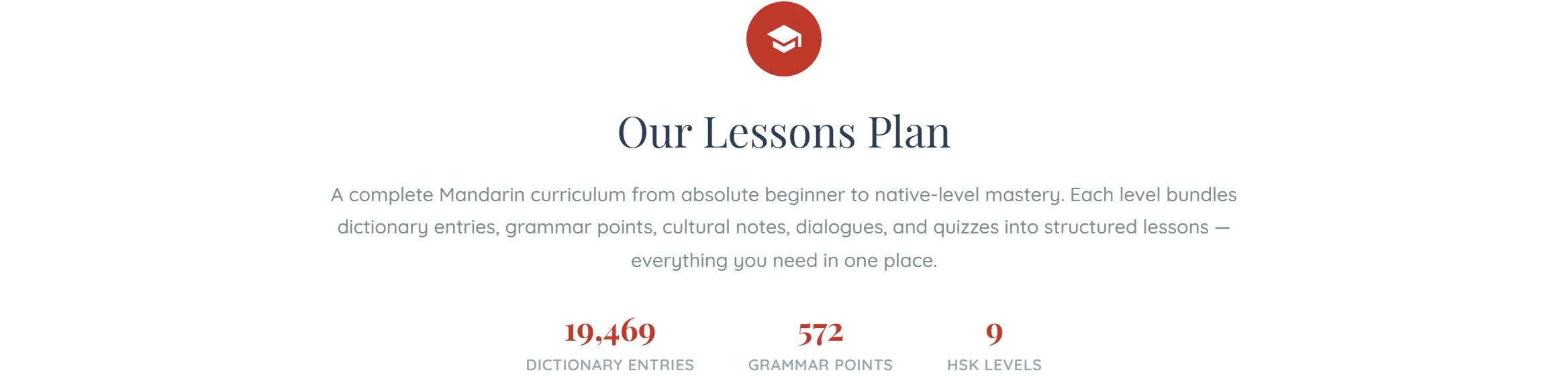
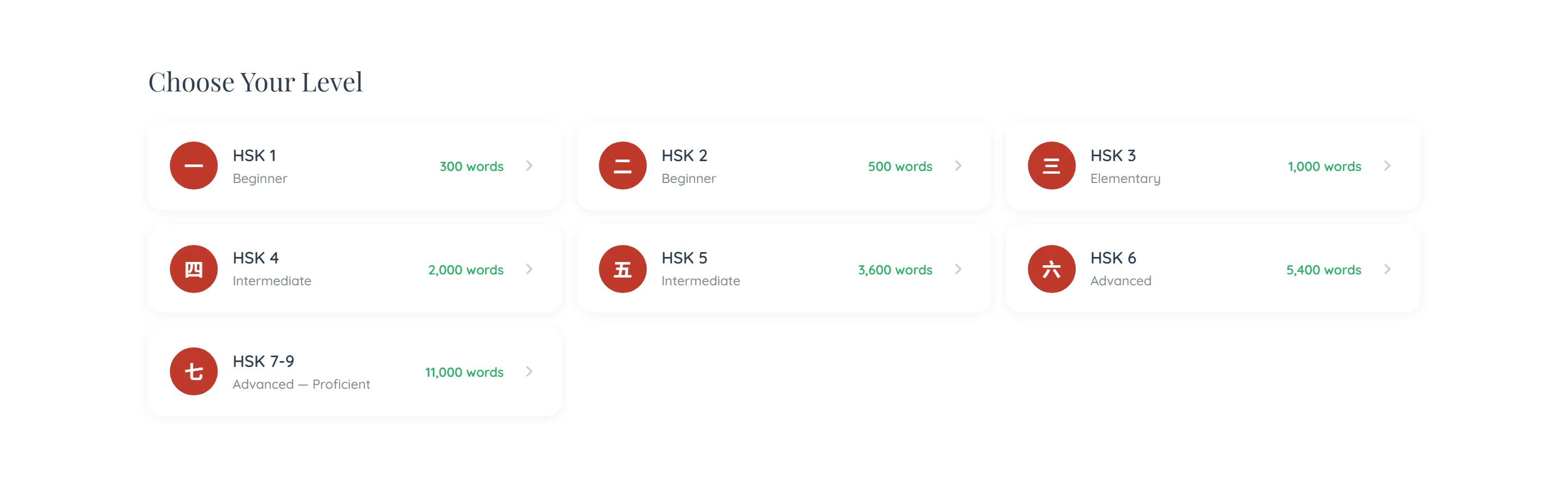
A reference: a dictionary of 21,000+ entries with pinyin, stroke order, example sentences and audio, 12,000+ of them banded to an HSK 3.0 level. A course: structured lessons from HSK 1 to the HSK 7–9 band, each with vocabulary, grammar, dialogue, practice and an end-of-unit exam. And a place to practise: flashcards on a spaced-repetition schedule, four skill studios for listening, reading, writing and speaking, and an AI tutor you can talk to.
On top of that sit the accounts that other people manage for you — a tutor running a circle, a parent following a child, a school onboarding a cohort. Those change who can see your progress, and nothing else.
Everything is aligned to HSK 3.0
This is the part that makes the rest usable. Every dictionary entry carries an HSK 3.0 band, and every piece of generated content — lesson dialogue, reading passage, listening script, writing prompt — is checked against the vocabulary you are supposed to know at that level before it is published.
The practical effect: an HSK 2 reading passage does not quietly contain HSK 5 words. You are never asked to guess at something the course has not taught you, and a lesson that says it is HSK 3 really is.
The study loop
Most of the product is arranged around one repeating cycle. You do not have to follow it, but everything is built assuming you might.
- Find your level — Take the placement test, or just pick a level if you already know it. Everything downstream is shaped by this answer, and it can be changed later.
- Work through a lesson — A lesson is dialogue, vocabulary, grammar, cultural context and practice. Sections tick off as you complete them, and the unit ends with an exam.
- Practise between lessons — New words go into flashcards on a spaced-repetition schedule, so review comes back to you at the point you are about to forget it.
- Use the four studios — Reading, listening, writing and speaking each have their own space, with material at your level rather than generic drills.
- Watch it accumulate — Checkpoints, XP and streaks build a picture of what you have actually done — which is also what a tutor or a parent sees, if you have one.
Who each part is for
The same corpus is presented differently depending on the account. This is worth knowing before you sign up, because picking the wrong account type is the most common thing people write to us about.
- Learning on your own — A standard account. Free covers the dictionary, grammar, culture and the first part of every lesson; Pro unlocks the rest. See what Pro unlocks.
- Teaching — A tutor account adds circles, homework and a view of what each learner did between lessons. Start at the tutor directory.
- A parent — A parent account holds child profiles, gives each child their own login, and shows you their progress — with limits on what you can see, by design.
- A school — An institution account onboards tutors and students in bulk, manages seats, and reports at cohort level. See institutions.
What costs money
Two separate things, and conflating them is the source of most billing questions.
A plan is a subscription. It unlocks content — the full body of every lesson, the exams, the studios. AI credits are consumed per use by the features that call a live model on your behalf: the tutor conversations, generated practice, feedback on your writing. A plan comes with credits; running out of credits does not lock you out of the content you are paying for.
Where to start
If you are new to Chinese entirely, take the placement test and then work through Orientation Day — a single day of short guided walkthroughs that your study plan puts before the HSK path begins. It introduces one surface at a time instead of dropping you into all of them at once.
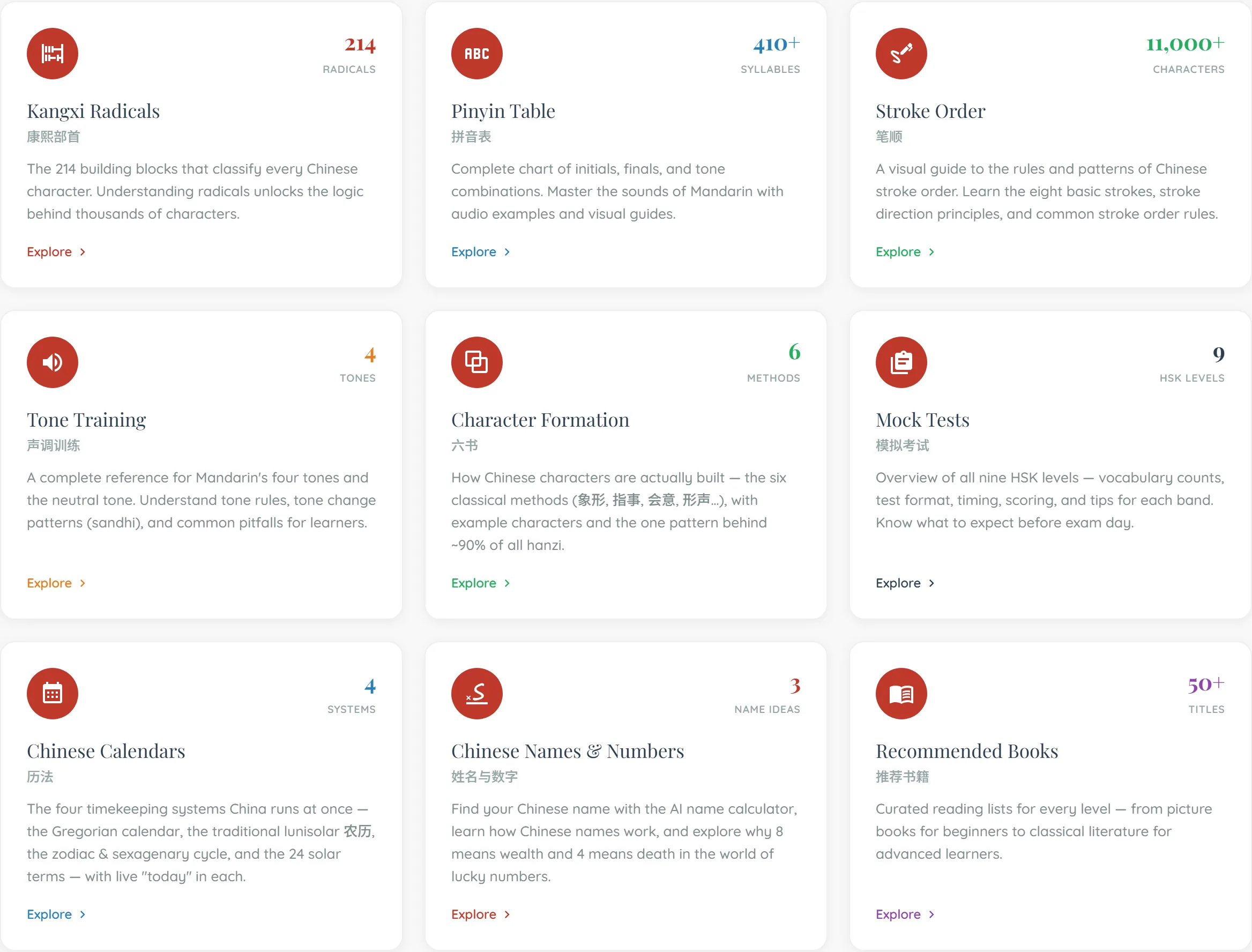
If you already study Chinese and came for a specific tool, go straight to it. The dictionary and grammar sections need no account at all.
Common questions
No. The dictionary, grammar points, culture articles and learning materials are open to everyone, with no sign-up. An account is needed for anything that remembers you — lessons and progress, flashcard scheduling, the studios, and anything involving a tutor, parent or school.