

September 24, 2026 · 星期四
Double Happiness
喜· to be fond of

 Today’s episode with Jason & Amy
The character 喜 is central to 囍, symbolizing joy and fondness in Chinese culture.
秋分 divides autumn in half, bringing day and night once more into perfect balance. After it the nights grow longer and the chill deepens, while golden fields ripen toward the great autumn harvest.
Now celebrated as China's Farmers' Harvest Festival, and children traditionally try 竖蛋 (standing eggs on end), as at the spring equinox.
Double Happiness
喜xǐ
In Chinese culture, the character 囍 (xǐ), meaning 'double happiness,' holds significant cultural importance, especially in the context of weddings. The character is a ligature composed of two 喜 (xǐ) characters, symbolizing harmony and joy in a matrimonial union. It is commonly seen on red paper cutouts, invitations, and decorations at wedding ceremonies, reflecting the shared happiness that the couple and their families experience during this joyous occasion[1].
The use of 囍 is deeply rooted in tradition and carries auspicious meanings beyond just weddings. In broader terms, it represents a wish for prosperity, harmony, and lasting happiness. The character is often used in various cultural contexts to invoke positive feelings and blessings, making it a popular motif in art, embroidery, and home decor. The repetition of 喜 in 囍 emphasizes the idea of abundance, doubling the joy and good fortune anticipated by those involved.
Today's Chinese word, 喜, which means 'to be fond of,' is an integral part of the character 囍. This connection highlights the importance of joy and fondness in relationships and life's celebrations. When people see the character 囍 at a wedding, it is a reminder of the happiness and love that should permeate the union and the lives of those gathered to celebrate[2].
The character 喜 is central to 囍, symbolizing joy and fondness in Chinese culture.
今天是个喜日子。
Jīntiān shì gè xǐ rìzi.
Today is a joyful day.
- [1] The Book of Rites (《礼记》), a classic Confucian text that includes details on traditional ceremonies.
- [2] The Chinese Wedding Ceremony by Qian, a well-known book on the customs and significance of Chinese weddings.
Jason & Amy on 喜
Podcast: Dragon Daily: Double Happiness — and the word 喜
Jason & Amy on Double Happiness and 喜
New here?
September 24, 2026
Today's notable Chinese figures and achievements highlight contributions in archaeology and film history.
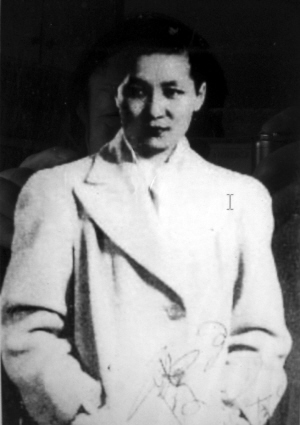
John Dowen / Wikimedia Commons (Public domain) source Birth of Esther Eng, pioneering film director
Esther Eng was a Chinese-American film director born in 1914. She was among the first female directors in Chinese cinema and worked on both Cantonese-language films and productions in the United States.
Eng's work bridged cultural gaps and promoted Chinese cinema internationally.
Read moreDeath of Wang Zhongshu, renowned archaeologist 王仲殊
Wang Zhongshu, a respected Chinese archaeologist, passed away in 2015. He made significant contributions to the study of ancient Chinese culture and archaeology, particularly in his research on the Han and Tang dynasties.
Wang's work remains a cornerstone in understanding China's archaeological history.
Read more
我喜欢猫。
Wǒ xǐhuān māo.
I like cats.
The word 喜 is used to express liking something.
这个电影很受欢迎。
Zhège diànyǐng hěn shòu huānyíng.
This movie is very popular.
The sentence shows how 喜 connects to fondness and popularity.
他的笑容充满了喜悦。
Tā de xiàoróng chōngmǎnle xǐyuè.
His smile was full of joy.
喜 is used in a more emotional context, showing joy.
生活的喜怒哀乐都值得珍惜。
Shēnghuó de xǐ nù āi lè dōu zhídé zhēnxī.
The joys and sorrows of life are all worth cherishing.
喜 is used abstractly to refer to the emotional spectrum of life.
The use of 喜 in expressions of fondness
喜欢 + noun/verb
The verb 喜欢 is used to indicate a fondness or liking for something or someone.
Use 喜欢 when expressing personal preferences or interests.
我喜欢吃苹果。
Wǒ xǐhuān chī píngguǒ.
I like eating apples.
她喜欢看书。
Tā xǐhuān kàn shū.
She likes reading books.
他们喜欢听音乐。
Tāmen xǐhuān tīng yīnyuè.
They like listening to music.
What does 喜 mean?
How is 喜 pronounced?
How do you write "to be fond of" in Chinese?
Listen. What does the sentence mean?
今天是个___日子。(Today is a ___ day.)
我很喜欢这本书。 — What does this sentence mean?
What does the character 囍 symbolize in Chinese weddings?
Arrange into a correct sentence
Who was a pioneering female director in Chinese cinema?
What was Wang Zhongshu known for?
Frequently asked questions about the word 喜
You can say '我喜欢这个' (Wǒ xǐ huān zhè ge), meaning 'I like this.'
Generally, 喜 consistently conveys happiness or fondness, but its intensity can vary depending on other words paired with it.
Yes, 喜 is commonly used in everyday conversation and is essential for expressing preferences.
Chinese Learner’s Horoscope
Your sign’s reading for today, written for learners.
Find your sign
The Chinese zodiac assigns each birth year one of twelve animals, each paired with an element that colours its character. Yours shapes a reading written for learners.
- Your sign and its elementOne of twelve animals on a 12-year cycle
- A daily affirmationFresh every morning, never repeated
- A learning horoscopeWhat to study today, and when
- A lucky characterWith pinyin, meaning and a study tip
Your birth date
Saved on this device — used only to work out your zodiac sign.
Today's Mandarin word: 喜 (xǐ) — to be fond of.
Learn it on Mandarin Temple's Dragon Daily 🐉