

September 20, 2026 · 星期日
The Butterfly Lovers
蝴蝶· butterfly

 Today’s episode with Jason & Amy
The butterfly, or 蝶, in Chinese culture symbolizes love and transformation, as shown in the legend of the Butterfly Lovers.
白露 is named for the glistening dew that beads on grass and leaves as cool nights condense the air's moisture. The temperature gap between day and night widens sharply, and a clear autumn crispness sets in.
In some regions people brew "白露 tea" or rice wine, and gather ten kinds of white-named herbs to make a nourishing tonic.
The Butterfly Lovers
蝴蝶hú dié
The tale of the Butterfly Lovers (梁祝, Liáng Zhù) is a cherished legend in Chinese culture, often likened to a Chinese Romeo and Juliet. The story tells of Zhu Yingtai, a young woman who disguises herself as a man to attend school, where she meets Liang Shanbo. The two develop a deep friendship, which blossoms into love. However, due to societal constraints, Zhu is betrothed to another, leading to a tragic end where both lovers die and are transformed into butterflies, forever united in their love[1].
This poignant legend is celebrated in various art forms, including opera, film, and music, illustrating its enduring influence on Chinese culture. The story's central theme of transformation and unity is beautifully symbolized by the butterfly (蝶, dié). Butterflies, often seen fluttering in pairs, are a universal symbol of love and transformation, making them a fitting metaphor for the eternal bond between the lovers. This connection is particularly poignant in Chinese culture, where the butterfly represents not only love but also the soul's journey and metamorphosis.
The Butterfly Lovers' narrative has inspired countless adaptations over the years. A notable example is the violin concerto named after the legend, which is a staple in the repertoire of many musicians worldwide. This piece captures the emotional depth and tragic beauty of the story through its haunting melody and evocative themes, further cementing the legend's place in global cultural consciousness. The story of Liang and Zhu continues to resonate, reminding us of the power of love and the beauty of transformation, much like the delicate yet enduring butterfly[2].
The butterfly, or 蝶, in Chinese culture symbolizes love and transformation, as shown in the legend of the Butterfly Lovers.
蝴蝶象征爱情。
Húdié xiàngzhēng àiqíng.
Butterflies symbolize love.
- [1] 《梁祝》, a classic Chinese opera adaptation of the Butterfly Lovers legend.
- [2] 《梁祝小提琴协奏曲》, a violin concerto inspired by the Butterfly Lovers, composed by He Zhanhao and Chen Gang.
Jason & Amy on 蝶
Podcast: Dragon Daily: The Butterfly Lovers — and the word 蝶
Jason & Amy on The Butterfly Lovers and 蝶
New here?
September 20, 2026
Today features notable figures in the realms of sports and exploration with a connection to China.
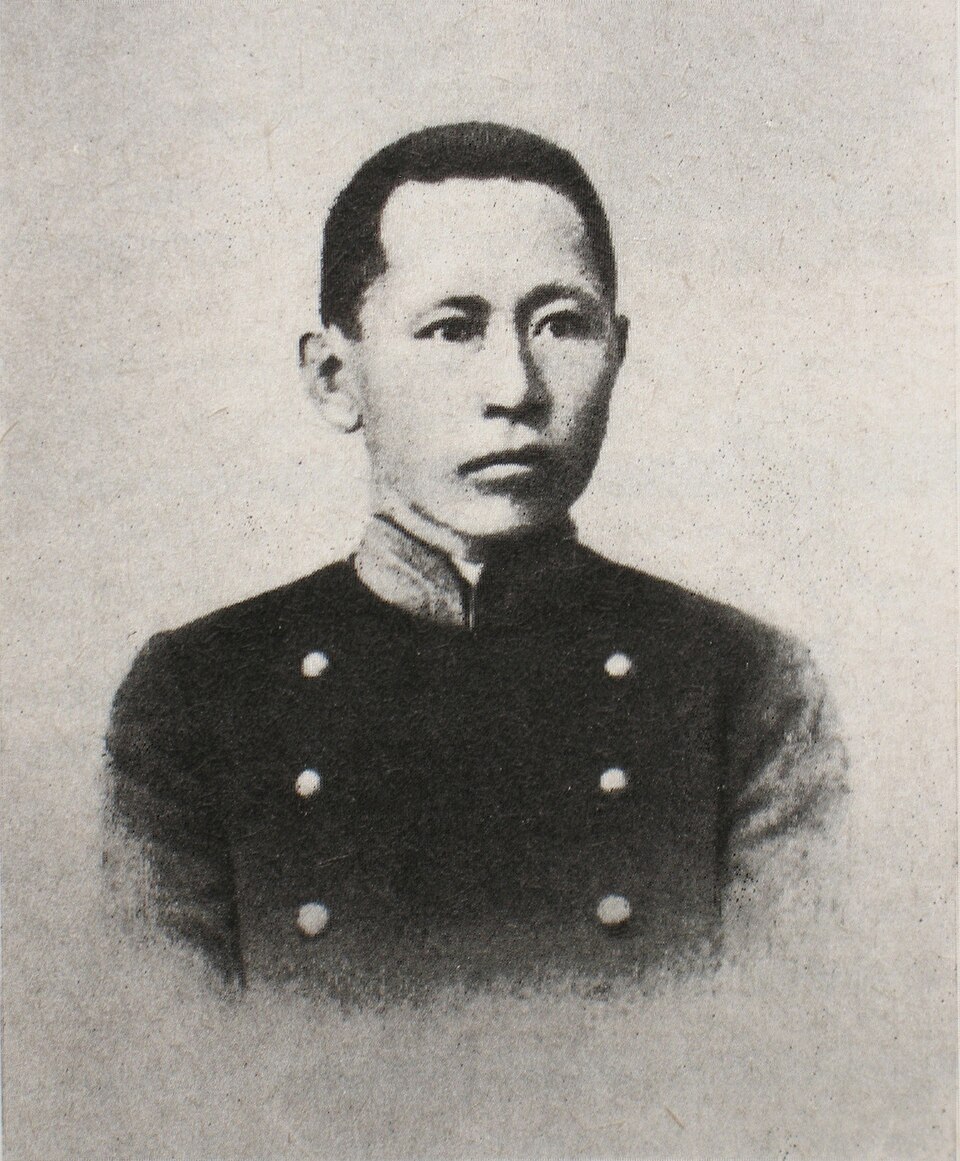
Unknown author Unknown author / Wikimedia Commons (Public domain) source Death of Gombojab Tsybikov, Explorer and Anthropologist
Gombojab Tsybikov, a Russian anthropologist and explorer renowned for his travels in Asia, passed away in 1930. His detailed studies brought insights into the cultural and geographic features of the regions he explored, including parts of China.
Tsybikov's work contributed to the understanding of Asian cultures and landscapes during a time of burgeoning exploration.
Read more
All-Pro Reels / Wikimedia Commons (CC BY-SA 2.0) sourcelicence Birth of Kyle Anderson, Basketball Player 凯尔·安德森
Kyle Anderson, an American-Chinese basketball player, was born in 1993. Known for his versatility on the court, Anderson became a key player in both the NBA and Chinese basketball, showcasing the growing influence of Chinese talent in international sports.
Anderson's career illustrates the global reach and cross-cultural connections in modern basketball.
Read more
我看到一只蝶。
Wǒ kàn dào yī zhī dié.
I saw a butterfly.
This sentence uses 蝶 to mean 'butterfly'.
蝴蝶很美丽。
Húdié hěn měilì.
Butterflies are beautiful.
The word 蝴蝶 refers to 'butterflies', showing their beauty.
两只蝴蝶在飞。
Liǎng zhī húdié zài fēi.
Two butterflies are flying.
This sentence illustrates the movement of butterflies.
蝴蝶象征着变化。
Húdié xiàngzhēngzhe biànhuà.
Butterflies symbolize change.
Here, 蝴蝶 symbolizes transformation and change.
Verb + 着 (zhe) pattern
Verb + 着 + Object
The pattern Verb + 着 indicates a continuous or ongoing action in Mandarin.
Use this pattern to describe actions that are still happening.
他看着书。
Tā kànzhe shū.
He is reading a book.
她笑着说话。
Tā xiàozhe shuōhuà.
She talks while smiling.
孩子们玩着游戏。
Háizimen wánzhe yóuxì.
The children are playing games.
What does 蝶 mean?
How is 蝶 pronounced?
How do you write "butterfly" in Chinese?
Listen. What does the sentence mean?
天空中飞着___。(Butterflies are flying in the sky.)
蝴蝶在花园飞 — What does this sentence mean?
What do butterflies symbolize in the legend of the Butterfly Lovers?
Arrange into a correct sentence
What sport is Kyle Anderson associated with?
Which explorer passed away in 1930?
Frequently asked questions about the word 蝶
The correct pronunciation is 'dié' with a rising tone.
It's best used in poetic or literary contexts; for casual conversations, use more common terms for insects.
Common phrases include '蝴蝶效应' (butterfly effect) and '蝴蝶梦' (butterfly dream).
Chinese Learner’s Horoscope
Your sign’s reading for today, written for learners.
Find your sign
The Chinese zodiac assigns each birth year one of twelve animals, each paired with an element that colours its character. Yours shapes a reading written for learners.
- Your sign and its elementOne of twelve animals on a 12-year cycle
- A daily affirmationFresh every morning, never repeated
- A learning horoscopeWhat to study today, and when
- A lucky characterWith pinyin, meaning and a study tip
Your birth date
Saved on this device — used only to work out your zodiac sign.
Today's Mandarin word: 蝶 (dié) — butterfly.
Learn it on Mandarin Temple's Dragon Daily 🐉