
Podcast


Podcast: The Mid-Autumn Festival: Mooncakes, Chang'e, and Family Reunion
Listen to Jason & Amy discuss The Mid-Autumn Festival: Mooncakes, Chang'e, and Family Reunion
New here?
The Legend of Chang'e and Hou Yi
The mythological foundation of the Mid-Autumn Festival rests upon one of Chinese literature's most poignant love stories: the tale of Chang'e and Hou Yi. According to the version preserved in the Huainanzi, a Han dynasty compendium of philosophy and mythology, Hou Yi was a legendary archer of extraordinary skill who saved humanity by shooting down nine of ten suns that had appeared simultaneously in the sky, threatening to scorch the earth. As a reward for this heroic act, the Queen Mother of the West bestowed upon him an elixir of immortality. However, Hou Yi chose not to consume it, preferring mortal life with his beloved wife Chang'e. The elixir was hidden away, but fate intervened when Chang'e — whether by accident, to prevent a villain from stealing it, or out of curiosity depending on the version — swallowed the elixir and floated upward to the moon, where she remains to this day (Birrell, 1993). The narrative carries profound resonance because it addresses universal themes of sacrifice, separation, and longing that transcend cultural boundaries.
Scholars such as Anne Birrell have traced the evolution of the Chang'e myth across centuries of Chinese literary tradition, noting how the story shifted from its earliest forms in which Chang'e was portrayed somewhat negatively — as a wife who betrayed her husband's trust — to later versions that cast her in a far more sympathetic light as a tragic heroine who sacrificed her earthly happiness to protect the elixir from falling into the wrong hands (Birrell, 1993). This transformation reflects broader changes in Chinese attitudes toward women and romantic love across different dynasties. During the Tang dynasty, poets such as Li Shangyin wrote verses lamenting Chang'e's loneliness on the moon, transforming her from a mythological figure into a symbol of solitary beauty and unfulfilled longing. The image of the jade rabbit, said to keep Chang'e company on the moon by pounding the elixir of immortality in a mortar, adds a layer of gentle companionship to an otherwise melancholy tale, and this motif appears frequently in Chinese decorative arts from the Han dynasty onward.
The companion figure of Wu Gang, condemned to eternally chop at a self-healing cassia tree on the moon, adds another dimension to the lunar mythology. His story, recorded in the Youyang Zazu by Duan Chengshi during the Tang dynasty, represents a Sisyphean punishment that resonates with Daoist ideas about the futility of certain human endeavors. Together, these lunar inhabitants — Chang'e, the jade rabbit, and Wu Gang — form a rich mythological tableau that has inspired countless paintings, operas, poems, and folk songs throughout Chinese history. The enduring power of these stories is evident in their continued relevance; China's lunar exploration program named its spacecraft Chang'e, demonstrating how ancient mythology remains woven into the fabric of modern Chinese identity and aspiration (Eberhard, 1986).
The Full Moon as Symbol of Reunion
The practice of moon worship in China predates the Mid-Autumn Festival by millennia. Archaeological evidence and textual references in the Zhouli (Rites of Zhou) describe autumn sacrifices to the moon conducted by the Zhou dynasty aristocracy, establishing a precedent for what would eventually become a popular festival (Eberhard, 1986). The full moon of the eighth lunar month holds special significance because it typically coincides with the autumn equinox and the end of the harvest season, making it a natural occasion for thanksgiving and celebration. In the agricultural calendar that governed traditional Chinese life, this was a moment of abundance — granaries were full, the summer heat had broken, and the moon appeared at its largest and brightest, hanging low and golden on the horizon. The convergence of these natural phenomena created an ideal setting for communal celebration and reflection.
The conceptual link between the full moon and family reunion is deeply embedded in the Chinese language itself. The word for "round" (圆, yuán) is phonetically and semantically connected to "reunion" (团圆, tuányuán), creating a linguistic resonance that reinforces the festival's central theme. When families gather to admire the full moon on the fifteenth of the eighth month, they are participating in a metaphorical enactment of wholeness and completeness — the round moon mirrors the round table at which the family sits, and the round mooncakes they share (Eberhard, 1986). This symbolic logic extends to those who cannot be present; the shared act of gazing at the same moon from different locations provides a poetic connection across distance. Su Shi's famous Song dynasty ci poem "Shuidiao Getou" captures this sentiment perfectly: gazing at the moon from a distant posting, he consoles himself with the thought that even separated families share the same moonlight. This poem has become inseparable from the festival itself, recited and sung at Mid-Autumn gatherings for nearly a thousand years.
The transformation of the Mid-Autumn Festival from an aristocratic and agricultural rite into a popular family holiday occurred gradually during the Song dynasty (960–1279), a period of unprecedented urbanization and commercial development in Chinese history. Meng Yuanlao's Dongjing Menghua Lu, a nostalgic memoir of life in the Northern Song capital of Kaifeng, describes the city's elaborate Mid-Autumn celebrations in vivid detail: shops decorated with silk flowers, night markets bustling until dawn, families feasting on rooftops and river boats while gazing at the moon (Kang, 1999). The festival's emphasis on family reunion made it especially poignant for officials serving far from home, merchants traveling the empire's trade routes, and soldiers stationed at distant frontiers. Over time, the emotional weight of the occasion intensified, and the Mid-Autumn Festival became second only to the Spring Festival (Chinese New Year) in its importance as a time for family gathering, a status it retains in contemporary Chinese society.
"May we all be blessed with longevity, though thousands of miles apart, sharing the beauty of the moon."
Su Shi, "Shuidiao Getou" (1076 CE)Mooncakes: History, Varieties, and Legends
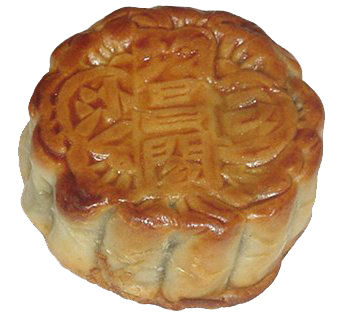
The mooncake (月饼, yuèbǐng) is the quintessential food of the Mid-Autumn Festival, and its history is as layered as the pastry itself. While round cakes offered to the moon are mentioned in Song dynasty sources, the mooncake as we know it — a dense pastry with elaborate fillings, often stamped with decorative designs — appears to have achieved its mature form during the Ming dynasty. The most famous legend associated with mooncakes involves their alleged role in the overthrow of Mongol Yuan dynasty rule in 1368. According to this popular tale, the rebel leader Liu Bowen (or in some versions, Zhu Yuanzhang himself) devised a plan to coordinate an uprising by hiding messages inside mooncakes, which were then distributed to Han Chinese households (Kang, 1999). The messages instructed recipients to revolt on the night of the Mid-Autumn Festival. While historians generally regard this story as apocryphal — a patriotic legend that gained currency during the later Ming period — it speaks to the mooncake's deep symbolic importance and its association with Chinese identity and solidarity.
The regional diversity of mooncakes across China reflects the country's extraordinary culinary geography. Cantonese-style mooncakes (广式月饼), perhaps the most internationally recognizable variety, feature a thin, glossy golden crust and rich fillings such as lotus seed paste with salted egg yolks — the yolks symbolizing the full moon. Suzhou-style mooncakes (苏式月饼) are characterized by their flaky, multi-layered pastry crust, achieved through a laborious process of folding dough with lard, and often contain savory meat fillings. Beijing-style mooncakes (京式月饼) tend to be lighter and less sweet, with a distinctive sesame-studded crust. Chaoshan-style mooncakes from the Teochew region feature a spiraling flaky pastry and fillings of taro paste or mung bean (Anderson, 1988). More recently, creative modern interpretations have proliferated: ice cream mooncakes, snow skin mooncakes with mochi-like wrappers, and even mooncakes filled with chocolate, matcha, or durian have appeared, particularly in Hong Kong, Taiwan, and Singapore, where innovation in mooncake flavors has become an annual competition among luxury hotels and bakeries.
The culture of mooncake gifting has become one of the most commercially significant aspects of the Mid-Autumn Festival. In contemporary China, mooncakes function not only as food but as social currency — elaborate gift boxes containing premium mooncakes are exchanged between business associates, given to clients, and presented to superiors as tokens of respect. The packaging has become increasingly lavish, with mooncakes sold in boxes that may include fine tea, wine, or even jewelry, leading to periodic government crackdowns on excessive mooncake gifting as a form of hidden bribery (Kang, 1999). The environmental impact of this packaging excess has also drawn criticism, prompting sustainability-minded campaigns to reduce waste. Despite these modern complications, the simple act of sharing mooncakes around a table while gazing at the autumn moon retains its emotional power. Many families still prize homemade mooncakes prepared from recipes passed down through generations, and the annual ritual of cutting a mooncake into precisely equal slices — one for each family member, with extra portions set aside for absent loved ones — remains a deeply moving expression of familial love and continuity.
Lanterns, Riddles, and Moon-Gazing Customs
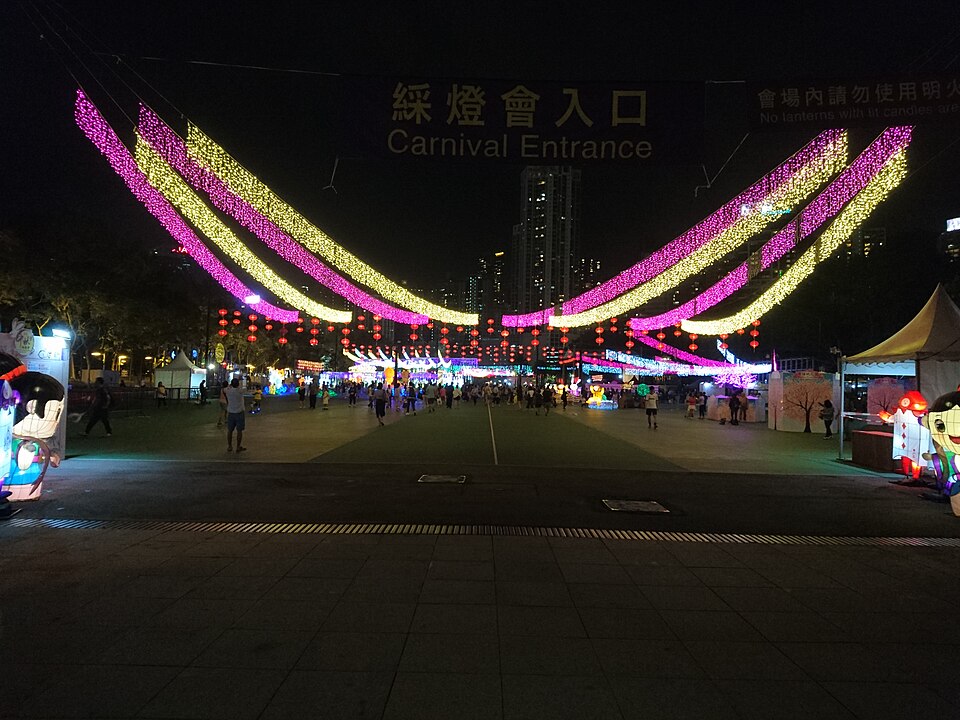
While mooncakes dominate the culinary dimension of the Mid-Autumn Festival, the visual spectacle of the celebration is defined by lanterns. Children carrying colorful lanterns through the streets is one of the festival's most iconic images, particularly in southern China and among overseas Chinese communities in Southeast Asia. The tradition of Mid-Autumn lanterns is distinct from the Lantern Festival (元宵节) held on the fifteenth of the first lunar month; Mid-Autumn lanterns tend to be smaller, more delicate, and carried by hand rather than displayed in large installations. Traditional lanterns were crafted from bamboo frames covered with paper or silk, shaped into forms of animals, flowers, or mythological figures such as the jade rabbit. In Guangdong province and Hong Kong, the tradition of lighting lanterns on hillsides and in public parks creates a dreamlike landscape of flickering lights that mirrors the stars above (Stepanchuk and Wong, 1991). The lanterns serve both decorative and symbolic functions: their light represents hope and illumination, and the act of carrying them through the darkness echoes the moon's role as a guiding light.
Lantern riddles (灯谜, dēngmí) add an intellectual dimension to the festival's celebrations. Riddles are written on slips of paper and attached to lanterns; participants attempt to solve them, with small prizes awarded for correct answers. This tradition, which gained popularity during the Song dynasty, reflects the Chinese cultural emphasis on wordplay, literary allusion, and the pleasure of intellectual challenge. The riddles often exploit the tonal nature of Mandarin Chinese and the multiple meanings of characters, creating puzzles that require both linguistic knowledge and lateral thinking. A classic Mid-Autumn riddle might describe the moon through metaphor and homophone, leading the solver through layers of meaning to arrive at the answer (Stepanchuk and Wong, 1991). In modern celebrations, lantern riddle competitions remain popular at temple fairs, community centers, and school events, preserving a form of entertainment that predates electronic media by nearly a millennium. The communal nature of riddle-solving — groups of friends and family members debating possible answers — reinforces the festival's emphasis on togetherness.
Moon-gazing (赏月, shǎngyuè) is the contemplative heart of the Mid-Autumn Festival. Unlike the boisterous celebrations of the Spring Festival, the Mid-Autumn Festival has a quieter, more reflective quality. Families set up tables in courtyards, on balconies, or in gardens, arranging offerings of fruit — particularly pomelos, which are in season and whose round shape echoes the moon — along with incense and mooncakes. The practice of "worshipping the moon" (拜月, bàiyuè) historically involved women and girls making wishes for beauty, marriage, and children, reflecting the moon's association with feminine qualities in Chinese cosmology (the moon being yin to the sun's yang). In the Tang dynasty, the emperor held elaborate moon-viewing banquets at which poets competed to compose the finest verses in honor of the autumn moon, establishing a literary tradition that produced some of Chinese poetry's most celebrated works. Today, while formal moon worship has largely faded, the custom of spending the evening outdoors admiring the moon with family endures, and in cities where light pollution obscures the night sky, families may drive to the countryside or visit parks specifically to experience the full moon in its undiminished splendor (Eberhard, 1986).
"The moon shines brightest at Mid-Autumn; during every festival one thinks doubly of family."
Traditional folk sayingRegional Celebrations Across Greater China
The Mid-Autumn Festival manifests differently across China's diverse regions, each locality adding its own customs and flavors to the shared celebration. In Fujian province, the tradition of "moon cake gambling" (博饼, bódǐng) transforms the festival into an exuberant game of chance. Originating, according to legend, from Zheng Chenggong's (Koxinga's) efforts to boost troop morale during the siege of Taiwan in the seventeenth century, the game involves rolling six dice in a porcelain bowl, with different combinations corresponding to different prizes ranked according to the imperial examination system — from xiucai (scholar) to zhuangyuan (top scholar). The clatter of dice in bowls echoes through Xiamen's streets and offices throughout the Mid-Autumn period, and companies organize elaborate bódǐng tournaments with prizes ranging from household goods to electronics. This uniquely Fujianese tradition has spread to Taiwan, where it has become equally popular, demonstrating how regional customs can travel with migrating populations (Stepanchuk and Wong, 1991).
In Hong Kong and Guangdong, the festival is marked by spectacular displays at Victoria Park and other public spaces, where thousands of lanterns create luminous installations depicting mythological scenes and contemporary themes. The Tai Hang Fire Dragon Dance, recognized by UNESCO as intangible cultural heritage, is a Hong Kong tradition dating to the 1880s in which a 67-meter dragon studded with lit incense sticks dances through the narrow streets of the Tai Hang neighborhood over three nights. The origin story involves villagers who performed the fire dragon dance to ward off a plague, and the tradition has been maintained continuously ever since (Kang, 1999). In Vietnam, where the festival is known as Tết Trung Thu, the celebration has evolved with a particular emphasis on children, who parade with colorful lanterns shaped like stars, fish, and butterflies. Lion dances, rather than dragon dances, dominate the Vietnamese celebration, and traditional mooncakes differ from their Chinese counterparts, often featuring sticky rice flour wrappers and green bean or durian fillings. Korean Chuseok, Japanese Tsukimi, and other East Asian harvest moon festivals share common roots with the Chinese Mid-Autumn Festival, though each has developed its own distinct character over centuries of independent cultural evolution.
In Taiwan, the Mid-Autumn Festival has acquired a distinctive modern tradition: outdoor barbecuing. Beginning in the 1980s, partly driven by clever marketing campaigns by soy sauce companies, families began setting up grills in front of their homes, on rooftops, and in parks, transforming the festival from a contemplative moon-gazing occasion into a communal cookout. This practice, which has no historical precedent in traditional Mid-Autumn customs, has become so deeply ingrained that many young Taiwanese now consider barbecuing an essential part of the festival, demonstrating how traditions can be invented and naturalized within a single generation (Anderson, 1988). The smoke from countless grills rising into the autumn night air, mingling with the glow of lanterns and the laughter of families, creates a uniquely Taiwanese festive atmosphere. Meanwhile, in mainland China's rapidly modernizing cities, the festival has become an occasion for commercial spectacle, with shopping malls, hotels, and tech companies vying to create the most impressive mooncake gift boxes and Mid-Autumn promotional events, while simultaneously the government promotes the festival as an important element of Chinese intangible cultural heritage worthy of preservation and respect.
Modern Celebrations and Cultural Continuity
The Mid-Autumn Festival's designation as a national public holiday in mainland China in 2008 marked an official recognition of its cultural importance after decades in which traditional festivals were viewed with ambivalence by the state. This policy shift reflected a broader turn toward cultural heritage preservation in Chinese governance, as authorities recognized that traditional festivals serve as anchors of social cohesion and national identity in an era of rapid modernization. The three-day holiday allows millions of workers to travel home for family reunions, creating one of the year's largest domestic migration events, second only to the Spring Festival travel rush (春运, chūnyùn). High-speed rail networks and expanded airline routes have made these journeys faster and more comfortable than ever before, fundamentally altering the experience of the festival for mobile populations who might previously have spent the holiday in lonely contemplation of a distant moon (Kang, 1999). The emotional significance of the journey home — the anticipation, the crowded stations, the moment of arrival — has become a central part of the modern festival experience, documented and shared extensively on social media.
Digital technology has transformed Mid-Autumn traditions in ways that would astonish previous generations while simultaneously preserving their emotional essence. WeChat and other messaging platforms see enormous spikes in activity during the festival, as users send digital red envelopes, share photographs of their mooncakes and moon-gazing setups, and video-call family members who cannot be physically present. Augmented reality apps allow users to "release" virtual lanterns into the night sky, creating shared digital spectacles visible to other users in the same area. E-commerce platforms offer an overwhelming variety of mooncakes for delivery anywhere in China within hours, enabling the tradition of mooncake gifting to transcend geographical limitations entirely (Stepanchuk and Wong, 1991). Yet these technological innovations exist alongside enduring analog traditions: grandmothers still tell the story of Chang'e to wide-eyed grandchildren, families still set up offering tables under the autumn sky, and the simple pleasure of biting into a mooncake while gazing at the luminous full moon remains as satisfying as it was a thousand years ago.
The Mid-Autumn Festival has also become an important vehicle for the international promotion of Chinese culture. Chinese communities around the world — in San Francisco's Chinatown, London's Soho, Sydney's Haymarket, and hundreds of other locations — organize public celebrations that introduce the festival to non-Chinese audiences. Mooncakes have gained global recognition as a specialty food item, available in Asian supermarkets and increasingly in mainstream grocery stores during the autumn season. The festival's themes of family reunion, gratitude for the harvest, and contemplation of beauty resonate across cultural boundaries, making it one of the most accessible entry points for those seeking to understand Chinese culture (Eberhard, 1986). International organizations and diplomatic missions frequently host Mid-Autumn receptions, using the festival as an occasion for cultural exchange. In this way, the Mid-Autumn Festival continues to evolve while maintaining its essential character: a night when the moon is full, families are together, mooncakes are shared, and the ancient legends of Chang'e and the jade rabbit live on in the stories told under the autumn sky.
"Raising my head, I gaze at the bright moon; lowering my head, I think of my hometown."
Li Bai, "Quiet Night Thought" (Tang dynasty)Quiz
What is the central theme of the Mid-Autumn Festival as described in the article?
Which legendary figure is associated with the Mid-Autumn Festival?
What does the word 'yuán' (圆) symbolize in the context of the Mid-Autumn Festival?
What does the jade rabbit do in the legend associated with Chang'e?
What aspect of the Mid-Autumn Festival has become commercially significant in modern times?
Which region is known for the tradition of 'moon cake gambling' during the Mid-Autumn Festival?
What modern tradition has become associated with the Mid-Autumn Festival in Taiwan?
What is one of the main reasons the Mid-Autumn Festival was recognized as a national public holiday in China?
Write your thoughts, then get feedback from Jason — you can turn any answer into a full discussion.
9. Why do you think the story of Chang'e has remained a significant part of the Mid-Autumn Festival across centuries?
10. How might the symbolic meaning of the full moon influence family gatherings during the Mid-Autumn Festival?
Frequently Asked Questions
Common questions about The Mid-Autumn Festival: Mooncakes, Chang'e, and Family Reunion
When is the Mid-Autumn Festival and why is it celebrated?
The Mid-Autumn Festival falls on the fifteenth day of the eighth lunar month, usually in September or October, when the moon is at its fullest and brightest. It celebrates family reunion, the harvest, and the legend of Chang'e, the moon goddess, making it one of the most emotionally significant holidays in the Chinese calendar.
What is the legend of Chang'e and the Mid-Autumn Moon?
According to Chinese mythology, Chang'e was the wife of the archer Hou Yi, who shot down nine of ten suns to save the earth from scorching heat. After swallowing an elixir of immortality, Chang'e floated up to the moon where she has lived ever since, accompanied only by a jade rabbit, and the Mid-Autumn Festival honors her eternal vigil.
What are mooncakes and what flavors do they come in?
Mooncakes are round pastries traditionally eaten during the Mid-Autumn Festival, symbolizing completeness and family reunion through their circular shape. Classic fillings include lotus seed paste with salted egg yolk, red bean paste, and five-kernel mix, though modern variations now feature flavors like matcha, chocolate, ice cream, and even durian.
Why are mooncakes given as gifts during the Mid-Autumn Festival?
Exchanging mooncakes is a central social custom of the Mid-Autumn Festival, expressing goodwill, gratitude, and the desire for togetherness. The tradition dates back centuries and carries both personal warmth and professional significance, as businesses commonly gift elaborate mooncake boxes to clients and partners as a gesture of respect.
How did mooncakes play a role in the overthrow of the Mongol Yuan dynasty?
According to popular legend, rebel leaders during the late Yuan dynasty hid secret messages inside mooncakes to coordinate an uprising against Mongol rule on the night of the Mid-Autumn Festival. While historians debate the accuracy of this story, it has become one of the most celebrated tales in Chinese folk history, adding a layer of patriotic symbolism to the humble mooncake.