
Podcast


Podcast: Sun Tzu and The Art of War: Strategy as Philosophy
Listen to Jason & Amy discuss Sun Tzu and The Art of War: Strategy as Philosophy
New here?
The Enigmatic Strategist
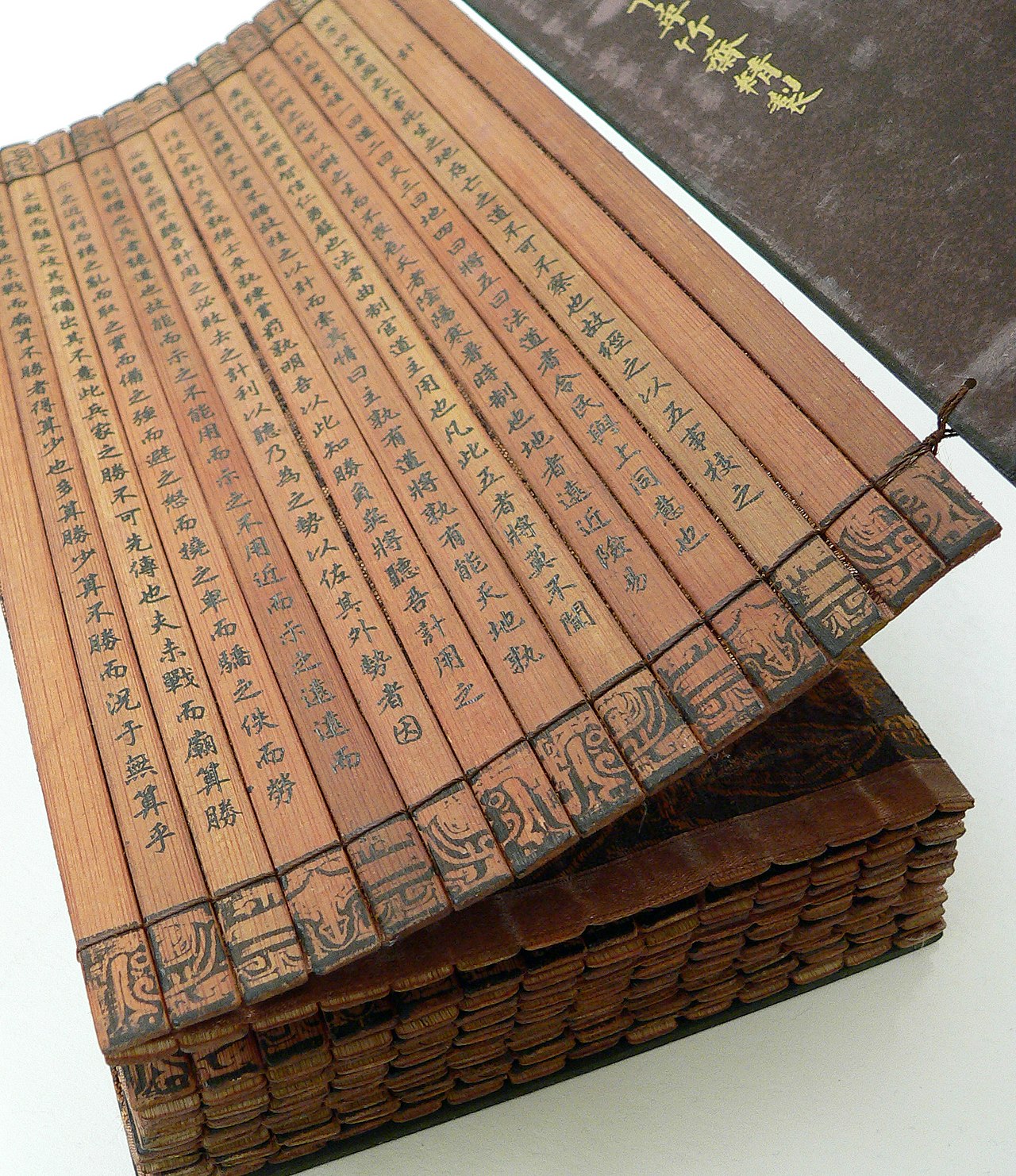
Sun Tzu (Sunzi, 孙子, literally "Master Sun") is the honorific title of Sun Wu, a military strategist traditionally said to have served the King of Wu in the late sixth century BCE. According to Sima Qian's Records of the Grand Historian, Sun Wu was a native of the state of Qi who presented his treatise on warfare to King Helu of Wu and subsequently served as the king's general, leading Wu to a series of stunning military victories against the larger state of Chu (Sawyer, 2007). The most famous episode in Sima Qian's account involves Sun Wu training the king's concubines as soldiers to demonstrate his principles of discipline — and executing two of the king's favorites when they refused to obey commands. The story, whether historical or legendary, illustrates the text's insistence that military discipline must be absolute and impartial.
The historical existence of Sun Wu has been debated for centuries. Some scholars have argued that the text is too sophisticated for the late Spring and Autumn period and must date from the Warring States era (roughly 475–221 BCE), when the professionalization of warfare and the emergence of large conscript armies made systematic military theory both possible and necessary (Lewis, 1999). Others have pointed to the discovery in 1972 of bamboo-strip manuscripts at Yinqueshan that include both the Sunzi Bingfa and a lost companion text, the Sun Bin Bingfa, attributed to a descendant of Sun Wu. This discovery suggests that the Sun family had a tradition of military scholarship spanning several generations and lends credibility to the existence of a historical Sun Wu, even if the text attributed to him was likely refined and expanded by later hands.
Regardless of questions of authorship, the text known as the Sunzi Bingfa is remarkable for its intellectual sophistication and its departure from the aristocratic warrior ethos that preceded it. Earlier Chinese military culture emphasized personal valor, ritual combat, and chivalric codes of conduct. Sun Tzu replaced this with a coldly rational calculus of advantage and disadvantage, in which deception, intelligence-gathering, and strategic flexibility take precedence over bravery and honor (Sawyer, 2007). This shift from a heroic to a strategic conception of warfare represents one of the major intellectual transformations of the ancient Chinese world and helps explain why the text has retained its relevance across radically different historical and cultural contexts.
"All warfare is based on deception."
Sunzi Bingfa, Chapter 1Structure of The Art of War
The Art of War consists of thirteen chapters, each devoted to a distinct aspect of warfare: planning, waging war, strategic attack, dispositions, energy, weaknesses and strengths, military maneuvers, variation of tactics, the army on the march, terrain, the nine situations, attack by fire, and the use of spies. This structure moves from the most general and strategic considerations — the calculation of relative advantage before a war even begins — to increasingly specific tactical matters, culminating in the specialized topics of incendiary warfare and espionage (Mair, 2007). The organization reflects a fundamental principle of the text: that strategy precedes tactics, and that victory is determined before the first battle is fought.
The literary style of the Sunzi Bingfa is distinctive among ancient Chinese texts. The prose is terse, aphoristic, and rhythmically balanced, designed to be memorized and recited. Many passages have the quality of maxims or proverbs: "All warfare is based on deception." "The supreme art of war is to subdue the enemy without fighting." "In the midst of chaos, there is also opportunity" (Sawyer, 2007). This aphoristic quality has made the text extraordinarily quotable and has contributed to its appeal far beyond the military sphere. At the same time, the apparent simplicity of the language can be deceptive; the text is dense with meaning, and each maxim encapsulates a complex strategic principle that requires careful interpretation and contextual application.
The text also employs a method of systematic categorization that reflects the broader intellectual culture of the Warring States period. Sun Tzu classifies terrain into six types, identifies nine varieties of ground, distinguishes five kinds of fire attack, and enumerates five qualities of a successful general (Lewis, 1999). This taxonomic approach — the impulse to classify, enumerate, and systematize — is characteristic of the "Hundred Schools" period more broadly and appears in texts as diverse as the Confucian Analects and the Mohist canons. In the Sunzi Bingfa, however, these categories serve a distinctly practical purpose: they provide a framework for rapid assessment and decision-making in the chaos and uncertainty of war.
Winning Without Fighting
The most philosophically significant idea in the Sunzi Bingfa is the principle that the highest form of military excellence is not winning battles but avoiding them altogether. "The supreme art of war is to subdue the enemy without fighting" (bu zhan er qu ren zhi bing, 不战而屈人之兵). Sun Tzu ranks military strategies in descending order of preference: best is to attack the enemy's strategy; next is to disrupt their alliances; next is to attack their army; and worst is to besiege their cities (Sawyer, 2007). This hierarchy inverts the common assumption that military greatness consists in spectacular battlefield victories. For Sun Tzu, the general who wins a hundred battles is not the pinnacle of excellence; the general who achieves his objectives without fighting at all is truly supreme.
This principle rests on a pragmatic calculation of costs and benefits. War is enormously expensive in blood, treasure, and social disruption. Even a victory that comes at great cost may leave the victor weakened and vulnerable to new threats (Mair, 2007). Sun Tzu was writing in an era of near-constant warfare among the Chinese states, and he had ample opportunity to observe the ruinous consequences of prolonged military campaigns. His insistence on achieving objectives with minimal expenditure of resources reflects not pacifism but a hard-headed assessment of the economics of conflict. The ideal outcome is one in which the enemy's resistance is broken through superior strategy, intelligence, and psychological pressure before a single arrow is fired.
The principle of winning without fighting has profound implications beyond the military sphere. It suggests that in any competitive situation — diplomatic, commercial, or personal — the most effective approach is often indirect rather than confrontational. Influence, positioning, information, and timing may accomplish what brute force cannot (Lewis, 1999). This insight has made the Sunzi Bingfa perennially relevant to fields as diverse as business strategy, political negotiation, sports coaching, and game theory. The text reminds us that the most visible forms of competition — the battle, the lawsuit, the hostile takeover — often represent a failure of strategy rather than a triumph of strength. True strategic mastery lies in shaping the situation so that the desired outcome becomes inevitable without the need for direct confrontation.
"To subdue the enemy without fighting is the supreme excellence."
Sunzi Bingfa, Chapter 3Know Yourself, Know Your Enemy
Perhaps the most frequently quoted passage in the entire text is the maxim: "Know the enemy and know yourself; in a hundred battles you will never be in peril. When you are ignorant of the enemy but know yourself, your chances of winning and losing are equal. If ignorant both of your enemy and yourself, you are certain in every battle to be in peril" (Sunzi Bingfa, chapter 3). This tripartite formulation is elegant in its simplicity and profound in its implications (Sawyer, 2007). It establishes knowledge — specifically, accurate intelligence about both one's own capabilities and those of the adversary — as the foundation of all strategic success. Without such knowledge, even the bravest general and the most powerful army are operating in the dark.
The emphasis on intelligence and information is one of the most striking features of the Sunzi Bingfa. The final chapter of the text is devoted entirely to the use of spies, which Sun Tzu classifies into five types: local spies, internal spies, double agents, expendable spies, and surviving spies (Mair, 2007). This systematic treatment of espionage is remarkable for its era and reflects a view of warfare in which information is at least as important as weapons. Sun Tzu argues that a general who refuses to spend money on intelligence — who considers it too costly or too dishonorable — is guilty of the worst kind of false economy, for the costs of ignorance in war are measured in the lives of thousands.
The principle of knowing oneself is equally important and equally demanding. Sun Tzu insists that a successful general must have an accurate and unsentimental assessment of his own army's strengths and weaknesses, morale and capabilities, supply situation and political support (Lewis, 1999). Self-deception — overestimating one's own strength, underestimating one's weaknesses, assuming that courage and determination can compensate for poor preparation — is among the most common causes of military disaster. This emphasis on self-knowledge connects the Sunzi Bingfa to the broader Chinese philosophical tradition, where self-cultivation and self-awareness are central concerns. The Delphic injunction "Know thyself" has its Chinese parallel in Sun Tzu's insistence that strategic wisdom begins with a clear-eyed understanding of one's own condition.
Terrain and Adaptation
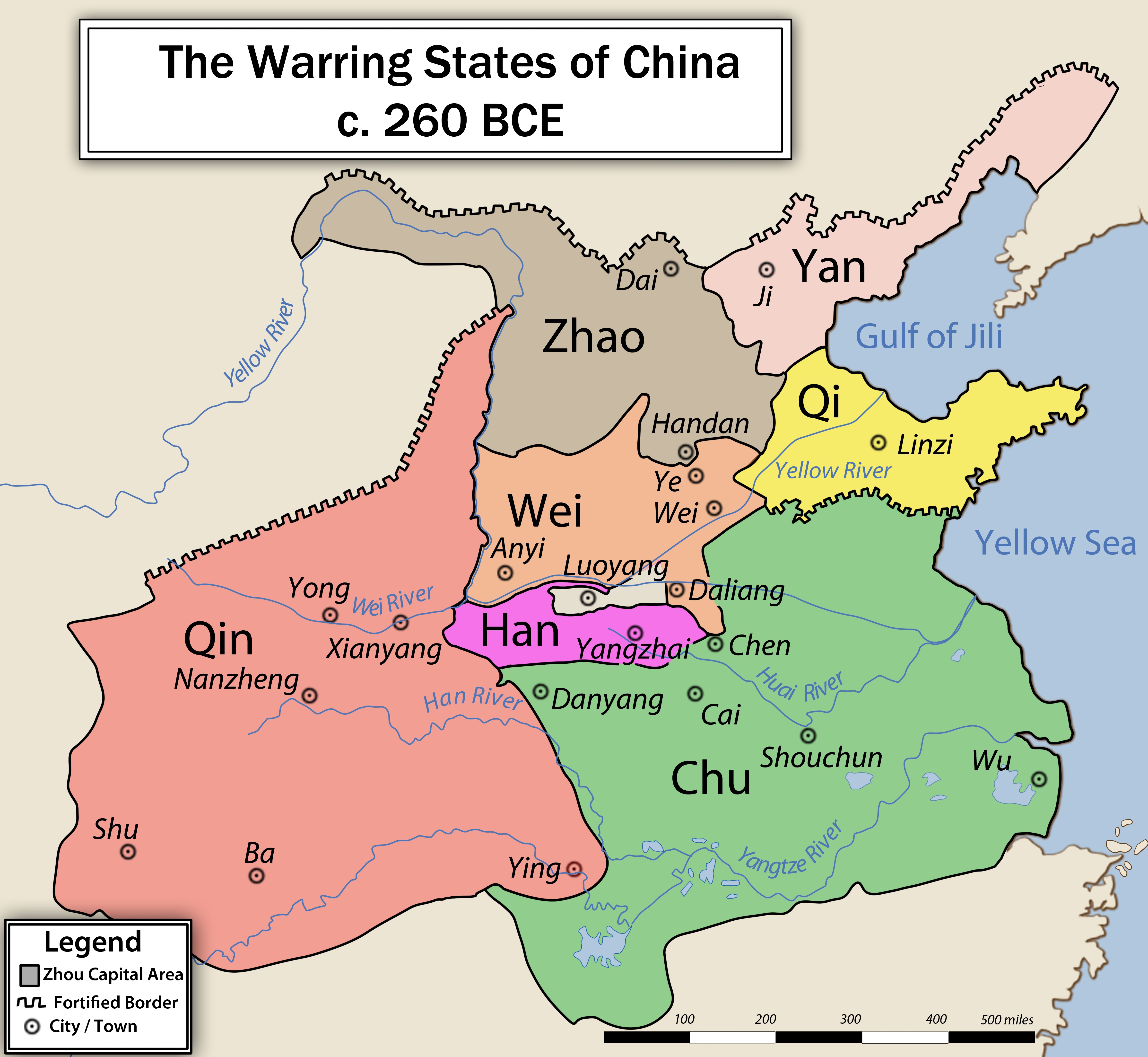
A central theme of the Sunzi Bingfa is the importance of adapting to circumstances — particularly to the physical terrain on which operations are conducted and the broader strategic environment in which conflict unfolds. Sun Tzu devotes three of his thirteen chapters (chapters 8, 10, and 11) to the analysis of terrain and its strategic implications, classifying ground into categories such as accessible, entrapping, stalemated, narrow, precipitous, and distant (Sawyer, 2007). Each type of terrain demands a different tactical approach; the general who applies the same strategy regardless of ground conditions is doomed to failure. This taxonomic approach to terrain reflects the text's broader emphasis on systematic analysis and contextual thinking.
The principle of adaptation extends beyond physical terrain to encompass the entire strategic situation. Sun Tzu famously compares the successful army to water: "Water shapes its course according to the ground over which it flows; the soldier works out his victory in relation to the foe he is facing" (chapter 6). Just as water has no fixed shape but adapts to the contours of the landscape, the successful strategist has no fixed plan but responds fluidly to changing circumstances (Mair, 2007). Rigid adherence to a predetermined plan — no matter how brilliant — is a recipe for disaster, because the enemy is a thinking, reacting agent who will not cooperate with your assumptions. The great general is one who can improvise, who can seize unexpected opportunities and withdraw from unfavorable situations without ego or hesitation.
This emphasis on flexibility and adaptation has made the Sunzi Bingfa particularly relevant to modern strategic thinking. In an era of rapid technological change, global interconnection, and radical uncertainty, the ability to adapt is arguably more important than any specific plan or capability (Lewis, 1999). Business strategists have drawn on Sun Tzu's insights to develop concepts of agile management, lean organization, and scenario planning. Military thinkers have applied his principles to counterinsurgency, cyber warfare, and asymmetric conflict. The underlying insight remains as valid today as it was twenty-five centuries ago: the world is complex, dynamic, and unpredictable, and the most successful actors are those who can respond to it as it is rather than as they wish it to be.
"Know the enemy and know yourself, and in a hundred battles you will never be in peril."
Sunzi Bingfa, Chapter 3From Battlefield to Boardroom
The Art of War's journey from ancient Chinese military manual to global cultural phenomenon is one of the most remarkable stories in the history of ideas. The text was introduced to European readers by the French Jesuit missionary Jean-Joseph-Marie Amiot, who published a translation in 1772. Napoleon is said to have read it, and the text influenced military thinkers from Carl von Clausewitz to Mao Zedong, who explicitly drew on Sun Tzu's principles in developing his theory of guerrilla warfare (Sawyer, 2007). During the Vietnam War, Ho Chi Minh and General Vo Nguyen Giap applied Sunzian principles against the superior firepower of France and the United States, demonstrating the text's continued relevance to asymmetric conflict.
In the late twentieth century, the Sunzi Bingfa underwent a remarkable transformation from military text to business bible. Beginning in Japan in the 1980s and spreading rapidly to the West, corporate strategists began applying Sun Tzu's principles to competitive business strategy (Mair, 2007). Concepts like "know your enemy," "attack where the enemy is weak," "all warfare is based on deception," and the importance of intelligence-gathering were translated into the language of market competition, product positioning, and corporate espionage. Books with titles like "Sun Tzu and the Art of Business" proliferated, and the text became required reading in MBA programs and corporate training seminars. While some of these applications are superficial, the best of them recognize that Sun Tzu's insights are fundamentally about how to think strategically in competitive environments — a challenge that is common to warfare, business, politics, and many other domains of human activity.
The Sunzi Bingfa also occupies an important place in the history of Chinese philosophy, though it is not always recognized as a philosophical text. Its emphasis on strategic calculation, its rejection of fixed principles in favor of contextual adaptation, and its pragmatic, results-oriented approach to human affairs connect it to the broader Legalist and "Realist" traditions of Chinese thought (Lewis, 1999). At the same time, its celebration of wu wei — the general who wins without fighting, the army that flows like water — reveals an affinity with Daoist philosophy that many commentators have noted. In this sense, the Sunzi Bingfa stands at the intersection of multiple Chinese philosophical traditions, drawing on and contributing to a shared intellectual culture that valued strategic thinking, self-knowledge, and adaptation to the natural order of things.
Quiz
What is the primary philosophical principle of Sun Tzu's The Art of War?
Which historical figure is traditionally credited with writing The Art of War?
What is one reason some scholars doubt Sun Wu's historical existence?
How does Sun Tzu's approach differ from earlier Chinese military culture?
What does the phrase 'Know the enemy and know yourself' imply in Sun Tzu's philosophy?
Why is intelligence gathering emphasized in The Art of War?
What is the significance of terrain in Sun Tzu's strategy?
How has The Art of War been applied in modern contexts?
Write your thoughts, then get feedback from Jason — you can turn any answer into a full discussion.
9. How might Sun Tzu's principle of 'winning without fighting' apply to modern business strategies?
10. Why is knowledge of both oneself and one's adversary crucial according to The Art of War, and how can this be applied outside of military contexts?
Frequently Asked Questions
Common questions about Sun Tzu and The Art of War: Strategy as Philosophy
What are the main principles of Sun Tzu Art of War?
The Art of War emphasizes winning through superior intelligence rather than brute force, with key principles including knowing your enemy and yourself, exploiting deception, adapting to changing circumstances, and achieving victory with minimal conflict. Sun Tzu argues that the supreme art of war is to subdue the enemy without fighting at all.
Is Sun Tzu a real historical person?
Sun Tzu (Sun Wu) is traditionally identified as a military strategist who served the King of Wu around the 5th century BCE, though some historians question whether he was a single individual or a legendary figure. The discovery of bamboo-strip manuscripts at Yinqueshan in 1972 confirmed the text's antiquity and strengthened the case for a historical author.
Why is the Art of War used in business today?
Business leaders and entrepreneurs apply Sun Tzu's principles because his insights on strategy, competitive positioning, and resource management translate directly to corporate competition. Concepts like knowing your market, exploiting competitors' weaknesses, and winning without destructive conflict have made the text a staple of MBA programs and executive education worldwide.
What does Sun Tzu say about knowing your enemy?
Sun Tzu's most famous maxim states: "Know the enemy and know yourself; in a hundred battles you will never be in peril." He argues that victory depends on thorough intelligence-gathering about the opponent's strengths, weaknesses, and intentions, combined with honest self-assessment of one's own capabilities and limitations.
How many chapters are in the Art of War?
The Art of War consists of thirteen chapters, each dedicated to a specific aspect of military strategy such as planning, waging war, offensive strategy, terrain, and the use of spies. Despite its brevity — the entire text is only about 6,000 Chinese characters — it covers the full spectrum of strategic thinking with remarkable depth and precision.