
Podcast


Podcast: The Eight Great Cuisines of China
Listen to Jason & Amy discuss The Eight Great Cuisines of China
New here?
A Civilization Defined by Its Table
No civilization on earth has invested more intellectual and philosophical energy into the art of eating than China. While other cultures developed sophisticated cuisines, China alone elevated cooking to the status of a governing principle. The earliest Chinese philosophical texts treat food as a metaphor for statecraft: the Daodejing compares ruling a great nation to cooking a small fish, and the legendary minister Yi Yin, who served the Shang dynasty around 1600 BCE, was said to have won his appointment by discoursing on the harmony of flavors. As food historian E. N. Anderson argues in The Food of China (1988), Chinese cuisine is not merely a collection of recipes but a coherent intellectual system built on principles of balance, contrast, and medicinal efficacy that date back thousands of years.
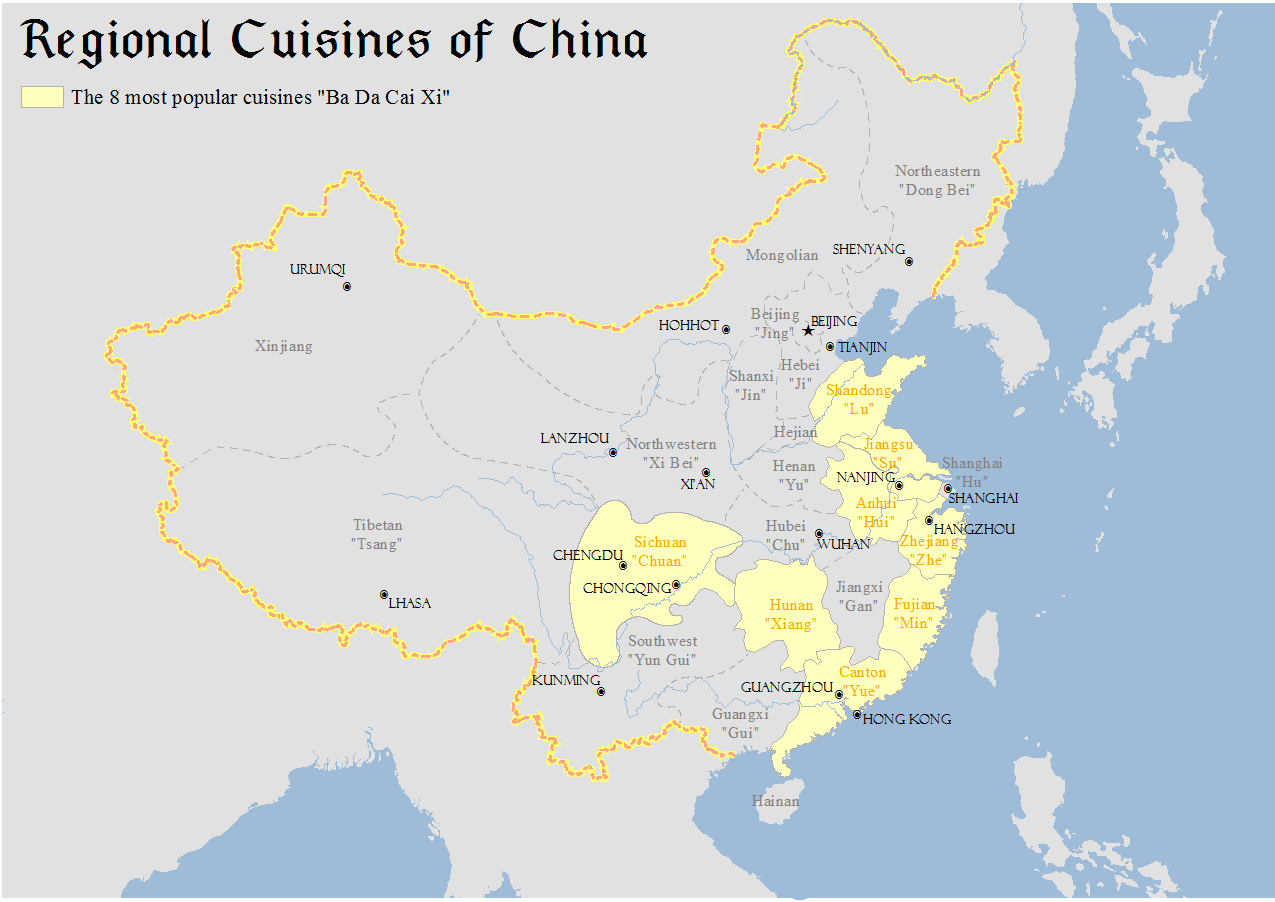
The formal classification of Chinese cooking into eight great regional cuisines — 八大菜系 (bā dà càixì) — crystallized during the Qing dynasty, though the regional distinctions themselves are far older. The system recognizes Shandong (Lu), Sichuan (Chuan), Cantonese (Yue), Jiangsu (Su), Zhejiang (Zhe), Fujian (Min), Hunan (Xiang), and Anhui (Hui) as the eight canonical traditions. Each cuisine reflects the geography, climate, agricultural products, and cultural history of its home region, and each has developed a distinctive philosophy of flavor. The classification is not arbitrary: it represents centuries of culinary discourse by scholars, gourmands, and professional chefs who recognized that China's continental scale produced not one cuisine but a family of related but distinct culinary civilizations.
Understanding the eight cuisines requires abandoning the Western assumption that "Chinese food" is a single entity. The distance from Guangzhou to Harbin is roughly equivalent to the distance from Lisbon to Moscow, and the culinary differences are equally dramatic. A banquet in Shandong, with its emphasis on braised seafood and wheat-based staples, shares almost nothing with a Sichuan hot pot dinner except the use of chopsticks. As the scholar Frederick Simoons observed in Food in China (1991), the fundamental division between northern wheat-eating and southern rice-eating cultures creates a gastronomic fault line that has shaped Chinese civilization as profoundly as any political boundary. The eight-cuisine system maps this diversity with remarkable precision, honoring the local while acknowledging the national.
"Food is the paramount necessity of the people."
Sima Qian, Records of the Grand Historian (史记)Shandong: The Aristocratic Tradition
Shandong cuisine, known as Lu cài (鲁菜), holds a unique position in the Chinese culinary hierarchy: it is the oldest of the eight great cuisines and the one that most profoundly influenced the cooking of the imperial court in Beijing. Shandong's location on the northeast coast, where the Yellow River meets the Bohai Sea, gave it access to both the finest freshwater fish and the rich marine harvest of the sea. Its inland plains, among the most fertile in China, produced abundant wheat, millet, and vegetables. This combination of sea and land ingredients, refined over more than two thousand years of continuous culinary development, created a cuisine of exceptional range and technical sophistication. According to Jacqueline Newman's Food Culture in China (2004), Lu cuisine's techniques of quick-frying (bào), braising (shāo), and deep-frying (zhá) became the foundational techniques of Chinese professional cooking.
The hallmarks of Shandong cuisine are precision, clarity, and the foregrounding of primary ingredients. Where Sichuan cuisine builds complexity through layers of spice and Cantonese cooking emphasizes the natural sweetness of fresh produce, Shandong cooking seeks to reveal and elevate the essential flavor of each ingredient through exact control of heat and timing. The signature technique is bàochǎo — explosive stir-frying over fierce heat for mere seconds, sealing in juices and producing a characteristic wok fragrance called wok hei (镬气). Shandong chefs are also masters of knife work: the province's culinary tradition includes dozens of specific cutting techniques that affect not only presentation but the way ingredients absorb sauces and respond to heat.
The cuisine divides into three sub-traditions. The coastal Jiaodong school specializes in seafood — sea cucumber braised with scallion, crispy fried prawns, and the celebrated sweet-and-sour carp (糖醋鲤鱼) that remains one of the most iconic dishes in northern Chinese cooking. The inland Jinan school is renowned for its soups, particularly the legendary "milk soup" (奶汤), a rich, opaque broth made by simmering pork bones and chicken for hours until the collagen emulsifies into a creamy liquid. The Confucian school of Qufu, birthplace of Confucius, developed a ceremonial banquet tradition that has been served continuously at the Kong family mansion for over two thousand years — the longest-running menu in human history.
Sichuan: The Kingdom of Flavor
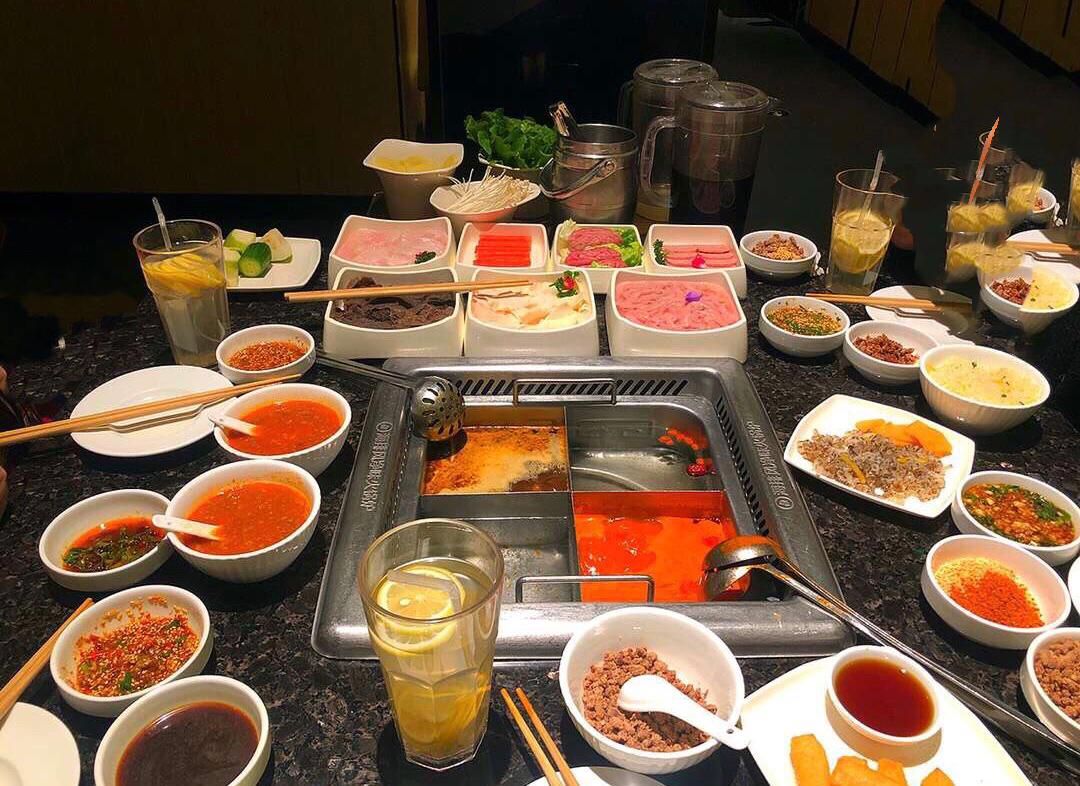
If Shandong cuisine represents the classical restraint of northern China, Sichuan cuisine — Chuān cài (川菜) — embodies the exuberant, unrestrained creativity of the southwest. Located in the fertile Sichuan Basin, surrounded on all sides by mountains and watered by the tributaries of the Yangtze, the province has been called the "Land of Abundance" (天府之国) since the Han dynasty. The warm, humid climate encouraged the use of chili peppers, garlic, ginger, and Sichuan peppercorns — ingredients that not only added flavor but helped preserve food and stimulate appetite in the oppressive subtropical heat. As Fuchsia Dunlop documents in Land of Plenty (2001), Sichuan cuisine developed the most complex flavor system of any regional Chinese cooking tradition, formally recognizing twenty-four distinct compound flavor profiles.
The defining characteristic of Sichuan cuisine is málà (麻辣) — the unique combination of the numbing sensation produced by Sichuan peppercorns (花椒, huājiāo) and the heat of dried chili peppers. This dual sensation, unknown in any other world cuisine, creates a tingling, buzzing warmth that Sichuan natives describe as addictive. But to reduce Sichuan cuisine to mere spiciness is a fundamental misunderstanding. Many of the province's most celebrated dishes are not spicy at all: camphor-tea smoked duck is aromatic and sweet, dry-fried green beans are savory and slightly charred, and sweet water noodles (甜水面) are bathed in a sauce of sesame paste, sugar, and vinegar. The genius of Sichuan cooking lies not in heat but in the principle of complex flavor layering, where each dish achieves a specific balance among multiple taste elements.
The cuisine's global reputation rests on a handful of iconic dishes that have become ambassadors for Chinese food worldwide. Mapo tofu (麻婆豆腐), invented in the 1860s by a pockmarked woman named Chen at a small restaurant in Chengdu, combines silken tofu with ground pork in a sauce that delivers all five fundamental tastes — sweet, sour, salty, bitter, and umami — plus the signature málà numbness. Kung pao chicken (宫保鸡丁), named after a Qing dynasty governor, juxtaposes diced chicken with peanuts and dried chilies in a sweet-vinegar sauce. Dan dan noodles (担担面), originally sold by street vendors who carried their portable kitchens on shoulder poles, layer sesame paste, chili oil, preserved vegetables, and ground pork over thin wheat noodles. Each dish demonstrates the Sichuan principle that flavor should be bold, layered, and memorable.
"In food, one should never tire of refinement; in preparation, never tire of precision."
Confucius, Analerta (论语)Cantonese: The Pinnacle of Freshness
Cantonese cuisine — Yuè cài (粤菜) — is the Chinese culinary tradition best known to the outside world, owing to the vast Cantonese diaspora that established restaurants from San Francisco to London to Sydney beginning in the nineteenth century. Centered on Guangdong province and the Pearl River Delta, Cantonese cooking is characterized by an almost fanatical commitment to freshness. The Cantonese palate prizes the natural flavors of ingredients above all else, and a Cantonese chef's highest compliment is to say that a dish tastes "fresh and sweet" (鲜甜, xiāntián). Sauces are light and designed to enhance rather than mask; cooking times are kept short to preserve texture and color. As the culinary historian Yan-kit So writes in Classic Food of China (1992), Cantonese cuisine represents the most refined expression of the Chinese principle that great cooking begins with great ingredients.
The technical repertoire of Cantonese cooking is staggering in its breadth. Steaming, the simplest and most revealing technique, is elevated to an art form: a whole steamed fish (清蒸鱼, qīngzhēng yú) dressed with nothing more than ginger, scallion, and a splash of hot oil is considered one of the supreme tests of a Cantonese chef's skill, because any flaw in the fish's freshness or the timing of the cooking is immediately exposed. Roasting produces another set of masterpieces — char siu (叉烧), the honey-glazed barbecued pork that hangs in the windows of Cantonese delicatessens worldwide, and crispy-skinned roast goose, the signature dish of the Pearl River Delta. Wok technique in Cantonese kitchens emphasizes speed and lightness, producing stir-fried dishes that are vibrant in color and retain a distinct textural bite.
Dim sum, the elaborate tradition of small dishes served with tea, is perhaps Cantonese cuisine's most celebrated contribution to world gastronomy. Originating in the teahouses of Guangzhou and later reaching its fullest expression in Hong Kong, dim sum encompasses hundreds of individual preparations — steamed dumplings, rice noodle rolls, baked pastries, braised meats, and delicate sweets — each one a miniature feat of culinary engineering. The tradition of yum cha (饮茶, literally "drinking tea") is not merely a meal but a social institution, a way of gathering with family and friends that has survived political upheaval, migration, and modernization to remain one of the most vibrant food cultures on earth.
Jiangsu and Zhejiang: The Elegant East
The two great cuisines of the Yangtze River Delta — Jiangsu (Sū cài, 苏菜) and Zhejiang (Zhè cài, 浙菜) — share a common geography and a related aesthetic, though each possesses a distinct identity. The region they inhabit is one of the most bountiful in China: a landscape of rivers, lakes, canals, and rice paddies that has been called the "land of fish and rice" (鱼米之乡) since antiquity. The mild climate, abundant freshwater, and proximity to the East China Sea provide an extraordinary range of ingredients, from the hairy crabs of Yangcheng Lake to the bamboo shoots of the Zhejiang hills to the freshwater eels of the Yangtze itself. Both cuisines are characterized by an emphasis on seasonal ingredients, delicate sweetness, and meticulous presentation that reflects the refined literary culture of the region.
Jiangsu cuisine, centered on the cities of Nanjing, Yangzhou, and Suzhou, is renowned for its slow-braised dishes, its sophisticated use of sugar, and its extraordinary knife work. The signature dish of Yangzhou, lion's head meatballs (狮子头, shīzitóu), exemplifies the Jiangsu approach: oversized pork meatballs, minced by hand to a specific texture that is neither smooth nor coarse, are braised for hours in a clear broth until they achieve a meltingly tender consistency. The sweetness characteristic of Jiangsu cooking is never cloying but a subtle background note that rounds and deepens savory flavors — a technique that reflects the region's historical wealth and its access to sugar. As the food writer Carolyn Phillips notes in All Under Heaven (2016), Jiangsu cuisine represents the culinary equivalent of the region's famous gardens: intricate, refined, and composed with an eye toward harmony and balance.
Zhejiang cuisine, anchored by the city of Hangzhou, shares Jiangsu's delicacy but tends toward lighter, crisper preparations that foreground the natural flavors of its exceptional raw materials. The celebrated West Lake vinegar fish (西湖醋鱼, Xīhú cùyú) — a whole grass carp poached and dressed in a sweet-sour vinegar sauce — is a masterpiece of simplicity, its success depending entirely on the freshness of the fish and the precision of the sauce. Dongpo pork (东坡肉), named after the Song dynasty poet Su Dongpo who supposedly invented it during his tenure as governor of Hangzhou, is a brick of pork belly braised for hours in Shaoxing wine, soy sauce, and sugar until the fat becomes translucent and the meat collapses at the touch of a chopstick. Zhejiang cooking, with its literary associations and its reverence for seasonality, embodies the classical Chinese ideal that the best food is a form of poetry.
"Governing a great nation is like cooking a small fish."
Laozi, Daodejing (道德经), Chapter 60Quiz
What distinguishes the eight great cuisines of China?
Which cuisine is known for its use of the málà flavor profile?
What is a key characteristic of Cantonese cuisine?
Which region's cuisine is famous for its dim sum tradition?
What is a defining feature of Shandong cuisine?
Which cuisine is known for its ceremonial banquet tradition?
What is a key ingredient in Fujian cuisine that gives dishes a crimson hue?
Which cuisine is known for its use of fresh chili peppers and smoked chili paste?
Write your thoughts, then get feedback from Jason — you can turn any answer into a full discussion.
9. Why do you think the eight great cuisines of China have developed such distinct identities over time?
10. How might understanding the diversity of Chinese cuisines change one's perception of 'Chinese food'?
Frequently Asked Questions
Common questions about The Eight Great Cuisines of China
What are the Eight Great Cuisines of China?
The Eight Great Cuisines (八大菜系) are Shandong (Lu), Sichuan (Chuan), Cantonese (Yue), Fujian (Min), Jiangsu (Su), Zhejiang (Zhe), Hunan (Xiang), and Anhui (Hui). Each cuisine reflects its region's geography, climate, and cultural history, producing distinct flavor profiles and cooking techniques.
Why does Chinese food taste so different from region to region?
China spans a vast territory with dramatically different climates, from tropical south to arid north, creating vastly different local ingredients and agricultural traditions. Centuries of relative isolation between regions allowed each area to develop unique seasoning philosophies, cooking methods, and dietary customs shaped by local resources and cultural practices.
Which Chinese cuisine is the most popular worldwide?
Cantonese (Yue) cuisine is historically the most widely known internationally, largely because early Chinese emigrants to the West came predominantly from Guangdong province. However, Sichuan cuisine has surged in global popularity in recent decades, with its bold mala flavors attracting adventurous diners worldwide.
How were the Eight Great Cuisines of China officially classified?
The formal classification emerged gradually during the Qing dynasty and was solidified in the early twentieth century by food scholars and culinary historians. The system reflects centuries of regional culinary development, with each cuisine distinguished by its signature ingredients, flavor principles, and characteristic cooking techniques.
What is the difference between northern and southern Chinese cooking?
Northern Chinese cooking tends to rely on wheat-based staples like noodles, dumplings, and steamed buns, with bold flavors from garlic, vinegar, and soy. Southern Chinese cooking centers on rice, features lighter and sweeter seasoning, and emphasizes the natural freshness of ingredients, particularly seafood and vegetables.