
Podcast


Podcast: The Rise of Chinese Tech Giants: From Copycats to Innovators
Listen to Jason & Amy discuss The Rise of Chinese Tech Giants: From Copycats to Innovators
New here?
Jack Ma and the Alibaba Revolution

The story of Alibaba's founding has achieved almost mythical status in the annals of Chinese entrepreneurship. In February 1999, Jack Ma — a former English teacher from Hangzhou who had failed his university entrance exams twice and been rejected from dozens of jobs, including a position at KFC — gathered seventeen friends and former students in his apartment to pitch his vision for an online marketplace that would connect China's small and medium-sized manufacturers with buyers around the world. Ma had encountered the internet during a trip to the United States in 1995 and was struck by the near-total absence of Chinese content online. His first venture, China Pages, a website directory for Chinese businesses, had failed, but the experience convinced him that e-commerce would transform China's economy if someone could build a platform tailored to the unique characteristics of Chinese business culture. The name "Alibaba" was chosen because it was universally recognizable, easy to spell, and evoked the story of a common person who discovers hidden treasures — a fitting metaphor for Ma's ambition to democratize commerce (Clark, 2016).
Alibaba's early years were a study in the challenges of building an internet business in a country where fewer than nine million people were online and the commercial infrastructure that Western e-commerce companies took for granted — reliable postal services, widespread credit card usage, consumer protection laws — simply did not exist. Ma's genius lay in recognizing that these obstacles were also opportunities. Rather than waiting for China's commercial infrastructure to catch up with Western standards, Alibaba built its own. Alipay, launched in 2004, created a trusted escrow payment system that addressed the profound mutual distrust between buyers and sellers in Chinese commerce, a problem so fundamental that it had stymied the development of online trade. Taobao, Alibaba's consumer marketplace launched in 2003, defeated eBay in the Chinese market not through technological superiority but through a deeper understanding of Chinese consumer behavior: Taobao was free for sellers, integrated instant messaging to allow buyers and sellers to negotiate in real time, and created an elaborate reputation system that built trust in an environment where it was sorely lacking (Lee, 2018).
The scale of Alibaba's eventual success exceeded even Ma's most ambitious projections. By the time the company went public on the New York Stock Exchange in September 2014, in what was then the largest initial public offering in history at $25 billion, Alibaba's platforms were processing more gross merchandise volume than Amazon and eBay combined. The company's Singles' Day shopping festival, held annually on November 11, became the world's largest online shopping event, generating over $74 billion in sales in 2020 alone — a single-day figure that dwarfed the combined totals of Black Friday and Cyber Monday in the United States. Alibaba's cloud computing division, Alibaba Cloud, grew to become the largest cloud provider in Asia and the fourth-largest globally, while Ant Group, the financial technology spin-off that grew out of Alipay, served over one billion users and processed more digital payments than Visa and Mastercard combined. The company's trajectory from a Hangzhou apartment to a global technology conglomerate valued at hundreds of billions of dollars became the defining success story of China's internet economy (Clark, 2016).
"There is no difficult business to do in the world."
Jack Ma, Alibaba's founding mission statementPony Ma, Tencent, and the WeChat Ecosystem
If Alibaba conquered Chinese e-commerce, Tencent conquered Chinese social life. Founded in November 1998 by Pony Ma Huateng and four co-founders in Shenzhen, Tencent began with OICQ, a Chinese-language instant messaging service modeled on the Israeli program ICQ. The company nearly went bankrupt in its first years, at one point considering selling the business for one million yuan. But the explosive growth of internet cafes across China in the early 2000s, which gave millions of young Chinese their first exposure to the internet, drove adoption of what was renamed QQ — a messaging platform that became as ubiquitous in Chinese digital life as email was in the West. Pony Ma, an introvert who shunned the limelight in stark contrast to the flamboyant Jack Ma, built Tencent into a company that understood Chinese internet users' social needs with an almost anthropological precision, layering gaming, music streaming, news, and digital payments onto its core messaging platform (Wu, 2019).
The launch of WeChat in January 2011 represented Tencent's decisive leap into the mobile era and perhaps the single most consequential product launch in the history of Chinese technology. Conceived by Allen Zhang Wei, the reclusive engineer who ran Tencent's Guangzhou research center, WeChat began as a simple mobile messaging application but rapidly evolved into something without precedent in the Western internet: a "super-app" that integrated messaging, social networking, payments, ride-hailing, food delivery, bill payments, government services, and thousands of "mini programs" — lightweight applications that ran within WeChat itself, effectively creating an operating system within an operating system. By 2020, WeChat had over 1.2 billion monthly active users, and for hundreds of millions of Chinese consumers, the app was the primary interface through which they engaged with the digital world. The concept of the super-app, pioneered by WeChat, was subsequently imitated by companies worldwide, from Grab in Southeast Asia to Rappi in Latin America (Lee, 2018).
Tencent's business model differed fundamentally from that of Western social media companies. While Facebook (later Meta) and Twitter derived the vast majority of their revenue from advertising, Tencent generated most of its income from gaming and financial services. The company became the world's largest gaming company by revenue, with a portfolio that included wholly owned studios, stakes in major international developers like Riot Games (maker of League of Legends) and Epic Games (maker of Fortnite), and a dominant position in mobile gaming through titles like Honor of Kings, which at its peak attracted over 100 million daily players. WeChat Pay, the mobile payment service integrated into WeChat, processed trillions of yuan in transactions annually and, alongside Alipay, effectively rendered cash obsolete in many Chinese cities. This diversified revenue model gave Tencent a resilience and stability that pure advertising-dependent platforms lacked, and the company's investments in gaming, entertainment, fintech, cloud computing, and artificial intelligence made it one of the most valuable companies in the world (Wu, 2019).
The Super-App Ecosystem and Mobile Payments
The super-app model that WeChat pioneered was not an isolated phenomenon but the centerpiece of a broader transformation in how Chinese consumers interacted with digital services. While Western internet users typically navigated between dozens of separate applications — one for messaging, another for payments, another for ride-hailing, another for food delivery — Chinese consumers increasingly conducted all of these activities within a small number of comprehensive platforms. Meituan-Dianping, often described as "the everything app for services," combined restaurant reviews, food delivery, hotel booking, movie ticketing, and grocery shopping into a single interface. Douyin, the Chinese version of TikTok, evolved from a short-video entertainment platform into a full-fledged e-commerce engine where users could discover, review, and purchase products without ever leaving the app. This integration of services within single platforms reflected both the technical sophistication of Chinese app developers and the distinctive characteristics of a market where many consumers had come online via smartphones rather than desktop computers, and therefore expected mobile-first, all-in-one experiences (Lee, 2018).
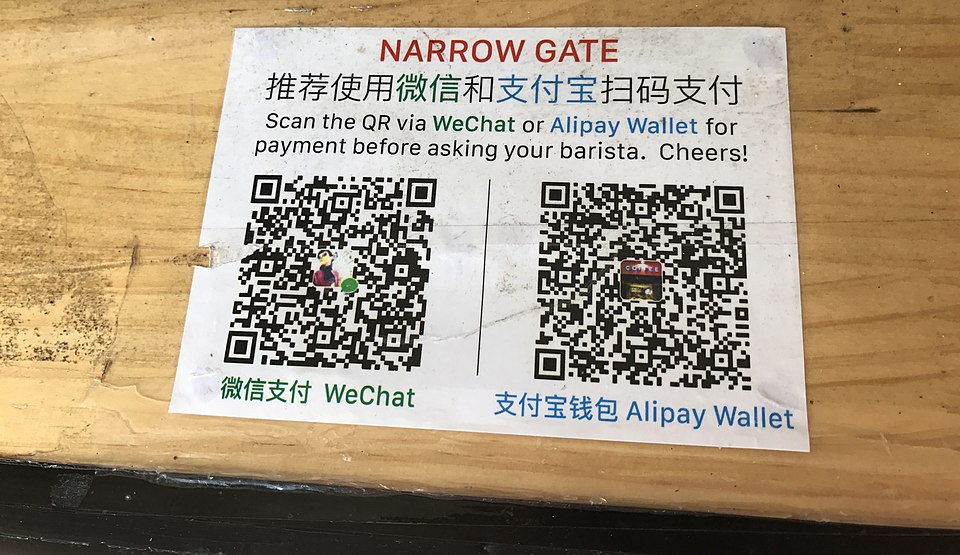
The mobile payments revolution that accompanied the rise of super-apps was arguably China's most significant contribution to global financial innovation. By 2020, mobile payment transactions in China exceeded $50 trillion annually, a figure that dwarfed mobile payment volumes in the United States by a factor of nearly fifty. The transformation happened with breathtaking speed: as recently as 2012, China had been a predominantly cash-based economy, but within half a decade, QR code-based mobile payments had become the default method of transaction for everything from luxury purchases to street food. The technology was remarkably democratic, enabling elderly vegetable vendors and rural farmers to accept digital payments as easily as sophisticated urban retailers. This leapfrogging of credit cards — a technology that China never adopted at scale — represented a distinctive pattern in Chinese technological development, where late adoption of one generation of technology enabled faster adoption of the next (Clark, 2016).
The implications of China's mobile payment ecosystem extended far beyond convenience. The vast quantities of transaction data generated by Alipay and WeChat Pay enabled the development of sophisticated credit scoring systems that brought financial services to hundreds of millions of Chinese consumers who had previously been excluded from the formal banking system. Ant Group's Sesame Credit, which assigned users a score based on their purchasing behavior, social connections, and payment history, became a powerful tool for extending microloans and insurance products to individuals and small businesses that traditional banks considered too risky to serve. While Western observers raised legitimate concerns about privacy and surveillance, the system also represented a genuine expansion of financial inclusion in a country where hundreds of millions of people had historically lacked access to credit. The mobile payment infrastructure also enabled the explosive growth of China's "new retail" sector, which blurred the boundaries between online and offline commerce in ways that Western retailers were only beginning to contemplate (Lee, 2018).
"Users first, technology for good."
Tencent's revised mission statement, 2019AI, Cloud Computing, and the Next Frontier
The competition between Chinese tech giants in artificial intelligence and cloud computing represented the next phase of China's technological ascent, one that carried profound implications for global economic and geopolitical competition. Kai-Fu Lee, a former head of Google China who became one of China's most prominent venture capital investors, argued in his influential 2018 book AI Superpowers that China possessed several structural advantages in the AI race: a massive population that generated unparalleled quantities of training data, a government willing to invest heavily in AI research and infrastructure, a competitive entrepreneurial ecosystem that rapidly translated research breakthroughs into commercial applications, and a regulatory environment that imposed fewer constraints on data collection than Western democracies. These advantages, Lee contended, would enable China to match or surpass the United States in applied AI within a decade, even if American research institutions maintained a lead in fundamental AI research (Lee, 2018).
By the early 2020s, the evidence largely supported Lee's thesis. Baidu, often called "China's Google," had repositioned itself as an "AI-first" company, investing billions in autonomous driving technology through its Apollo platform and developing its own large language models. Alibaba's DAMO Academy, established in 2017 with a $15 billion research budget, pursued fundamental research in machine learning, natural language processing, and quantum computing, while Alibaba Cloud provided the infrastructure on which much of China's digital economy ran. Tencent applied AI across its gaming, social media, and financial services divisions, and its AI Lab produced research that was regularly published in top international conferences. SenseTime, Megvii, and other Chinese AI startups achieved global leadership in computer vision and facial recognition technology, though their applications in surveillance and social control generated intense controversy both domestically and internationally (Wu, 2019).
The cloud computing market in China mirrored the competitive dynamics of the broader tech sector, with Alibaba Cloud, Huawei Cloud, and Tencent Cloud vying for dominance in a market that grew at annual rates exceeding thirty percent throughout the late 2010s and early 2020s. Unlike in the United States, where Amazon Web Services held a commanding lead, the Chinese cloud market was more fragmented, with multiple strong competitors and significant government involvement through state-owned telecommunications companies. The Chinese government's "new infrastructure" initiative, announced in 2020, directed massive investment into data centers, 5G networks, and AI computing infrastructure, providing a tailwind that accelerated the growth of domestic cloud providers. The strategic importance of cloud computing — as the foundation on which AI, big data analytics, and digital transformation were built — made it a key battleground not only between Chinese companies but also between China and the United States, as both nations recognized that dominance in cloud infrastructure would shape economic competitiveness for decades to come (Clark, 2016).
The Great Firewall as Inadvertent Protector
One of the most paradoxical aspects of China's technology sector was the role played by the Great Firewall — the extensive system of internet censorship and control that blocked Chinese users from accessing Google, Facebook, Twitter, YouTube, and many other foreign websites — in enabling the growth of domestic tech giants. The conventional narrative, popular in Western media, portrayed the Great Firewall solely as an instrument of political repression, a tool for preventing the free flow of information and suppressing dissent. While this characterization was not wrong, it was incomplete. By blocking foreign competitors from the Chinese market, the Great Firewall created a protected space in which domestic companies could develop, iterate, and scale without facing competition from the world's most powerful technology firms. Baidu thrived in search because Google was blocked; Weibo and WeChat dominated social media because Facebook and Twitter were inaccessible; Youku and Bilibili captured online video because YouTube was unavailable. Whether this protection was an intentional industrial policy or merely a fortunate side effect of political censorship remains a subject of scholarly debate, but its impact on the development of China's tech sector was undeniable (Lee, 2018).
The protected market theory, however, provides only a partial explanation for the success of Chinese tech companies. Several foreign companies that were not blocked by the Great Firewall — including Amazon, LinkedIn, and Uber — also failed to achieve dominance in China, suggesting that market protection alone was insufficient to explain Chinese companies' competitive advantages. Chinese tech firms succeeded in large part because they were better at serving Chinese consumers than their foreign rivals were. Alibaba's e-commerce platforms were designed around the specific challenges of Chinese retail, including the lack of trusted brands, the fragmentation of the retail landscape, and the importance of social proof in purchasing decisions. Tencent's social products reflected a deep understanding of Chinese communication norms, relationship hierarchies, and entertainment preferences. Didi Chuxing defeated Uber in China not primarily because of regulatory favoritism but because Didi's product was better adapted to Chinese urban transportation patterns, payment habits, and user expectations. The most honest assessment of the Great Firewall's economic impact acknowledged both its protectionist function and the genuine competitive capabilities that Chinese companies developed independently (Clark, 2016).
The relationship between China's tech giants and the Chinese state grew increasingly complex in the 2020s, challenging the simple narrative that government protection unambiguously benefited the sector. Beginning in late 2020, Chinese regulators launched an unprecedented crackdown on the country's largest technology companies, blocking Ant Group's planned IPO, imposing massive antitrust fines on Alibaba, ordering Didi to delist from the New York Stock Exchange, and introducing sweeping regulations on data privacy, algorithmic recommendation, and the gig economy. These actions, driven by a combination of genuine regulatory concerns and the political leadership's desire to reassert control over an increasingly powerful private sector, wiped hundreds of billions of dollars from the market capitalizations of Chinese tech companies and raised fundamental questions about the relationship between innovation and state power. The crackdown demonstrated that the state giveth and the state taketh away: the same government that had nurtured China's tech giants through protected markets and supportive policies could also constrain them when their interests diverged from those of the Communist Party (Wu, 2019).
Global Ambitions and Geopolitical Friction
As Chinese tech companies matured and their domestic markets approached saturation, international expansion became an imperative, but also a source of escalating geopolitical friction. TikTok, the international version of ByteDance's Douyin, became the first Chinese consumer internet application to achieve truly global scale, surpassing one billion monthly active users by 2021 and becoming the most downloaded app in the world. TikTok's success demonstrated that Chinese companies could create products that resonated with consumers across cultural boundaries, overturning the long-held assumption that Chinese internet companies were incapable of succeeding outside the Chinese-speaking world. However, TikTok's popularity also triggered intense political opposition in the United States and other Western democracies, where lawmakers raised concerns about data security, the potential for Chinese government surveillance, and the app's influence on public discourse. India banned TikTok outright in 2020, and the United States threatened to do the same, forcing ByteDance into protracted negotiations over the storage and governance of American user data (Lee, 2018).
The global expansion of Chinese technology companies intersected with a broader deterioration in U.S.-China relations that increasingly centered on technology competition. The Trump administration's decision to place Huawei on the Entity List in 2019, effectively cutting the company off from American semiconductor technology, represented a watershed moment in the decoupling of the world's two largest technology ecosystems. Subsequent U.S. export controls targeted Chinese AI chip companies, semiconductor manufacturers, and supercomputing centers, while Chinese authorities responded with their own restrictions on the export of critical minerals and technologies. This escalating cycle of technology restrictions threatened to bifurcate the global technology industry into separate Chinese and American spheres, with profound implications for innovation, standards-setting, and the future architecture of the global internet. Chinese tech companies responded by accelerating efforts to develop indigenous replacements for American technologies, from operating systems and semiconductors to cloud infrastructure and AI frameworks, a process that was enormously costly but that Chinese leaders viewed as essential for national security (Clark, 2016).
The story of Chinese tech giants remained unfinished and deeply uncertain as of the mid-2020s. The companies that had emerged from the chaotic, exuberant growth of China's internet economy faced simultaneous challenges from domestic regulation, international geopolitical pressure, and the inherent difficulty of sustaining innovation at scale. Yet the achievements of the preceding quarter-century were extraordinary by any measure. In the space of a single generation, Chinese entrepreneurs had built technology companies that rivaled the most powerful firms in Silicon Valley, created digital infrastructure that served over a billion users, and pioneered innovations — from mobile payments to super-apps to short-video commerce — that influenced technology development worldwide. Whether these companies would continue to push the boundaries of innovation or would be constrained by the political and regulatory environment in which they operated was a question that would shape the global technology landscape for decades to come. What was beyond dispute was that the era of dismissing Chinese tech companies as mere copycats was definitively over (Wu, 2019).
"The Yangtze's rear waves push the front waves forward."
Classical proverb on how each generation surpasses the last — often applied to Chinese tech innovationQuiz
What was Jack Ma's primary goal when founding Alibaba?
Why did Taobao defeat eBay in the Chinese market?
What was a key factor in Tencent's initial success?
What characterized the launch of WeChat in 2011?
How did Chinese consumers' expectations shape the super-app ecosystem?
What was a significant outcome of China's mobile payment revolution?
What advantage did the Great Firewall provide to Chinese tech companies?
What challenge did Chinese tech companies face as they expanded globally?
Write your thoughts, then get feedback from Jason — you can turn any answer into a full discussion.
9. How do you think the development of super-apps in China reflects the specific needs and habits of Chinese consumers?
10. In what ways might the geopolitical tensions between China and the United States impact the future of global technology development?
Frequently Asked Questions
Common questions about The Rise of Chinese Tech Giants: From Copycats to Innovators
How did Chinese tech companies go from copycats to innovators?
Chinese tech companies initially adapted Western business models for the local market — Alibaba mirrored eBay, Baidu mirrored Google, and Weibo mirrored Twitter. However, intense domestic competition and unique market conditions forced these companies to innovate beyond their Western counterparts, pioneering breakthroughs in mobile payments, super-apps, livestream commerce, and AI applications that Western companies now study and imitate.
What is the Great Firewall and how did it help Chinese tech companies?
The Great Firewall is China's system of internet censorship that blocks access to major Western platforms like Google, Facebook, and Twitter. While controversial, this digital barrier created a protected domestic market that allowed Chinese tech companies to grow and innovate without competing directly against established Western giants during their formative years.
How did Alibaba become one of the world's largest e-commerce companies?
Alibaba succeeded by solving fundamental trust problems in Chinese e-commerce through innovations like Alipay's escrow payment system, which held buyer funds until goods were confirmed delivered. Founded by Jack Ma in 1999, the company grew by serving small and medium businesses overlooked by traditional banks, eventually expanding into cloud computing, digital payments, logistics, and entertainment.
What makes WeChat different from Western messaging apps?
WeChat, developed by Tencent, evolved far beyond messaging to become a "super-app" that integrates social media, mobile payments, ride-hailing, food delivery, bill payment, government services, and mini-programs all within a single platform. This all-in-one approach, which has no true Western equivalent, has made WeChat essential infrastructure for daily life in China, with over a billion monthly active users.
How is China competing with the US in artificial intelligence?
China has emerged as a major AI competitor through massive government investment, abundant data from its 1.4 billion population, a large pool of AI researchers, and aggressive corporate R&D spending by companies like Baidu, Alibaba, and Tencent. China's national AI development plan, announced in 2017, set a goal of becoming the world's leading AI innovation center by 2030, with particular strengths in facial recognition, natural language processing, and autonomous vehicles.