
Podcast


Podcast: Chinese Negotiation: Face, Patience, and the Art of the Deal
Listen to Jason & Amy discuss Chinese Negotiation: Face, Patience, and the Art of the Deal
New here?
Mianzi: The Currency of Face
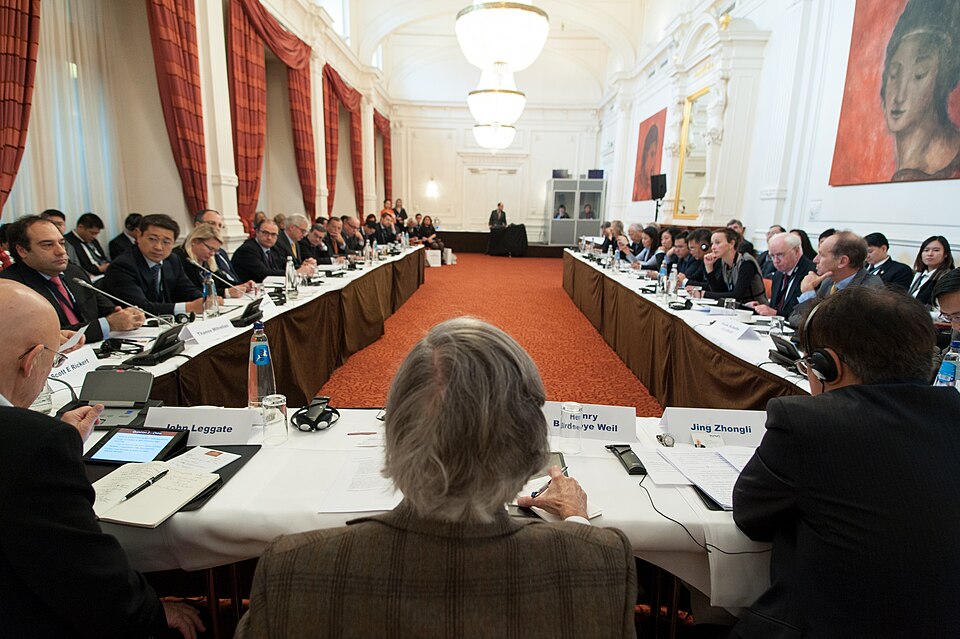
In Chinese business culture, few concepts are as central — or as frequently misunderstood by outsiders — as mianzi, commonly translated as "face." Mianzi encompasses a person's reputation, social standing, dignity, and perceived competence, and its management is not merely a matter of personal vanity but a fundamental social skill that governs virtually every aspect of interpersonal interaction. The sociologist Hu Hsien-chin, in her pioneering 1944 study of Chinese social dynamics, distinguished between two dimensions of face: mianzi, which refers to the prestige and reputation achieved through success, wealth, and social accomplishment, and lian, which relates to the moral character and integrity that society accords to an individual based on their ethical conduct. Both dimensions are at play in any Chinese negotiation, and a skilled negotiator must attend to both — enhancing the counterpart's mianzi through expressions of respect and admiration while taking care never to threaten their lian through public criticism, embarrassment, or contradiction (Pye, 1992).
The practical implications of face for business negotiations are extensive and consequential. A Chinese negotiator who feels that their face has been damaged — whether through a blunt refusal, a public challenge to their position, or a failure to show appropriate deference to their seniority or expertise — may withdraw from discussions entirely, even if the proposed deal is economically advantageous. Conversely, a foreign negotiator who skillfully enhances their Chinese counterpart's face — by praising their company's achievements, showing genuine interest in Chinese culture, deferring to senior members of the Chinese delegation, and arranging impressive hospitality — can create a reservoir of goodwill that facilitates agreement on even the most difficult commercial issues. Lucian Pye, in his seminal study of Chinese negotiating behavior, noted that Western negotiators often make the mistake of assuming that face is merely a matter of politeness or etiquette, when in fact it is "a fundamental dimension of Chinese social psychology that shapes perceptions of fairness, reciprocity, and obligation in ways that have direct and measurable impacts on negotiation outcomes" (Pye, 1992).
The face dynamic also shapes the structure and composition of Chinese negotiating teams. Senior Chinese executives rarely participate directly in the contentious phases of negotiation, not because they are uninterested in the outcome but because direct involvement in adversarial bargaining could expose them to potential loss of face if their positions are challenged or if they are forced to make concessions. Instead, junior team members handle the detailed back-and-forth of proposal and counter-proposal, while senior executives maintain a dignified distance, intervening only at critical moments to signal approval or to break deadlocks with magnanimous gestures that demonstrate their authority and generosity. Understanding this hierarchical structure is essential for foreign negotiators, who must learn to distinguish between the nominal authority of their interlocutors and the actual decision-making power that may reside with individuals who are not even present at the negotiating table. The failure to identify and cultivate relationships with the true decision-makers — a process that requires patience, sensitivity, and considerable cultural intelligence — is among the most common reasons that foreign companies fail in their Chinese negotiations (Graham & Lam, 2003).
"Do not impose on others what you yourself do not desire."
Confucius, Analerta 15.24 — a foundational principle of Chinese interpersonal ethicsPatience as a Strategic Weapon
If face is the currency of Chinese negotiation, patience is its defining temporal rhythm. Chinese negotiators are famously willing to invest weeks, months, or even years in building relationships and exploring possibilities before committing to a deal, a pace that frequently bewilders and frustrates Western counterparts who have been trained to value efficiency and time management. This patience is not mere cultural affectation; it reflects a fundamentally different conception of the negotiation process itself. In the Western tradition, negotiation is typically viewed as a discrete event — a meeting or series of meetings with a defined beginning, middle, and end, aimed at producing a contractual agreement. In the Chinese tradition, negotiation is understood as a phase in an ongoing relationship, one that has no clear endpoint because the relationship itself is expected to evolve and deepen over time. The deal is not the culmination of the relationship; the relationship is the context within which many deals will eventually be done (Pye, 1992).
Chinese negotiators deploy patience strategically, understanding that time pressure almost always works to the disadvantage of the party that needs the deal more urgently. A common tactic is to delay discussions until a foreign negotiator is nearing the end of their scheduled visit, when the pressure to return home with a signed agreement makes them more likely to accept unfavorable terms. Another is to reopen issues that were apparently settled, a practice that Western negotiators often interpret as bad faith but that Chinese negotiators view as a legitimate response to changed circumstances or newly available information. The Chinese phrase "manman lai" — take it slowly — is not merely a pleasantry but an expression of a deeply held belief that hasty decisions lead to poor outcomes. Foreign negotiators who arrive in China with tight deadlines, pre-booked return flights, and pressure from headquarters to close the deal quickly are, from the Chinese perspective, practically negotiating against themselves (Graham & Lam, 2003).
The strategic use of patience is also evident in the Chinese practice of conducting multiple rounds of negotiation, each of which may take place in a different setting and involve different members of the Chinese team. Initial meetings may focus entirely on relationship-building, with no discussion of business whatsoever — a phase that Western negotiators sometimes dismiss as "wasting time" but that Chinese negotiators view as essential preparation. Subsequent meetings may involve broad discussions of principles and mutual interests, followed by detailed technical negotiations, followed by senior-level meetings at which the broad outlines of an agreement are blessed, followed by further rounds of detailed negotiation to resolve remaining issues. This iterative process can be exasperating for foreign negotiators who prefer a linear progression from agenda item to agenda item, but it reflects the Chinese emphasis on building consensus gradually and ensuring that all stakeholders have been consulted and their concerns addressed. The most successful foreign negotiators in China are those who internalize this patience, adjusting their expectations, their timelines, and their definition of progress to match the rhythm of Chinese commercial culture (Faure, 1998).
Guanxi, Banquets, and the Architecture of Relationships
The Chinese concept of guanxi — loosely translated as "connections" or "relationships" — is the foundation upon which all Chinese business activity rests. Guanxi is not simply networking in the Western sense; it is a complex web of reciprocal obligations, personal loyalties, and mutual dependencies that binds individuals and families into networks of trust and mutual aid. In a business context, guanxi determines who you can do business with, on what terms, and with what degree of confidence that agreements will be honored. A Chinese businessperson with strong guanxi has access to information, resources, and opportunities that are invisible to outsiders, while a businessperson without guanxi — regardless of how attractive their products, prices, or proposals might be — will find doors closed at every turn. Building guanxi is therefore not a preliminary to doing business in China; it is the business, or at least the prerequisite without which no business can be sustainably conducted (Pye, 1992).
The business banquet is the quintessential institution for cultivating guanxi, and its rituals and protocols are as codified and significant as any clause in a commercial contract. A formal Chinese business dinner typically follows a precise sequence: the host seats guests according to a hierarchy of honor, with the most important guest seated to the host's right and facing the door; dishes are ordered to demonstrate generosity and cultural knowledge, with premium ingredients like abalone, sea cucumber, and shark fin (increasingly replaced by other delicacies amid environmental concerns) conveying respect for the guests' status; toasts are offered in a specific order, with the host initiating and each subsequent toast carrying implicit messages about the relative standing and warmth of the relationship. The consumption of baijiu — a fiery grain liquor that is China's most consumed spirit — is a particularly important element of banquet culture, with the willingness to drink serving as a test of sincerity, trust, and commitment to the relationship. Foreign negotiators who decline to participate in drinking rituals may inadvertently signal aloofness or lack of commitment, while those who engage enthusiastically can rapidly accelerate the process of building trust and rapport (Graham & Lam, 2003).
The significance of banquet culture extends beyond mere socializing. Important information that would never be shared in a formal meeting room — competitive intelligence, bureaucratic obstacles, personal opinions about a proposed deal — often emerges during the relaxed and lubricated atmosphere of a dinner. Chinese negotiators use banquets to take the measure of their counterparts, observing how they handle alcohol, how they treat service staff, whether they are genuinely interested in Chinese culture or merely going through the motions, and how they respond to indirect probes about their company's true priorities and constraints. The gifts exchanged at these occasions, carefully chosen to convey respect without crossing the line into bribery, are another channel of communication, with the quality, appropriateness, and thoughtfulness of a gift conveying messages about the giver's understanding of Chinese culture and the seriousness of their intentions. For all of these reasons, the banquet table is often where the real negotiation takes place, and the foreign executive who views business dinners as obligatory social events rather than as strategic opportunities is likely to find themselves outmaneuvered by counterparts who understand the full significance of what happens outside the meeting room (Faure, 1998).
"Even if the deal falls through, the friendship endures."
Traditional Chinese business proverb — emphasizing relationships over transactionsIndirect Communication and Reading the Room
Chinese communication style in business negotiations is characteristically indirect, a tendency that reflects both Confucian norms of politeness and harmony and the practical imperative of preserving face for all parties. Direct refusals are rare in Chinese business culture; instead of saying "no," a Chinese negotiator is far more likely to say "that would be difficult," "we need to study this further," "perhaps there is another way," or simply to change the subject. These indirect signals, which can seem evasive or noncommittal to Western ears, are in fact clearly understood within Chinese communication norms as polite ways of expressing disagreement or rejection. The anthropologist Edward T. Hall's distinction between "high-context" and "low-context" cultures is particularly relevant here: Chinese communication relies heavily on shared cultural knowledge, nonverbal cues, and contextual implications, while Western business communication tends to favor explicit, unambiguous statements that leave little room for interpretation. The gap between these communication styles is a frequent source of misunderstanding in cross-cultural negotiations, with Western negotiators believing they have received agreement when in fact their Chinese counterparts have merely expressed polite interest, and Chinese negotiators feeling that Western directness is rude, aggressive, or lacking in sophistication (Pye, 1992).
The concept of "ting hua" — literally "listening to speech" but carrying the deeper meaning of reading between the lines — is a critical skill in Chinese negotiation. A skilled Chinese negotiator communicates as much through what is not said as through what is, and expects their counterpart to possess the sensitivity to decode these omissions. Silence, in particular, carries very different connotations in Chinese and Western business culture. While Western negotiators tend to find silence uncomfortable and rush to fill it with words, Chinese negotiators use silence deliberately — to signal contemplation, to express skepticism, to apply pressure, or simply to allow the weight of a proposal to be felt before responding. The Chinese proverb "yan duo bi shi" — excessive speech leads to mistakes — reflects a cultural preference for measured, thoughtful communication over the rapid-fire verbal sparring that characterizes Western-style negotiation. Foreign negotiators who can resist the urge to fill silence, who can read the subtle signals embedded in indirect language, and who can communicate their own positions with appropriate nuance and indirection will find Chinese negotiations far more productive and less frustrating (Graham & Lam, 2003).
Nonverbal communication plays an equally important role in Chinese negotiations. Seating arrangements, the order in which business cards are exchanged, the relative positions of team members, the quality of the meeting room, and the level of hospitality offered all carry specific messages about the Chinese side's assessment of the relationship and the negotiation's priority. A Chinese delegation that arrives with senior executives in attendance is signaling serious intent; one that sends junior representatives may be indicating that the deal is not yet considered important enough to warrant senior involvement. Similarly, the location of a meeting — whether at the Chinese company's headquarters, at a neutral venue, or at a government office — conveys information about the institutional dynamics and power relationships that may influence the negotiation. The ability to decode these spatial and ceremonial signals, and to respond with appropriately calibrated gestures of one's own, is a skill that distinguishes effective cross-cultural negotiators from those who remain perpetually mystified by the apparent inscrutability of their Chinese counterparts (Faure, 1998).
Contracts Versus Relationships: Different Models of Trust

Perhaps the most fundamental cultural divide between Chinese and Western approaches to business negotiation lies in the role assigned to the written contract. In the Anglo-American legal tradition, the contract is the cornerstone of commercial relationships — a comprehensive, legally binding document that specifies the rights and obligations of each party, anticipates potential disputes, and provides mechanisms for resolution. The negotiation process is essentially a process of drafting and refining this document, and once it is signed, the contract becomes the authoritative reference point for the relationship. In the Chinese commercial tradition, by contrast, the contract has historically been viewed as a general expression of intent — an important document, certainly, but one that captures the spirit of the relationship rather than its precise legal terms. The real guarantee of performance is not the contract but the relationship itself: the web of personal connections, mutual obligations, and shared interests that bind the parties together far more effectively than any legal instrument (Pye, 1992).
This difference in attitudes toward contracts has been a persistent source of friction in Sino-Western business relations. Western companies frequently complain that their Chinese partners treat signed contracts as starting points for further negotiation rather than as final agreements, reopening terms that were supposedly settled and requesting modifications based on changed circumstances. From the Chinese perspective, this flexibility is not a sign of bad faith but a natural consequence of viewing the business relationship as dynamic and evolving. If circumstances change — if raw material prices fluctuate, if government regulations shift, if new information comes to light — then it is only reasonable that the terms of the arrangement should be adjusted accordingly. The Western insistence on holding rigidly to the letter of a contract, regardless of changed circumstances, can seem inflexible, unreasonable, and even hostile to a Chinese partner who views the relationship as paramount and the contract as a subsidiary instrument that should serve the relationship rather than constrain it (Graham & Lam, 2003).
The tension between contract-based and relationship-based trust has evolved as China's legal system has matured and as a new generation of Chinese businesspeople, many educated in Western business schools and experienced in international commerce, has come to appreciate the value of well-drafted legal agreements. Modern Chinese companies, particularly those engaged in international business, are far more legalistic in their approach than their predecessors, employing sophisticated legal counsel and negotiating contracts with a level of detail that would satisfy any Western lawyer. Yet the underlying cultural preference for relationship-based trust has not disappeared; it has simply been layered atop a more formalized legal framework. The most successful Sino-Western business partnerships are typically those that honor both dimensions — investing in the personal relationships and mutual understanding that Chinese business culture demands while also establishing clear contractual frameworks that provide the certainty and enforceability that Western business culture requires. Achieving this balance requires cultural intelligence, patience, and a willingness on both sides to move beyond the assumption that the other party's approach is inherently inferior (Faure, 1998).
"Know yourself and know your opponent, and you will never be defeated."
Sun Tzu, The Art of War — widely applied to Chinese business strategyCommon Mistakes and Best Practices for Western Negotiators
Decades of cross-cultural business research and the accumulated experience of thousands of foreign companies that have negotiated in China have produced a well-documented catalog of common mistakes that Western negotiators make — mistakes that are often rooted not in ignorance but in the unconscious application of Western assumptions to a fundamentally different cultural context. Among the most frequent errors is the failure to invest adequate time in relationship-building before launching into substantive negotiations. Western executives who arrive in China with packed agendas and a determination to "get down to business" often find that their Chinese counterparts are unresponsive, evasive, or apparently disinterested — not because they lack interest in the deal but because they have not yet developed the personal trust that Chinese business culture requires as a prerequisite for serious commercial engagement. Lucian Pye observed that "Americans think of negotiations as a problem-solving process, while Chinese think of them as a relationship-building process," and this fundamental difference in orientation explains many of the misunderstandings that plague Sino-Western business interactions (Pye, 1992).
Another common mistake is the deployment of high-pressure tactics that may be effective in Western negotiations but are counterproductive in China. Ultimatums, artificial deadlines, threats to walk away from the table, and other forms of hardball negotiation are perceived in Chinese business culture as signs of bad faith, impatience, and disrespect — qualities that undermine rather than strengthen a negotiator's position. Similarly, the Western habit of sending a different negotiating team to each meeting, or of replacing team members who have built relationships with their Chinese counterparts, is deeply problematic in a culture that values personal connections over institutional relationships. Chinese negotiators invest significant effort in getting to know their counterparts as individuals, and the introduction of new faces disrupts this process and signals a lack of commitment to the relationship. Legal threats are particularly counterproductive; while China's legal system has become increasingly sophisticated, the cultural stigma associated with litigation means that threatening legal action is often perceived as a declaration of war rather than a negotiating tactic, and may permanently damage a relationship that might otherwise have been salvageable (Graham & Lam, 2003).
The most effective Western negotiators in China are those who approach the process with genuine cultural humility, recognizing that the Chinese way of doing business is not an obstacle to be overcome but a sophisticated system that has facilitated commerce for millennia. Best practices include sending senior executives to initial meetings to signal respect and commitment; learning enough Mandarin to exchange basic pleasantries, even if the substantive negotiation will be conducted through interpreters; researching the personal backgrounds and interests of Chinese counterparts before meetings; reciprocating hospitality generously and thoughtfully; expressing genuine interest in Chinese history, culture, and business achievements; and, above all, exercising the patience that Chinese business culture demands. Companies that succeed in China over the long term are almost invariably those that have invested in developing deep institutional knowledge of Chinese business practices, often by stationing experienced managers in China for extended periods and by cultivating relationships with Chinese partners that transcend any individual transaction. The rewards of this investment are substantial: access to the world's largest consumer market, partnerships with some of the world's most dynamic companies, and participation in one of the greatest economic transformations in human history (Faure, 1998).
Quiz
What is the primary focus of the concept of 'mianzi' in Chinese business culture?
Why might a Chinese negotiator withdraw from discussions even if a deal is economically advantageous?
How is patience viewed in Chinese negotiation tactics?
What role does 'guanxi' play in Chinese business negotiations?
What is a common misconception Western negotiators have about Chinese negotiation tactics?
How do Chinese negotiators often express disagreement?
What is the significance of the business banquet in Chinese negotiations?
What is a major cultural difference in viewing contracts between Chinese and Western negotiators?
Write your thoughts, then get feedback from Jason — you can turn any answer into a full discussion.
9. How might understanding the concept of 'face' influence a Western negotiator's approach to discussions in China?
10. Why do you think patience is considered a strategic weapon in Chinese negotiations, and how can Western negotiators adapt to this approach?
Frequently Asked Questions
Common questions about Chinese Negotiation: Face, Patience, and the Art of the Deal
How do Chinese negotiate differently from Westerners?
Chinese negotiation emphasizes relationship-building, patience, and indirect communication, in contrast to the more direct and time-pressured Western approach. Chinese negotiators typically invest significant time in establishing trust before discussing business terms, use silence and ambiguity as strategic tools, and view agreements as the beginning of a relationship rather than a final transaction.
What is the role of face in Chinese business negotiations?
Face (面子, mianzi) is a critical concept in Chinese negotiations, representing a person's social standing, reputation, and dignity. Skilled negotiators carefully protect their counterpart's face by avoiding public disagreements, using intermediaries for difficult conversations, and framing concessions in ways that allow both sides to maintain dignity and claim success.
Why do Chinese business negotiations take so long?
Chinese negotiations typically take longer because relationship-building (guanxi) is considered a prerequisite to doing business, not a byproduct of it. Chinese negotiators often use extended timelines strategically, knowing that Western counterparts under deadline pressure may make greater concessions, and they view patience itself as a negotiating advantage.
What are common mistakes foreigners make in Chinese negotiations?
Common mistakes include pushing for quick decisions, interpreting politeness as agreement, failing to build personal relationships before discussing business terms, and publicly contradicting or embarrassing Chinese counterparts. Foreigners also frequently underestimate the importance of banquets, gift-giving, and social rituals that are integral to the Chinese negotiation process.
How important are banquets in Chinese business deals?
Banquets are a crucial component of Chinese business culture, serving as the primary venue for building trust, gauging character, and advancing negotiations in a relaxed setting. The seating arrangements, toasting rituals, and food choices at a business banquet all carry social significance, and many important business understandings are reached over dinner rather than in the conference room.