
Listening is the skill that lags, and it lags for a specific reason: reading lets you set the pace and listening does not. The studio at /listening is graded from HSK 1 to the 7–9 band so you can practise at a speed you can nearly follow, which is where the gains are.
Without a plan: none
Pro adds: Every listening lesson, with comprehension and dictation
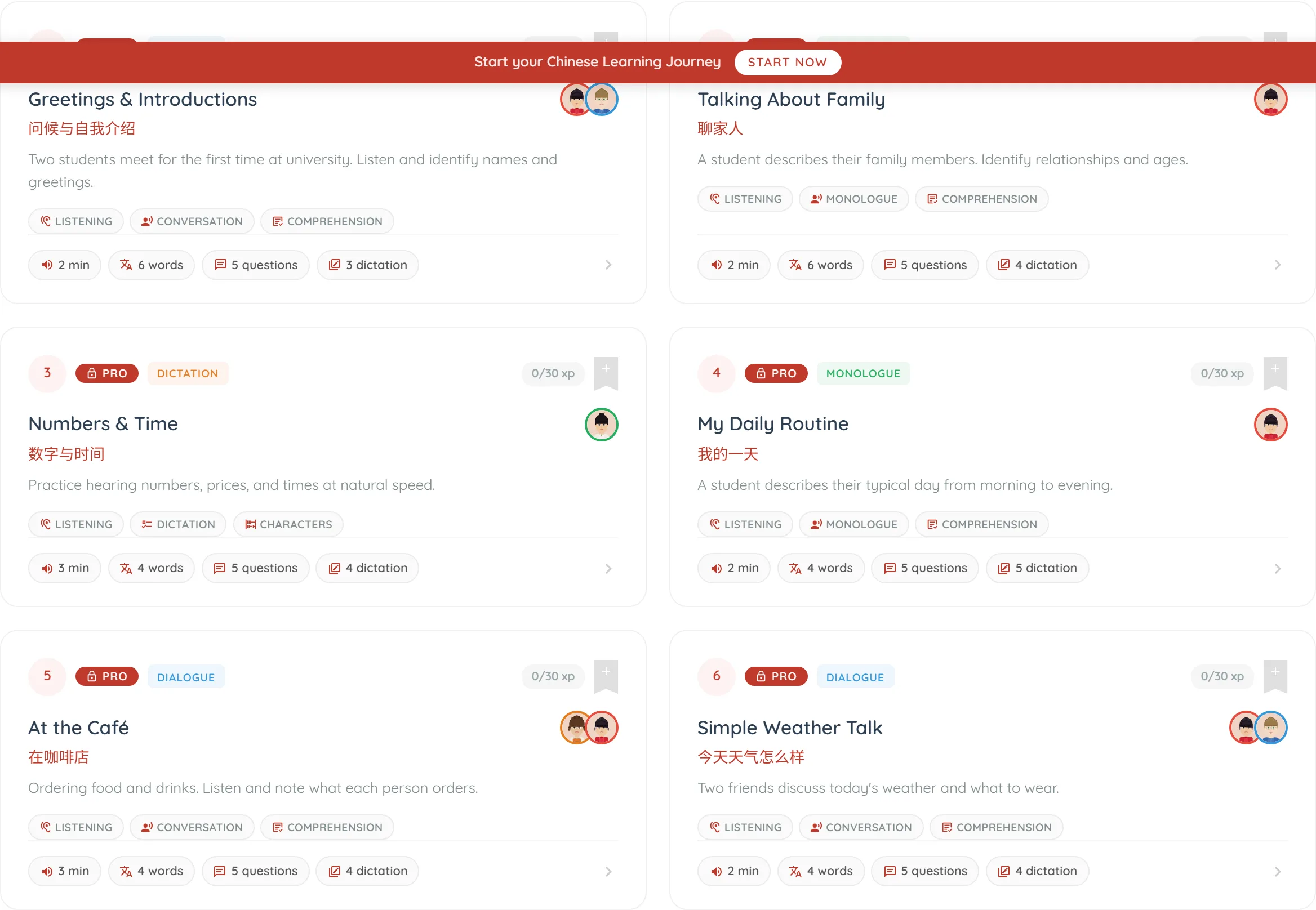
What is in the studio
- Native-speed dialogues — Real pace, not the slowed-down delivery of a textbook recording. Banded, so HSK 2 material is short and clear rather than slow.
- Dictation drills — Write what you hear. The most demanding exercise in the studio and the one that improves your ear fastest.
- Comprehension questions — After the passage, on what was said — the same shape the HSK listening section uses.
- Transcripts — Available after you have attempted the passage, so you can find out exactly which word you misheard.
How to get value out of it
- Listen once without the transcript — Get the gist. Resist opening the text; the discomfort is the exercise.
- Listen again for the gaps — Second pass, aimed at the bits you missed rather than the whole. You will catch more than you expect.
- Answer the questions — Before reading the transcript, so the answers measure your ear rather than your eye.
- Now read the transcript — And find the specific word that defeated you. It is almost always a word you know in writing and have never heard.
- Listen a final time, reading along — This is where the sound and the spelling get welded together, which is the actual point of the session.
What it costs
The passages and their audio are recorded once and served to everyone, so playing them is free however many times you replay a line. The studio itself is part of a plan.
Annotating a transcript with pinyin and glosses calls an AI and costs 2 credits.
Common questions
No. The audio is pre-recorded and served like any other file — replay it as often as you like.
October 9, 2026