
Grammar is the part learners either over-study or avoid entirely, and both go wrong for the same reason: treating it as a subject rather than as the shape sentences come in. The grammar section here is built around patterns you can fill rather than rules you memorise, and all of it is free.
How it is organised
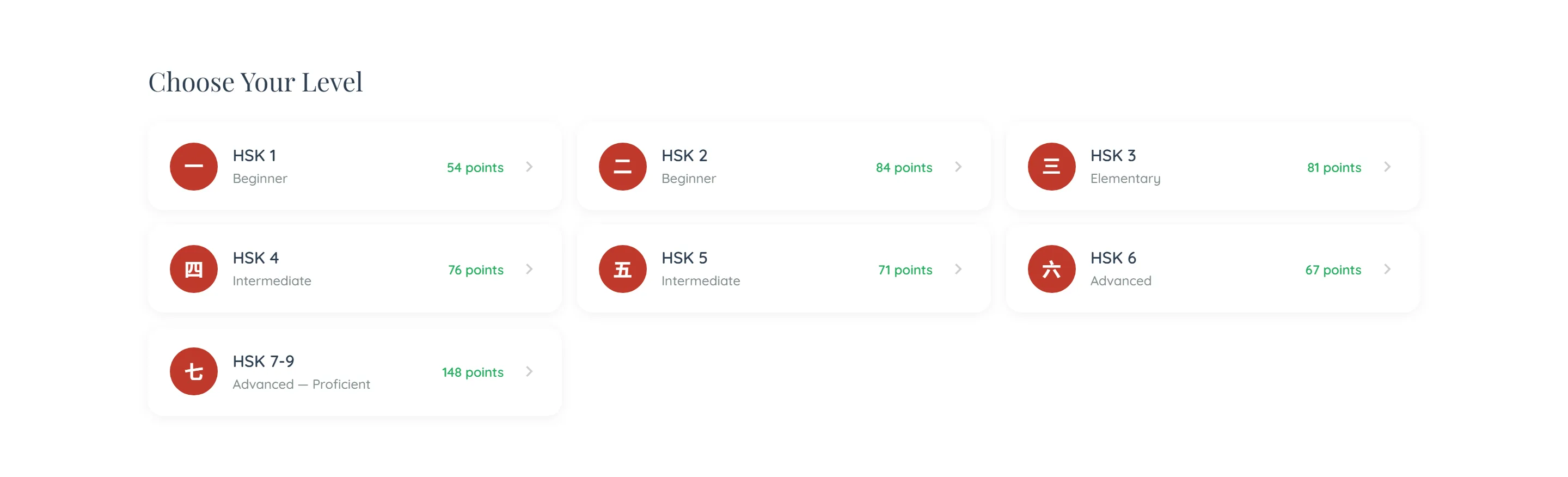
By HSK level, matching the lessons. Each level has its own set of points, and the grammar hub lets you read a whole band or jump to one pattern.
A point is not a paragraph — it is a page, with the same shape every time so you learn where to look.
What is in a grammar point
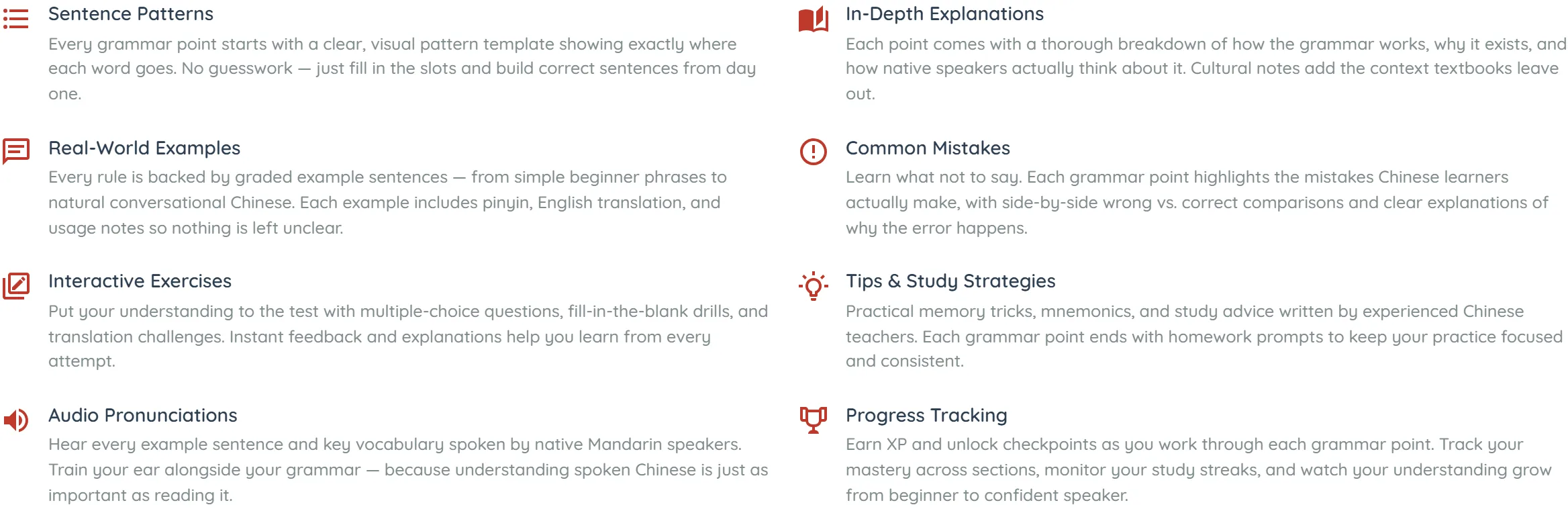
- The pattern — A slot-based template — Subject + 把 + Object + Verb + Result — rather than a prose description. This is the part to memorise, and it is short.
- The explanation — What the pattern does and when a native speaker reaches for it. Usually the answer to "why not just say it the other way".
- Graded examples — Sentences at the point’s own HSK level, so you can read them rather than decode them. Tap any character you do not know.
- Common mistakes — The specific wrong version learners produce, next to the right one. Often more useful than the explanation.
- Exercises — Build the pattern yourself. Recognition and production are different skills and only the second one is speaking.
- Tips — The shortcuts and mnemonics that make a pattern stick.
Grammar and lessons together
Every HSK lesson has its own grammar section covering the patterns that lesson introduces. The standalone grammar pages are the reference: fuller treatment, more examples, and every point at a level in one place.
Use the lesson when you are working through the course, and the grammar page when you have hit a pattern in the wild and want it properly explained.
Not sure which level to read?
The placement test is grammar-based and takes about three minutes. It is the fastest honest answer to "where am I", and it costs nothing.
Common questions
Entirely. Every point at every level, with its examples, mistakes and exercises, needs no account and no plan.