
November 14, 2026 · 星期六
The Grand Canal
大运河· to move

 Today’s episode with Jason and Amy
The Grand Canal showcases the significant role of water transport in Chinese history, fostering economic and cultural exchange.
立冬 marks the beginning of winter, when the harvest is stored away and the land settles into rest. The cold deepens, water begins to freeze, and creatures retreat into shelter and stillness.
Northerners eat dumplings (饺子) on this day, their shape recalling ears to protect against frostbite in the coming cold.
The Grand Canal
大运河dà yùn hé
The Grand Canal, known in Chinese as 大运河 (Dàyùnhé), is an extraordinary feat of engineering and a significant cultural symbol in China. Stretching over 1,700 kilometers, it connects Beijing in the north to Hangzhou in the south, and has been instrumental in the economic and cultural development of the country. This massive waterway first came into being during the Sui Dynasty, around the 7th century, and was further developed in subsequent dynasties[1].
The construction of the Grand Canal enabled the efficient movement (运) of grain and other goods, which was crucial for supplying the capital and feeding the armies stationed in the north. It also facilitated cultural exchange and communication between different regions of China[2]. The canal's existence allowed for the transfer of administrative duties and resources, shaping the socio-economic landscape of ancient China.
Today, the Grand Canal remains a symbol of China’s historical ingenuity and engineering prowess. Its legacy is preserved as a UNESCO World Heritage site, reflecting its importance in the history of global civil engineering. November is a wonderful time to reflect on this monumental structure, as the weather cools and the canal's scenic beauty becomes even more pronounced, inviting contemplation on the past and the continuous flow of culture and history.
The Grand Canal showcases the significant role of water transport in Chinese history, fostering economic and cultural exchange.
大运河很长。
Dà Yùnhé hěn cháng.
The Grand Canal is very long.
- [1] UNESCO World Heritage Centre: The Grand Canal
- [2] Needham, Joseph. Science and Civilisation in China, Volume 4: Physics and Physical Technology
Jason & Amy on 运
Podcast: Dragon Daily: The Grand Canal — and the word 运
Jason & Amy on The Grand Canal and 运
New here?
November 14, 2026
Today's highlights include a significant birth in Chinese filmmaking and an important engineering contribution.
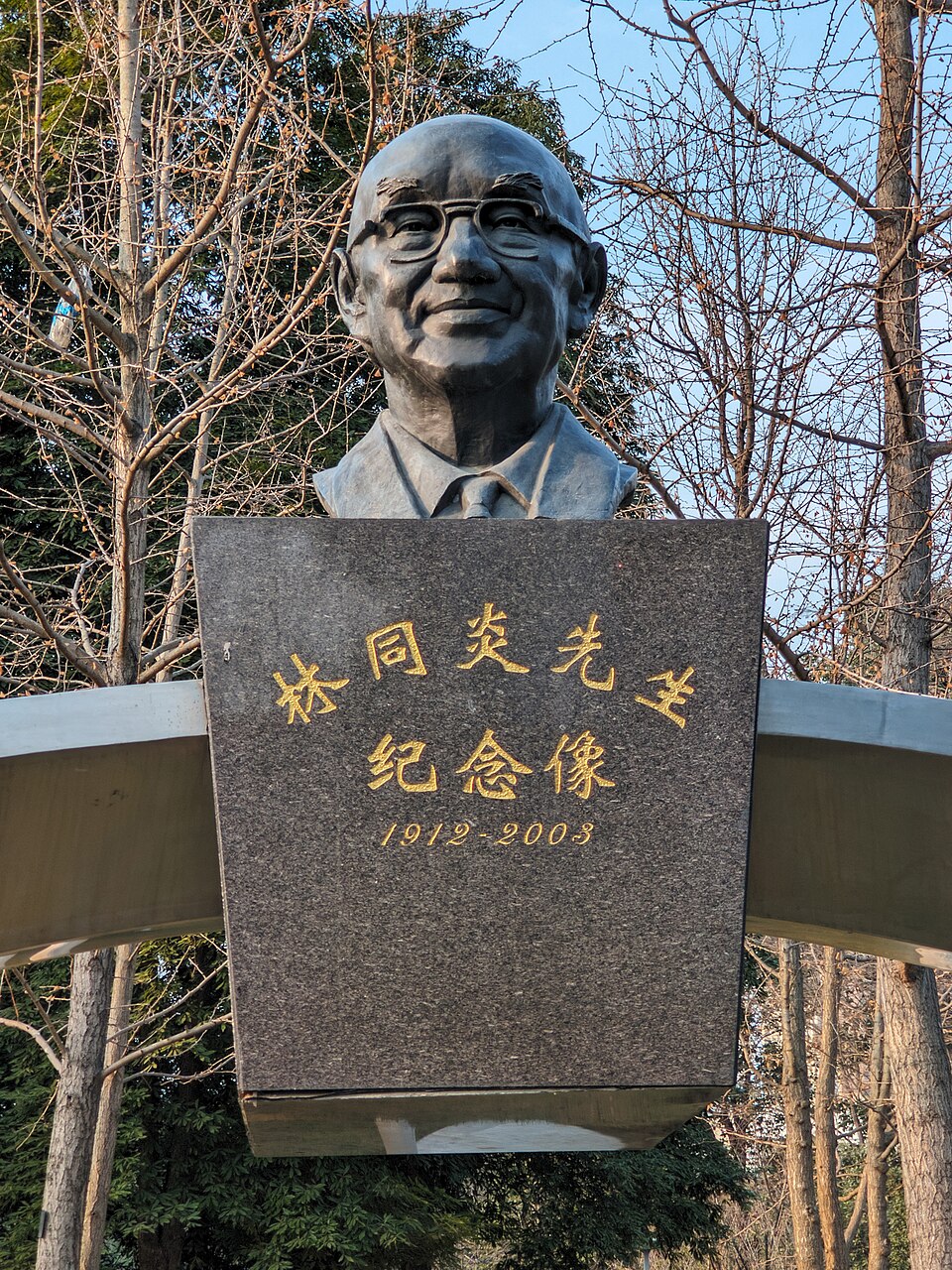
Kcx36 / Wikimedia Commons (CC BY-SA 4.0) sourcelicence Birth of Engineer Tung-Yen Lin 林同炎
Tung-Yen Lin, born this day, was a pioneering Chinese-American engineer known for his work in prestressed concrete. He designed the famous Guandu Bridge in Taiwan.
Lin's innovations in engineering have influenced major construction projects worldwide.
Read more
Dick Thomas Johnson from Tokyo, Japan / Wikimedia Commons (CC BY 2.0) sourcelicence Birth of Zhang Yimou, Influential Filmmaker 张艺谋
Zhang Yimou, a renowned Chinese director, was born. He is celebrated for films such as 'Raise the Red Lantern' and 'Hero'. Zhang is known for his storytelling prowess and vivid cinematic style.
Zhang Yimou's work has significantly shaped Chinese cinema's global reputation.
Read more
我运东西。
Wǒ yùn dōngxī.
I move things.
A simple sentence showing the basic use of '运'.
他用车运货。
Tā yòng chē yùn huò.
He uses a car to transport goods.
Shows '运' in the context of transportation.
我们运粮食。
Wǒmen yùn liángshí.
We transport grain.
Demonstrates '运' in a practical context of moving supplies.
思想的运转很重要。
Sīxiǎng de yùnzhuǎn hěn zhòngyào.
The movement of thoughts is important.
A more abstract use of '运', relating to the movement of thoughts.
Using '运' in a sentence
verb + 运 + noun
This pattern is used to indicate the action of moving or transporting something.
Use this pattern when describing the movement or transportation of objects or ideas.
他们运送货物。
Tāmen yùnsòng huòwù.
They transport goods.
我运了家具。
Wǒ yùnle jiājù.
I moved the furniture.
我们运油。
Wǒmen yùn yóu.
We transport oil.
What does 运 mean?
How is 运 pronounced?
How do you write "to move" in Chinese?
Listen. What does the sentence mean?
他们正在___货。(They are currently ___ goods.)
我们运书 — What does this sentence mean?
What is the Grand Canal known for?
Arrange into a correct sentence
What is Zhang Yimou best known for?
Which engineering innovation is Tung-Yen Lin associated with?
Frequently asked questions about the word 运
Common phrases include 运气 (yùnqì - luck) and 运输 (yùnshū - transportation).
Yes, 运 can be used in both contexts, whether discussing logistics or talking about luck.
运 is pronounced with a falling tone, yùn, which is important to distinguish it from other similar-sounding words.
Chinese Learner’s Horoscope
Your sign’s reading for today, written for learners.
Find your sign
The Chinese zodiac assigns each birth year one of twelve animals, each paired with an element that colours its character. Yours shapes a reading written for learners.
- Your sign and its elementOne of twelve animals on a 12-year cycle
- A daily affirmationFresh every morning, never repeated
- A learning horoscopeWhat to study today, and when
- A lucky characterWith pinyin, meaning and a study tip
Your birth date
Saved on this device — used only to work out your zodiac sign.
Today's Mandarin word: 运 (yùn) — to move.
Learn it on Mandarin Temple's Dragon Daily 🐉