

September 22, 2026 · 星期二
The Elephant of Peace
大象· elephant

 Today’s episode with Jason & Amy
The character 象 not only represents the animal but also symbolizes deeper concepts like peace in Chinese culture.
白露 is named for the glistening dew that beads on grass and leaves as cool nights condense the air's moisture. The temperature gap between day and night widens sharply, and a clear autumn crispness sets in.
In some regions people brew "白露 tea" or rice wine, and gather ten kinds of white-named herbs to make a nourishing tonic.
The Elephant of Peace
大象dà xiàng
In Chinese culture, the elephant (象, xiàng) has long been a symbol of strength, wisdom, and peace. The 'Elephant of Peace,' or 大象, is an artistic motif where an elephant carries a vase, known as 'ping' in Chinese. This imagery forms a rebus that conveys the message 'peace in the world' since 'ping' sounds like 'peace' (平安, píng'ān)[1]. Such visual puns have been a significant part of Chinese art and literature, often used to convey deeper meanings through simple images.
The rebus of the 'Elephant of Peace' is prominently featured in traditional Chinese paintings and sculptures, often found in temples and palaces. These artworks not only serve as decorative pieces but also as carriers of cultural values and aspirations. The imagery is intended to evoke a sense of harmony and tranquility, which are central tenets in Chinese philosophy[2].
Elephants themselves are not native to the majority of China, yet they hold an important place in Chinese mythology and history. The use of elephants in art and symbolism is believed to have been influenced by cultural exchanges with neighboring regions where elephants are native. The elephant's association with peace is particularly fitting given its gentle nature and majestic presence, which have captivated artists and craftsmen for centuries.
Today, the motif of the 'Elephant of Peace' continues to inspire modern art and design, reflecting a timeless desire for peace and harmony in the world. This symbolic use of 象 demonstrates the rich interplay between language, culture, and art in China, where a single character can open up a world of meanings and associations.
The character 象 not only represents the animal but also symbolizes deeper concepts like peace in Chinese culture.
大象象征和平。
Dàxiàng xiàngzhēng hépíng.
The elephant symbolizes peace.
- [1] UNESCO inscription: Traditional Chinese Art Motifs, 2020
- [2] C. A. S. Williams, Outlines of Chinese Symbolism and Art Motives, 1976
Jason & Amy on 象
Podcast: Dragon Daily: The Elephant of Peace — and the word 象
Jason & Amy on The Elephant of Peace and 象
New here?
September 22, 2026
Today in Chinese cultural history, we remember influential figures whose contributions to literature and history have left lasting impacts.
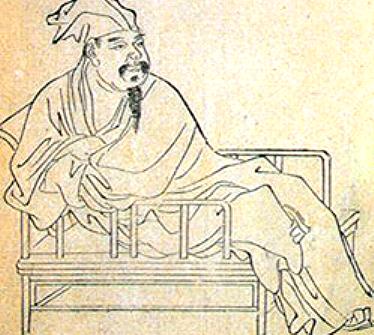
Unknown author / Wikimedia Commons (Public domain) source Ouyang Xiu, Celebrated Historian and Poet, Passes Away 欧阳修
Ouyang Xiu, a prominent historian and poet of the Song Dynasty, passed away. Known for his literary works, including prose and poetry, he also played a key role in the development of Chinese historical writing. His writings are revered for their elegant style and depth.
Ouyang Xiu's works continue to be studied for their historical and literary value.
Read more
大象很大。
Dàxiàng hěn dà.
Elephants are big.
This sentence describes the size of elephants, using 象 to mean 'elephant'.
她在画大象。
Tā zài huà dàxiàng.
She is drawing an elephant.
The sentence shows action related to elephants, clearly using 象.
大象象征力量。
Dàxiàng xiàngzhēng lìliàng.
The elephant symbolizes strength.
This usage associates 象 with symbolic meanings.
和平如大象般稳重。
Hépíng rú dàxiàng bān wěnzhòng.
Peace is as steady as an elephant.
This sentence uses 象 metaphorically to convey stability and peace.
Using 象 as a noun
象 + verb/adjective
In this pattern, 象 is used as a noun referring to the animal, serving as a subject or object in a sentence.
Use this pattern when referring to elephants specifically, or symbolically.
象在河边。
Xiàng zài hé biān.
The elephant is by the river.
象是庞大的动物。
Xiàng shì pángdà de dòngwù.
Elephants are large animals.
大象搬运木头。
Dàxiàng bānyùn mùtou.
The elephant is moving logs.
What does 象 mean?
How is 象 pronounced?
How do you write "elephant" in Chinese?
Listen. What does the sentence mean?
___象征着智慧。(The ___ symbolizes wisdom.)
大象象征和平。 — What does this sentence mean?
What does the 'Elephant of Peace' symbolize in Chinese culture?
Arrange into a correct sentence
Which figure remembered today was a celebrated poet and historian of the Song Dynasty?
Frequently asked questions about the word 象
You can say '这只象很大' (zhè zhī xiàng hěn dà) meaning 'This elephant is very big.'
Yes, it also means 'shape' or 'to imitate,' depending on the context.
It can be used in formal writing, but ensure the context is appropriate, especially when referring to its symbolic meanings.
Chinese Learner’s Horoscope
Your sign’s reading for today, written for learners.
Find your sign
The Chinese zodiac assigns each birth year one of twelve animals, each paired with an element that colours its character. Yours shapes a reading written for learners.
- Your sign and its elementOne of twelve animals on a 12-year cycle
- A daily affirmationFresh every morning, never repeated
- A learning horoscopeWhat to study today, and when
- A lucky characterWith pinyin, meaning and a study tip
Your birth date
Saved on this device — used only to work out your zodiac sign.
Today's Mandarin word: 象 (xiàng) — elephant.
Learn it on Mandarin Temple's Dragon Daily 🐉