

September 16, 2026 · 星期三
The Contented Pig
猪· hog

 Today’s episode with Jason & Amy
In Chinese culture, the pig symbolizes wealth and ease, rounding out the zodiac cycle with its connection to abundance.
白露 is named for the glistening dew that beads on grass and leaves as cool nights condense the air's moisture. The temperature gap between day and night widens sharply, and a clear autumn crispness sets in.
In some regions people brew "白露 tea" or rice wine, and gather ten kinds of white-named herbs to make a nourishing tonic.
The Contented Pig
猪zhū
The pig, known as 猪 (zhū) in Mandarin, holds a significant place in Chinese culture and the zodiac. As the twelfth and final animal in the Chinese zodiac cycle, the pig is often associated with traits such as wealth, prosperity, and contentment. This symbolism is rooted in the agricultural history of China, where pigs were seen as valuable assets that contributed to a family's wealth and well-being[1]. The presence of a pig in the zodiac reflects a cultural appreciation for abundance and ease.
In traditional Chinese beliefs, those born in the Year of the Pig are thought to be blessed with good fortune and a carefree life. This perception is not merely a product of superstition but is also influenced by the pig's historical role in Chinese society. Pigs were essential livestock, providing both sustenance and economic stability. Consequently, the pig became a metaphor for a life of plenty and satisfaction, marking a harmonious end to the zodiac cycle[2].
Today, the pig continues to hold cultural significance in various celebrations and customs. During the Chinese New Year, pig motifs are often seen in decorations, symbolizing a wish for prosperity and a bountiful year ahead. The pig's image is also prevalent in art and literature, where it is depicted as a creature of leisure and affluence, reflecting the cultural values of comfort and generosity. As we reflect on the symbolism of the pig, it is clear that 猪 represents much more than just an animal; it embodies an ideal of harmonious living and contentment, making it a fitting theme for the conclusion of the zodiac cycle.
In Chinese culture, the pig symbolizes wealth and ease, rounding out the zodiac cycle with its connection to abundance.
猪象征着富裕。
Zhū xiàngzhēngzhe fùyù.
The pig symbolizes wealth.
- [1] 《中国民俗文化》 Chinese Folk Culture, a comprehensive study on traditional customs and beliefs.
- [2] 《十二生肖》 The Twelve Chinese Zodiac, exploring the cultural significance of each zodiac animal.
Jason & Amy on 猪
Podcast: Dragon Daily: The Contented Pig — and the word 猪
Jason & Amy on The Contented Pig and 猪
New here?
September 16, 2026
On this day, we explore cultural developments in transportation and celebrate influential figures in Chinese history.
Birth of the Daoguang Emperor 道光皇帝
The Daoguang Emperor, a ruler of the Qing dynasty, was born. His reign was marked by efforts to address internal challenges and interactions with Western powers.
His reign had a lasting impact on China's history and its interactions with Western nations.
Read more
Harald Krichel / Wikimedia Commons (CC BY-SA 4.0) sourcelicence Birth of Fan Bingbing, Chinese Actress
Fan Bingbing, a celebrated Chinese actress, singer, and producer, was born. Known for her roles in films like 'Cell Phone,' she has become a significant figure in the Chinese entertainment industry.
Fan Bingbing's work has influenced Chinese film and brought international attention to Chinese cinema.
Read more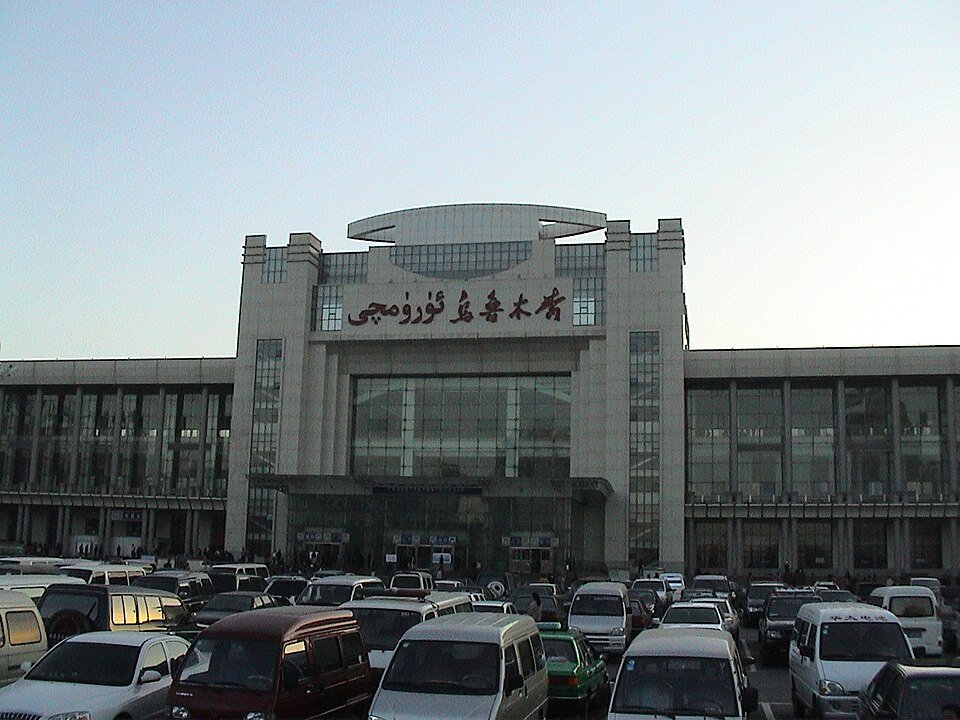
Unknown author / Wikimedia Commons (CC BY-SA 3.0) sourcelicence Completion of the Northern Xinjiang Railway 北疆铁路
The Northern Xinjiang railway was completed, linking Ürümqi South to Alashankou, and connecting Chinese railways to Kazakhstan. This added a crucial segment to the Eurasian Land Bridge.
This railway enhanced international trade routes across Eurasia.
Read more
我喜欢猪。
Wǒ xǐhuān zhū.
I like pigs.
Simple sentence showing basic preference.
猪很可爱。
Zhū hěn kě'ài.
Pigs are very cute.
Describes pigs with an adjective.
猪在农场里生活。
Zhū zài nóngchǎng lǐ shēnghuó.
Pigs live on farms.
Describes the habitat of pigs.
猪象征着丰富的生活。
Zhū xiàngzhēngzhe fēngfù de shēnghuó.
The pig symbolizes a life of abundance.
Uses symbolism to describe cultural significance.
Using 的 to link adjectives and nouns
adjective + 的 + noun
The particle 的 is used to connect adjectives with nouns, forming descriptive phrases.
Use 的 to join adjectives and nouns for detailed descriptions.
可爱的猪
kě'ài de zhū
cute pig
富裕的生活
fùyù de shēnghuó
wealthy life
安静的晚上
ānjìng de wǎnshàng
quiet night
What does 猪 mean?
How is 猪 pronounced?
How do you write "pig" in Chinese?
Listen. What does the sentence mean?
农场里有很多___。(There are many ___ on the farm.)
猪象征着富裕。 — What does this sentence mean?
What does the pig symbolize in Chinese culture?
Arrange into a correct sentence
What was completed in 1990 that linked Chinese railways to Kazakhstan?
Who is Fan Bingbing?
Frequently asked questions about the word 猪
You can say '我喜欢吃猪肉' (Wǒ xǐhuān chī zhūròu), which means 'I like to eat pork.'
Yes, the term for wild boar is 野猪 (yězhū), where 野 means 'wild.'
One common idiom is 猪八戒 (Zhū Bājiè), referring to a character from 'Journey to the West' who is often viewed humorously.
Chinese Learner’s Horoscope
Your sign’s reading for today, written for learners.
Find your sign
The Chinese zodiac assigns each birth year one of twelve animals, each paired with an element that colours its character. Yours shapes a reading written for learners.
- Your sign and its elementOne of twelve animals on a 12-year cycle
- A daily affirmationFresh every morning, never repeated
- A learning horoscopeWhat to study today, and when
- A lucky characterWith pinyin, meaning and a study tip
Your birth date
Saved on this device — used only to work out your zodiac sign.
Today's Mandarin word: 猪 (zhū) — hog.
Learn it on Mandarin Temple's Dragon Daily 🐉