

August 20, 2026 · 星期四
Bronze Mirrors
铜镜· mirror

 Today’s episode with Jason & Amy
The word 镜 connects to today's story as it signifies 'mirror', highlighting the cultural and artistic significance of bronze mirrors in ancient China.
立秋 marks the official start of autumn, though the lingering "autumn tiger" heat often hangs on for weeks. Subtle signs appear — a cooler breeze at dawn, the first yellowing leaves, ripening fruit.
People practice 贴秋膘 ("sticking on autumn fat"), eating hearty meats to recover weight lost in summer, and bite into melon (啃秋).
Bronze Mirrors
铜镜tóng jìng
Bronze mirrors, known as 铜镜 (tóngjìng) in Chinese, were not only practical tools in ancient China but also exquisite works of art[1]. These mirrors were often crafted with a highly polished reflecting surface on one side and intricate designs on the reverse, typically featuring motifs of mythical creatures, flowers, or scenes from nature[2]. This duality made them both functional and decorative, serving as both dressing-table essentials and as decorative pieces in homes.
The process of creating a bronze mirror involved melting and casting bronze into molds, followed by meticulous polishing to achieve a reflective surface. The reverse side's designs were achieved through casting or engraving techniques, which artisans used to convey cultural and spiritual themes[3]. This artistry made each mirror unique, reflecting the aesthetics and beliefs of its time.
Historically, these mirrors also held symbolic significance. They were often associated with myths and legends, believed to possess the ability to ward off evil spirits or reveal the truth, much like the symbolic use of the word 镜, which means 'mirror' in Chinese. The presence of a bronze mirror in a household symbolized prosperity and cultural refinement, underlining the importance of craftsmanship in Chinese heritage.
Today, these ancient mirrors are valued artifacts, showcasing the advanced metallurgical techniques and artistic sensibilities of ancient Chinese society. They are displayed in museums and studied by historians and art lovers alike, who appreciate their beauty and historical significance. As we reflect on the past on this day, August 20th, we can appreciate how these cultural treasures offer us a 镜 (mirror) into the rich history of China.
The word 镜 connects to today's story as it signifies 'mirror', highlighting the cultural and artistic significance of bronze mirrors in ancient China.
今天我们学习铜镜。
Jīntiān wǒmen xuéxí tóngjìng.
Today we learn about bronze mirrors.
- [1] 《中国古代镜子艺术》 (The Art of Ancient Chinese Mirrors)
- [2] 《工艺美术》 (Arts and Crafts)
- [3] 《中国古代青铜器》 (Ancient Chinese Bronzes)
Jason & Amy on 镜
Podcast: Dragon Daily: Bronze Mirrors — and the word 镜
Jason & Amy on Bronze Mirrors and 镜
New here?
August 20, 2026
Today in Chinese cultural history, we highlight notable figures in media and music, celebrating influential personalities.

Tombus20032000 / Wikimedia Commons (CC BY-SA 4.0) sourcelicence Birth of Agnes Chan, Hong Kong Singer and Author
Agnes Chan, born in 1955, is a celebrated Hong Kong singer and author. She rose to fame in the 1970s with her melodic voice and has published numerous books, impacting both music and literature.
Her work bridges cultural gaps and continues to inspire across generations.
Read moreBirth of Liu Chunyan, Voice Actress and Host 刘纯燕
Liu Chunyan, born in 1966, is a well-known Chinese host and voice actress. She gained fame for her role as the host of the children's program 'Big Pinwheel' and her voice work in various animated series.
Liu Chunyan has left a lasting impact on children's television in China.
Read more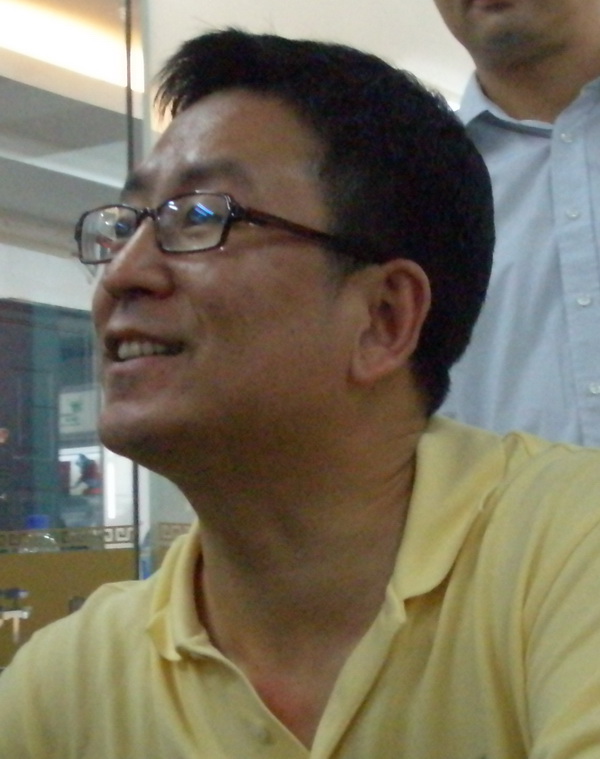
Berthe / Wikimedia Commons (CC BY-SA 3.0) sourcelicence Birth of Bai Yansong, Influential Chinese Host 白岩松
Bai Yansong, a prominent Chinese television host, was born in 1968. Renowned for his insightful reporting and engaging interview style, he has become a respected figure in Chinese media.
Bai Yansong's work continues to influence Chinese journalism and public discourse.
Read more
这是一个镜子。
Zhè shì yī gè jìngzi.
This is a mirror.
This simple sentence introduces the word for 'mirror'.
镜子很明亮。
Jìngzi hěn míngliàng.
The mirror is very bright.
Describes a mirror's reflective quality.
铜镜是古代的艺术品。
Tóngjìng shì gǔdài de yìshùpǐn.
Bronze mirrors are ancient artworks.
This sentence connects mirrors to their cultural significance.
这面镜子反映了历史。
Zhè miàn jìngzi fǎnyìngle lìshǐ.
This mirror reflects history.
Uses 'mirror' metaphorically to reflect cultural history.
Using 是 to Define
subject + 是 + noun
This pattern is used to define or identify the subject as the noun.
Use it to state what something is.
他是老师。
Tā shì lǎoshī.
He is a teacher.
这是书。
Zhè shì shū.
This is a book.
我们是朋友。
Wǒmen shì péngyǒu.
We are friends.
What does 镜 mean?
How is 镜 pronounced?
How do you write "mirror" in Chinese?
Listen. What does the sentence mean?
他在看___。(He is looking at the ___.).
这面镜子很大。 — What does this sentence mean?
What were bronze mirrors typically used for in ancient China?
Arrange into a correct sentence
Which television program is Liu Chunyan known for hosting?
What field is Bai Yansong recognized in?
Frequently asked questions about the word 镜
镜子 (jìngzi) specifically refers to a mirror, while 玻璃 (bōli) is a more general term for glass.
Yes, 镜 can symbolize self-reflection or insight, especially in phrases like '镜子里看到自己' (seeing oneself in the mirror).
Yes, common phrases include '照镜子' (to look in the mirror) and '镜头' (lens), especially in photography.
Chinese Learner’s Horoscope
Your sign’s reading for today, written for learners.
Find your sign
The Chinese zodiac assigns each birth year one of twelve animals, each paired with an element that colours its character. Yours shapes a reading written for learners.
- Your sign and its elementOne of twelve animals on a 12-year cycle
- A daily affirmationFresh every morning, never repeated
- A learning horoscopeWhat to study today, and when
- A lucky characterWith pinyin, meaning and a study tip
Your birth date
Saved on this device — used only to work out your zodiac sign.
Today's Mandarin word: 镜 (jìng) — mirror.
Learn it on Mandarin Temple's Dragon Daily 🐉