
Podcast


Podcast: The One-Child Policy and Its Legacy: Reshaping China's Demographic Destiny
Listen to Jason & Amy discuss The One-Child Policy and Its Legacy: Reshaping China's Demographic Destiny
New here?
Origins and Implementation of the Policy

The one-child policy did not emerge in a vacuum but was the culmination of decades of evolving Chinese state attitudes toward population management. In the early years of the People's Republic, Mao Zedong initially encouraged large families, famously declaring that "every stomach comes with two hands," viewing population growth as a source of national strength and revolutionary energy. However, by the late 1950s and into the 1960s, some Chinese demographers and economists, notably Ma Yinchu, president of Peking University, began warning that unchecked population growth would undermine economic development and strain the country's limited arable land. Ma was politically persecuted for these views during the Anti-Rightist Campaign, but history would vindicate his analysis. By the early 1970s, China's population had surpassed 800 million, and the state began implementing the "Later, Longer, Fewer" campaign, which encouraged later marriage, longer intervals between births, and fewer children overall, successfully reducing the fertility rate from approximately 5.9 births per woman in 1970 to 2.7 by 1979 (Greenhalgh, 2008, pp. 45-72).
The formal one-child policy, announced in September 1980 through an open letter from the Central Committee of the Chinese Communist Party, represented a dramatic intensification of these earlier family planning efforts. The architect of the policy's scientific justification was not a demographer but a missile scientist, Song Jian, who applied cybernetic control theory and systems engineering models to population projections, arguing that China must limit families to one child for the foreseeable future to avoid ecological and economic catastrophe (Greenhalgh, 2008, pp. 112-138). Song's models, while mathematically sophisticated, made assumptions about optimal population targets that were contested by social scientists who understood the complex cultural and economic factors shaping reproductive decisions. Nevertheless, the policy was adopted with the full force of the state apparatus behind it. Implementation varied significantly across regions and over time, but the core mechanism involved a system of rewards for compliance — priority access to housing, education, and employment — and penalties for violations, including substantial fines calculated as multiples of annual income, demotion at work, and in some cases loss of employment in the state sector.
The coercive dimensions of the policy's implementation remain its most controversial legacy. Local cadres, operating under intense pressure to meet population targets set by higher authorities, sometimes resorted to forced sterilizations, mandatory IUD insertions, and coerced late-term abortions, particularly during aggressive campaigns in the 1980s and early 1990s. White (2006, pp. 89-134) documented the systematic nature of these coercive practices through extensive fieldwork in rural areas, revealing how the political economy of birth quotas created perverse incentives for local officials to prioritize numerical targets over individual rights. It is important to note that the policy was never uniformly applied: rural families whose first child was a girl were often permitted a second child, ethnic minorities were generally exempt or subject to more lenient limits, and enforcement intensity varied enormously between provinces. Wealthy urban families could effectively circumvent the policy by paying the "social maintenance fee," a euphemistic term for what was essentially a fine for unauthorized births, creating a de facto two-tier system in which reproductive freedom was correlated with economic status (Greenhalgh and Winkler, 2005, pp. 201-228).
"It is good to have just one child."
Family Planning Commission propaganda slogan (1980s)The "Little Emperor" Generation and Family Transformation
The one-child policy produced a generation of approximately 150 million only children — dubbed "little emperors" (小皇帝, xiǎo huángdì) by Chinese media — who became the focal point of their families' hopes, anxieties, and material resources. With six adults (two parents and four grandparents) investing all their emotional and financial capital in a single child, the 4-2-1 family structure created unprecedented dynamics in Chinese domestic life. These children grew up with levels of parental attention, educational investment, and consumer indulgence that would have been unimaginable to previous generations. Fong (2004, pp. 34-67) documented through extensive ethnographic fieldwork in Dalian how only-child families channeled their resources into tutoring, extracurricular activities, and educational materials, creating a hothouse environment of intense academic pressure and high expectations. The stereotype of the spoiled, socially inept "little emperor" became a pervasive cultural trope, though research has shown this characterization to be considerably more nuanced than popular discourse suggests.
Scholarly studies of only children in China have produced mixed findings that challenge simplistic narratives. Cameron et al. (2013, pp. 953-978) conducted experimental economic games with participants born before and after the policy's implementation, finding that those born under the one-child policy were less trusting, less trustworthy, more risk-averse, and more pessimistic than their counterparts with siblings. However, other researchers have argued that many of the characteristics attributed to "little emperor" socialization — self-confidence, academic achievement, comfort with adult interaction — are actually adaptive qualities in a rapidly modernizing society that rewards individual initiative and educational credentials. The experience of growing up without siblings in a culture that historically valued large families and sibling bonds created a distinctive generational psychology marked by both remarkable self-sufficiency and a deep longing for peer connection, helping to explain the extraordinary enthusiasm with which Chinese only children embraced social media and online communities when these technologies became available (Fong, 2004, pp. 112-145).
The transformation of the Chinese family under the one-child policy extended far beyond the experience of individual children. The policy accelerated a fundamental shift in family structure from the extended patrilineal household — idealized in Confucian culture as multiple generations living under one roof — to the nuclear family as the dominant domestic unit. Daughters, traditionally considered less valuable because they would marry out of the family, paradoxically gained status in one-child families: with no son to carry on the family line, parents invested heavily in their daughters' education and career prospects, contributing to a measurable narrowing of gender gaps in educational attainment among urban populations (Greenhalgh, 2008, pp. 245-270). The elimination of siblings also transformed the emotional landscape of aging, as the first generation of only children reached adulthood facing the prospect of bearing sole responsibility for the care of two aging parents and potentially four grandparents — a caregiving burden that has become one of the most pressing social challenges in contemporary China.
The Sex Ratio Crisis and Missing Women
Perhaps the most devastating unintended consequence of the one-child policy was the dramatic skewing of China's sex ratio at birth, which rose from the biologically normal range of approximately 105-106 males per 100 females to a peak of nearly 121 males per 100 females in 2005. This imbalance, concentrated primarily in rural areas and among second or higher-order births, reflected the collision of the one-child limit with deeply rooted cultural preferences for male heirs — preferences grounded in the patrilineal kinship system, the expectation that sons would provide old-age support, and the Confucian emphasis on male descendants to maintain ancestral rites. The availability of ultrasound technology from the mid-1980s onward enabled sex-selective abortion on a massive scale, despite repeated government prohibitions on fetal sex determination for non-medical purposes (Greenhalgh, 2008, pp. 287-312). Demographers have estimated that between 30 and 40 million "missing women" can be attributed to the combined effects of sex-selective abortion, neglect of female infants, and underreporting of female births during the decades of strict policy enforcement.
The consequences of this demographic distortion have been profound and far-reaching. By the 2010s, millions of Chinese men — disproportionately poor and rural — faced the prospect of being unable to find wives, a phenomenon that Chinese media termed "bare branches" (光棍, guānggùn). Sociologists and criminologists have documented correlations between surplus male populations and elevated rates of depression, substance abuse, and certain categories of crime, though the causal mechanisms remain debated (White, 2006, pp. 234-267). The marriage market became intensely competitive, with bride prices in rural areas inflating dramatically as families of eligible women leveraged their scarcity. In some impoverished regions, the desperation for brides fueled trafficking in women from neighboring countries, particularly Vietnam, Myanmar, and Laos, creating a transnational dimension to China's domestic demographic crisis. The emotional toll on the "bare branches" themselves — men who grew up expecting to fulfill the cultural mandate of marriage and fatherhood but found themselves unable to do so — represents a form of suffering that is only beginning to be documented by researchers.
The government's response to the sex ratio crisis evolved from denial to acknowledgment to active intervention. The "Care for Girls" campaign, launched in 2003, sought to change cultural attitudes toward daughters through propaganda, economic incentives for families with girls, and stricter enforcement of bans on sex-selective abortion (Greenhalgh and Winkler, 2005, pp. 301-335). These efforts, combined with broader social changes — urbanization, rising female educational attainment, the decline of agricultural labor as a determinant of family economic strategy — have contributed to a gradual normalization of the sex ratio, which had declined to approximately 111 by 2020. However, the demographic damage of the peak imbalance years will take decades to work through the population structure, and the cohorts of surplus men born during the 1980s and 1990s will carry the consequences of the policy throughout their lifetimes, a painful reminder that demographic engineering on a national scale produces effects that are far easier to create than to reverse.
"Raise children to provide against old age."
Traditional Chinese proverbThe Aging Crisis and the Shrinking Workforce
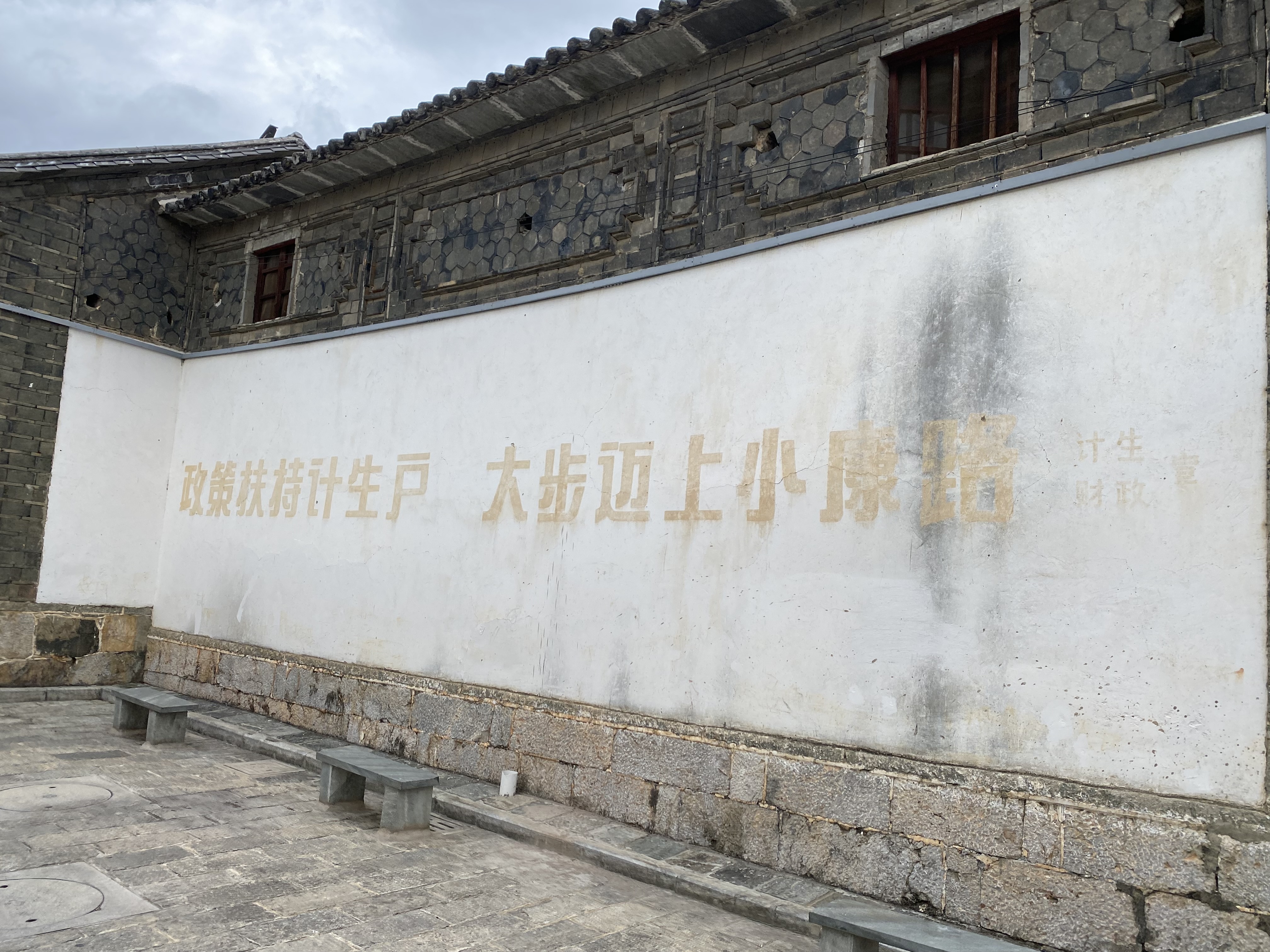
The one-child policy's most consequential long-term legacy may be the dramatic acceleration of China's demographic transition from a young, rapidly growing population to an aging, potentially shrinking one. China's median age rose from approximately 22 years in 1980 to over 38 years by 2020, and the United Nations projects it will reach 50 by 2050, placing China among the world's most elderly societies — a transformation that took Western European countries a century but occurred in China in barely four decades. The working-age population (15-64) peaked around 2015 and has been declining since, a trend that threatens the labor-intensive manufacturing model that powered China's economic miracle (Greenhalgh, 2008, pp. 340-368). The old-age dependency ratio — the number of people over 65 relative to the working-age population — is projected to more than triple between 2020 and 2050, creating enormous fiscal pressure on pension systems, healthcare infrastructure, and social services that were designed for a much younger demographic profile.
The care crisis facing China's elderly population is particularly acute because the one-child policy eroded the traditional family-based eldercare system without establishing adequate institutional alternatives. In traditional Chinese society, filial piety ensured that aging parents would be cared for by their children and grandchildren within the multigenerational household. The one-child policy shattered this model by reducing the number of potential caregivers to one per family, while simultaneously accelerating urbanization and geographic mobility, which often separated adult children from their aging parents by hundreds or thousands of miles. The phenomenon of "empty nest elders" (空巢老人, kōngcháo lǎorén) — elderly parents living alone in rural areas while their only child works in a distant city — has become one of China's most poignant social problems, associated with elevated rates of depression, loneliness, and suicide among the rural elderly (Fong, 2004, pp. 198-224). Government efforts to address this crisis have included legislation requiring adult children to visit their parents regularly — the 2013 amendment to the Elderly Rights Law — though critics have noted the near impossibility of enforcing such provisions.
The economic implications of demographic aging extend far beyond eldercare to encompass the fundamental trajectory of China's development model. The demographic dividend — the economic boost that comes from having a large proportion of the population in its productive working years — powered much of China's growth between 1980 and 2010, but that dividend has now been exhausted and is transitioning into a demographic tax. Some economists argue that automation, artificial intelligence, and productivity improvements can compensate for a shrinking workforce, while others warn that China risks "getting old before getting rich," facing the burdens of an aged society at a per capita income level far below that of Japan, South Korea, or Western Europe when they entered their own aging transitions (White, 2006, pp. 312-345). The government's belated policy reversals — allowing two children in 2015, then three in 2021, and effectively removing all limits by 2023 — have so far failed to produce a meaningful rebound in birth rates, as the structural factors discouraging childbearing in modern China — high costs of housing, education, and childcare; career pressures; changing gender expectations — have proven far more powerful than policy incentives.
From Two-Child to Three-Child: Policy Reversals and Their Limits
The formal relaxation of the one-child policy began in November 2013, when the Third Plenum of the 18th Central Committee announced that couples in which one partner was an only child would be permitted to have two children, followed by the universal two-child policy in January 2016 and the three-child policy in May 2021. These reversals represented an acknowledgment, long delayed by institutional inertia and political face-saving, that the demographic projections which had justified the original policy were proving catastrophically accurate in ways its architects had not fully anticipated. The initial response to the two-child policy was a modest uptick in births in 2016 and 2017, driven primarily by older women who had long desired a second child, but this rebound proved temporary. By 2019, China's birth rate had fallen to its lowest level since the founding of the People's Republic, and the 2020 census revealed a total fertility rate of approximately 1.3 — well below the replacement level of 2.1 and comparable to the ultra-low fertility rates observed in Japan and South Korea (Greenhalgh, 2008, pp. 380-402).
The failure of pronatalist policies to reverse the fertility decline reflects a fundamental misunderstanding of the relationship between state policy and reproductive behavior. Four decades of family planning propaganda successfully instilled the small-family norm into Chinese culture so thoroughly that it has now become self-sustaining, independent of government enforcement. Young Chinese women, who came of age with unprecedented access to education and career opportunities, are increasingly reluctant to sacrifice their professional aspirations and personal autonomy for motherhood, particularly in a society where childcare responsibilities fall disproportionately on women and institutional support for working mothers remains inadequate (Greenhalgh and Winkler, 2005, pp. 378-412). The astronomical cost of raising a child in urban China — estimated at approximately 485,000 yuan ($68,000) for a child's first seventeen years in 2022, and far more in first-tier cities when accounting for housing and education — has made the decision to have even one child a source of financial anxiety for many young couples. The irony is exquisite: a policy designed to constrain population growth succeeded so well that the state now finds itself desperately trying to encourage the births it once prohibited.
The government's increasingly urgent pronatalist measures — extended maternity and paternity leave, tax deductions for childcare expenses, subsidized housing for families with multiple children, crackdowns on the private tutoring industry to reduce educational costs — have so far produced minimal demographic impact. Provincial and municipal governments have experimented with cash incentives for births, with some cities offering payments of 10,000 yuan or more for second and third children, though these sums are widely regarded as insufficient given the true costs of child-rearing (Cameron et al., 2013, pp. 1012-1035). The cultural shift is perhaps most visible in the rise of the "double income, no kids" (丁克, dīngkè, from the English "DINK") movement among educated urban young people who openly declare their intention to remain child-free — a position that would have been nearly unthinkable in Chinese society a generation ago. Whether China's demographic trajectory can be altered remains one of the great uncertainties of the twenty-first century, with implications that extend far beyond China's borders to affect global economic growth, geopolitical power balances, and the sustainability of international systems built on assumptions of continued Chinese demographic and economic expansion.
"Cannot afford to give birth, raise, educate, get sick, or die."
Popular internet expression on the cost of living in modern ChinaCultural and Psychological Legacy
The one-child policy's cultural legacy extends far beyond demographics into the realms of psychology, identity, and collective memory. For the generation born under the policy — roughly 1980 to 2015 — the experience of being an only child in a society that historically celebrated large families created a distinctive generational identity marked by both privilege and isolation. These individuals, now entering their thirties and forties, carry the weight of being simultaneously their families' sole hope and their nation's demographic experiment. The psychological literature on Chinese only children reveals complex patterns: higher levels of academic achievement and self-confidence coexist with elevated rates of anxiety, loneliness, and difficulty in collaborative social situations, though researchers caution against attributing all these characteristics to only-child status rather than to the broader social transformations occurring simultaneously (Fong, 2004, pp. 256-289). The phenomenon of "shidu" families (失独家庭, shīdú jiātíng) — parents who lost their only child to accident, illness, or natural disaster — represents perhaps the policy's most heartbreaking legacy, as these bereft parents face old age without children, grandchildren, or the social identity that parenthood confers in Chinese culture.
The one-child policy also reshaped Chinese gender relations in complex and sometimes contradictory ways. On one hand, the elimination of competition from brothers gave only daughters unprecedented access to family resources and parental investment, contributing to the dramatic expansion of female educational attainment that has made Chinese women among the most highly educated in the developing world. On the other hand, the persistence of son preference and the practice of sex-selective abortion revealed the limits of policy-driven gender equity, demonstrating that cultural attitudes toward gender could survive and even intensify under population pressure (White, 2006, pp. 356-389). The generation of urban women who grew up as only children often display a confident self-assurance that distinguishes them from their mothers and grandmothers, yet they confront a marriage market distorted by surplus men and a workplace culture that continues to discriminate against women of childbearing age. The tension between the empowerment that only-child status conferred and the patriarchal structures that persist in Chinese society creates a distinctive form of feminist consciousness among young Chinese women.
The policy's place in Chinese collective memory remains deeply contested. For many Chinese families, particularly in urban areas, the one-child policy is remembered as a reasonable, if painful, sacrifice that contributed to China's economic development and their own family's prosperity — the smaller family enabling greater investment in education, housing, and quality of life. For others, especially rural families who suffered coerced abortions, forced sterilizations, or the confiscation of property as punishment for unauthorized births, the policy represents a traumatic violation of bodily autonomy and family integrity whose wounds have never been officially acknowledged or addressed (Greenhalgh, 2008, pp. 415-445). The Chinese government has shown little inclination to reckon publicly with the policy's abuses, preferring to frame the transition from restriction to encouragement as a natural evolution of governance rather than an admission of error. This unresolved reckoning — the absence of accountability for suffering inflicted in the name of national development — remains a source of quiet bitterness for millions of Chinese families and a challenge for historians and ethicists attempting to evaluate the policy's full human cost against its claimed demographic and economic benefits.
Quiz
What was the primary reason for the implementation of China's one-child policy in 1980?
Which group was generally exempt from strict enforcement of the one-child policy?
What term is used to describe the generation of only children born under the one-child policy?
What unintended consequence did the one-child policy have on China's sex ratio?
What is the main challenge faced by the 'bare branches' in China?
What impact did the one-child policy have on the traditional family-based eldercare system in China?
What was the initial response to the relaxation of the one-child policy allowing two children?
What cultural shift has been observed among young, educated urban Chinese people in recent years?
Write your thoughts, then get feedback from Jason — you can turn any answer into a full discussion.
9. How might the legacy of the one-child policy influence China's future social and economic development?
10. In what ways could the one-child policy have affected the personal identities and social interactions of those born under it?
Frequently Asked Questions
Common questions about The One-Child Policy and Its Legacy: Reshaping China's Demographic Destiny
What was China's one-child policy?
China's one-child policy was a population control measure implemented in 1979 that restricted most urban couples to having only one child. Enforced through a combination of financial incentives, workplace pressure, and sometimes coercive measures, it remained in effect for over 35 years before being replaced by a two-child policy in 2015 and a three-child policy in 2021.
Why did China end the one-child policy?
China ended the one-child policy because it created a rapidly aging population, a shrinking workforce, and a severe gender imbalance of approximately 30 million more men than women. By the 2010s, economists warned that these demographic distortions threatened China's long-term economic growth and social stability.
What is the "little emperor" syndrome in China?
The "little emperor" syndrome refers to the perception that children raised as only children under the one-child policy were spoiled by the undivided attention and resources of two parents and four grandparents. Research has shown these children tend to be less trusting, more risk-averse, and less competitive than peers raised with siblings, though they also benefited from greater educational investment.
How many people were affected by China's one-child policy?
The one-child policy affected an estimated 400 million births that were prevented over its 35-year duration, according to Chinese government figures. The policy reshaped the family structure for an entire generation, creating a society where most urban Chinese born between 1980 and 2015 grew up without siblings.
What is the gender imbalance caused by the one-child policy?
The one-child policy, combined with traditional son preference and access to sex-selective ultrasound technology, produced a dramatic gender imbalance with the sex ratio at birth reaching 121 boys per 100 girls by 2005. This has left tens of millions of men unable to find partners, a demographic group sometimes called "bare branches" (光棍), contributing to social instability in rural areas.