
Podcast


Podcast: Filial Piety: The Root of Chinese Social Order
Listen to Jason & Amy discuss Filial Piety: The Root of Chinese Social Order
New here?
Origins and Classical Foundations
The concept of filial piety (xiao, 孝) occupies a position in Chinese moral philosophy so fundamental that Confucius himself reportedly declared it the root of all virtue and the foundation of civilized governance. The character xiao is a compound ideograph depicting a child (zi, 子) supporting an elder (lao, 老), a visual etymology that captures the essence of the concept: the younger generation bears the weight of the older, sustaining the family across time. While reverence for parents and ancestors certainly predated Confucius, it was the Confucian tradition that elevated xiao from a natural sentiment into a systematic ethical obligation, integrating it into a comprehensive framework of social relationships that would govern Chinese life for millennia. The Analects (Lunyu) contains numerous passages in which Confucius discusses filial piety, most famously the exchange with his disciple Meng Yizi, in which the Master defines xiao simply as "not being disobedient" (wu wei) — a deceptively simple formulation that, as Rosemont and Ames (2009, pp. 45–62) have argued, implies an entire cosmology of harmonious social relationships radiating outward from the parent-child bond.
The Xiaojing, or Classic of Filial Piety, is the single most important text in the intellectual history of xiao, a short but enormously influential dialogue between Confucius and his disciple Zengzi that systematically expounds the duties of filial piety across all social classes, from the common peasant to the Son of Heaven himself. Traditionally attributed to Zengzi or his disciples and dated to the fourth or third century BCE, the Xiaojing argues that filial piety is not merely a private family virtue but the cosmic principle that connects human society to the order of Heaven and Earth. The text famously declares that "filial piety is the root of virtue and the source of all teaching" (fu xiao, de zhi ben ye, jiao zhi suo you sheng ye), establishing a hierarchy of moral importance that places the parent-child relationship above all other social bonds. The Xiaojing further distinguishes between levels of filial duty appropriate to different social stations: the Son of Heaven practices xiao by governing the empire with benevolence, the feudal lords by preserving their territories, the ministers by loyal service, and the common people by diligently supporting their parents through labor. This stratified model of filial obligation effectively made xiao the unifying ethical principle of the entire imperial social order, connecting the humblest family to the throne itself through a continuous chain of reciprocal duty (Knapp, 2005, pp. 18–35).
The philosophical elaboration of filial piety continued through the work of Mencius (Mengzi, 372–289 BCE), who extended the concept in directions that would prove enormously consequential for Chinese legal and social history. Mencius identified three forms of unfilial conduct, the gravest of which was failing to produce an heir — a formulation that sanctioned and even demanded the practice of taking concubines if a primary wife proved unable to bear sons, with profound implications for gender relations and family structure. Mencius also emphasized the emotional dimension of xiao, arguing that genuine filial piety required not merely outward compliance but heartfelt devotion, joyful service, and the gentle remonstrance of parents who had gone astray — a position that distinguished Confucian filial piety from the blind obedience demanded by Legalist thinkers. The Mencian synthesis of duty and emotion, obligation and love, gave filial piety a psychological depth and moral complexity that elevated it far beyond simple obedience, creating an ethical ideal that could accommodate the full range of human feeling within the parent-child relationship (Holzman, 1998, pp. 72–89).
"Filial piety is the root of virtue and the source from which all teaching comes."
Classic of Filial Piety (Xiaojing), c. 4th century BCEFilial Piety in Law and Governance
The translation of filial piety from philosophical ideal into enforceable legal obligation represents one of the most distinctive features of the Chinese legal tradition, distinguishing it sharply from the rights-based legal systems that developed in the West. Beginning with the Han dynasty (206 BCE – 220 CE), Chinese law codes incorporated filial piety as both a positive duty and a criminal category, creating a legal framework in which offenses against parents were punished with extraordinary severity while filial devotion was rewarded with official recognition and material benefits. The Han Code established the crime of "unfilial conduct" (bu xiao) as one of the "Ten Abominations" (shi e) — the most serious category of offenses in Chinese law, ranking alongside treason and rebellion. A child who struck, cursed, or failed to support a parent faced punishments far exceeding those imposed for identical acts against a stranger, reflecting the legal system's foundational assumption that the parent-child relationship was qualitatively different from all other social bonds and deserving of special protection (Ch'ü, 1961, pp. 22–41).
The Tang Code (Tanglü shuyi, 653 CE), generally regarded as the most influential legal code in East Asian history, brought the legal institutionalization of filial piety to its fullest expression, creating a comprehensive system of graduated penalties that calibrated punishment according to the precise kinship relationship between offender and victim. Under the Tang Code, a child who killed a parent or grandparent was subject to death by slow slicing (lingchi), the most terrible penalty in the Chinese penal repertoire, regardless of any mitigating circumstances. A child who merely struck a parent faced strangulation, while cursing a parent merited three years of penal servitude — in each case, the punishment was several degrees more severe than that imposed for the same act against an unrelated person. Conversely, a parent who killed a child in the course of disciplinary punishment received a substantially reduced sentence, and a grandparent who killed a disobedient grandchild might escape punishment entirely. This asymmetry of legal protection, which persisted in various forms through the Qing dynasty and was not fully eliminated until the twentieth century, reflected the Confucian principle that the parent-child relationship was inherently hierarchical and that the obligations owed by children to parents were categorically greater than those owed by parents to children (MacCormack, 1996, pp. 55–78).
Beyond the criminal law, filial piety shaped Chinese governance through the institution of the "举孝廉" (ju xiaolian, "recommending the filial and incorrupt"), a system of official recruitment established during the Han dynasty that required local officials to identify and nominate individuals distinguished by their filial conduct for appointment to government positions. This system, which functioned as the primary method of bureaucratic recruitment before the establishment of the imperial examination system, created a direct link between family virtue and political power, ensuring that the Confucian moral hierarchy was reproduced at every level of the administrative apparatus. The practice of erecting memorial arches (paifang) to honor exceptionally filial individuals — particularly widows who remained faithful to deceased husbands and sons who performed extraordinary acts of devotion to aging parents — further reinforced the public dimension of filial piety, transforming private family virtue into community spectacle and state-sanctioned ideology (Knapp, 2005, pp. 42–68).
The Twenty-Four Exemplars and Popular Culture
The popular dissemination of filial piety ideology reached its most vivid expression in the Ershisi Xiao, or Twenty-Four Exemplars of Filial Piety, a collection of stories compiled by Guo Jujing during the Yuan dynasty (1260–1368) that became one of the most widely reproduced and illustrated texts in Chinese cultural history. These stories, depicting historical and legendary figures who demonstrated extraordinary filial devotion under extreme circumstances, were carved into temple walls, painted on porcelain, embroidered on textiles, and recited by storytellers in teahouses and marketplaces across the empire. The tales range from the merely devoted — such as Huang Xiang, who warmed his father's bed with his own body in winter and fanned it cool in summer — to the gruesomely self-sacrificing, such as Guo Ju, who prepared to bury his infant son alive so that he could devote more food to his aging mother, only to be rewarded by Heaven with a pot of gold discovered in the grave. The Ershisi Xiao served as the primary vehicle through which filial piety ideology was transmitted to the illiterate masses, creating a shared vocabulary of moral exemplars that cut across class, regional, and educational boundaries (Knapp, 2005, pp. 75–98).
The stories of the Twenty-Four Exemplars have generated intense scholarly debate, particularly regarding those tales that depict filial piety in forms that modern readers find disturbing or morally repugnant. The story of Wang Xiang, who lay naked on a frozen river to melt the ice and catch carp for his ailing stepmother, celebrates suffering and self-abnegation to a degree that strikes many contemporary readers as pathological rather than virtuous. Even more troubling is the tale of Wu Meng, an eight-year-old boy who deliberately allowed mosquitoes to feast on his blood so that the insects would not disturb his sleeping parents — a story that effectively valorizes child abuse disguised as devotion. Lu Xun, the great iconoclast of modern Chinese literature, devoted a famous essay in his collection Dawn Blossoms Plucked at Dusk (1928) to a scathing critique of the Twenty-Four Exemplars, arguing that these stories promoted a "slave morality" that demanded the annihilation of individual selfhood in the service of parental authority. Lu Xun's critique reflected the broader May Fourth Movement rejection of Confucian family ethics, which reformers blamed for stifling individual creativity, perpetuating patriarchal oppression, and retarding China's modernization (Holzman, 1998, pp. 102–125).
Despite these critiques, the cultural legacy of the Twenty-Four Exemplars remains remarkably persistent in contemporary China, adapted and reinterpreted for new audiences through television dramas, animated series, children's books, and even government propaganda campaigns promoting "harmonious society" (hexie shehui) values. In 2012, the All-China Women's Federation published a revised set of "New Twenty-Four Filial Piety Standards" that updated the traditional concept for modern conditions, including injunctions to teach parents to use the internet, take them for regular medical checkups, and refrain from nagging them about their habits — a domesticated, consumer-friendly version of xiao that would have been unrecognizable to Guo Jujing or his Yuan dynasty audience. The persistence of the exemplar tradition, even in radically altered form, testifies to the enduring power of narrative as a vehicle for moral instruction in Chinese culture and the remarkable adaptability of the filial piety concept across vastly different historical contexts (Ch'ü, 1961, pp. 88–112).
"While your parents are alive, do not journey far; if you must travel, have a definite destination."
Confucius, Analects (Lunyu) 4.19Filial Piety and Ancestor Worship
The relationship between filial piety and ancestor worship constitutes one of the most profound intersections of ethics and religion in Chinese civilization, extending the obligations of xiao beyond the boundaries of death itself and creating a cosmological framework in which the living and the dead exist in continuous reciprocal relationship. Chinese ancestor worship, which archaeological evidence traces back to the Shang dynasty (c. 1600–1046 BCE), rests on the belief that deceased family members continue to exist as spirits (gui or shen) who require sustenance, respect, and communication from their living descendants. The rituals of ancestor worship — offering food, burning incense and paper money (joss paper), maintaining ancestral tablets in household shrines or clan temples, and performing seasonal sacrifices at gravesites — are understood not merely as commemorative gestures but as essential acts of spiritual care that sustain the well-being of the dead in the afterlife. Failure to perform these rituals condemns ancestral spirits to hunger and neglect, transforming them from benevolent protectors into vengeful ghosts (egui) who may bring illness, misfortune, and disaster upon their neglectful descendants (Ebrey, 1991, pp. 15–38).
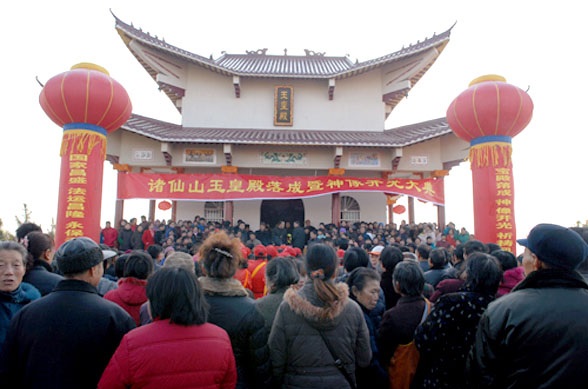
The ancestral hall (citang or zongci) served as the architectural and institutional center of filial piety practice in traditional Chinese society, functioning simultaneously as a temple, a family archive, a legal tribunal, and a community center. These halls, which ranged from modest single-room structures in small villages to magnificent multi-courtyard complexes maintained by wealthy lineages in Fujian, Guangdong, and Jiangxi provinces, housed the ancestral tablets of the lineage's founding ancestors and their descendants, arranged in precise hierarchical order according to generation and seniority. The most important rituals of the year — particularly the Qingming (Tomb-Sweeping) Festival in spring and the Chongyang (Double Ninth) Festival in autumn — were performed in these halls, bringing together hundreds or even thousands of lineage members for collective worship, feasting, and the reaffirmation of kinship bonds. The ancestral hall also served as the venue for lineage governance, where elders adjudicated disputes, administered communal property, managed lineage schools and charitable funds, and enforced behavioral standards that often superseded the authority of the imperial state itself (Freedman, 1966, pp. 33–58).
The Communist revolution of 1949 brought a sustained assault on ancestor worship and the institutional structures that supported it, as the new regime targeted lineage organizations, ancestral halls, and "feudal superstition" as obstacles to socialist transformation. During the land reform campaigns of the early 1950s, ancestral halls were confiscated, converted to secular uses, or destroyed; ancestral tablets were burned; and lineage elders who had wielded quasi-judicial authority were publicly denounced and sometimes executed as "local despots." The Cultural Revolution (1966–1976) intensified this campaign, with Red Guards systematically destroying surviving temples, graves, and genealogical records in the name of eliminating the "Four Olds." Yet the reform era that began in 1978 witnessed a remarkable revival of ancestor worship practices across southern China, as newly prosperous villagers rebuilt ancestral halls, reprinted genealogies, and resumed ritual observances that had been suppressed for decades. This revival, which accelerated dramatically in the 1990s and 2000s, has been interpreted by scholars as evidence of the extraordinary resilience of kinship-based social organization in Chinese culture and the limited capacity of even the most powerful state to permanently eradicate deeply rooted religious and ethical practices (Ebrey, 1991, pp. 62–85).
Modern Challenges: The Aging Society
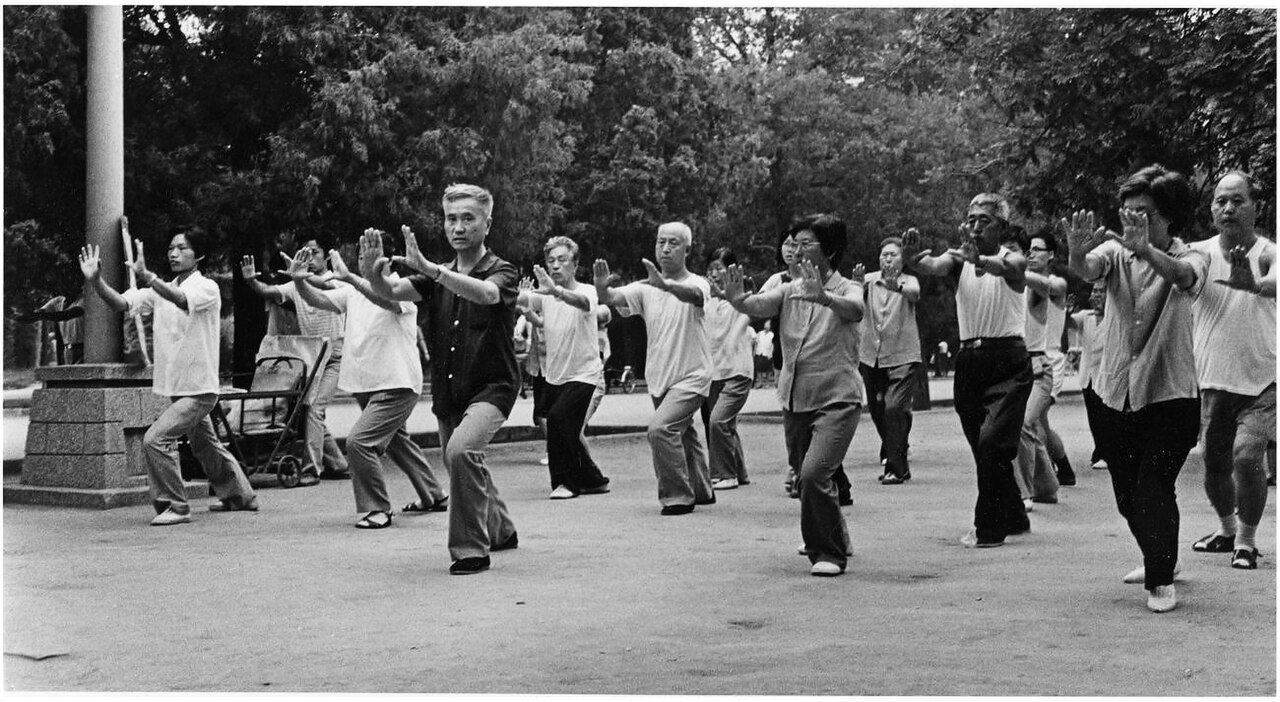
The most consequential modern challenge to the practice of filial piety is demographic: China's one-child policy (1979–2015) and subsequent rapid fertility decline have created a population structure in which the traditional expectation that children will care for aging parents has become practically unsustainable for millions of families. The so-called "4-2-1" problem — in which a single adult child bears responsibility for two parents and four grandparents — has transformed filial piety from a shared family obligation distributed among multiple siblings into an impossible burden concentrated on individuals who simultaneously face the demands of career, marriage, and their own child-rearing. China's elderly population, which numbered approximately 280 million people over age sixty in 2023 (representing roughly 19.8 percent of the total population), is projected to exceed 400 million by 2035, creating an eldercare crisis of staggering proportions for which the country's social welfare infrastructure remains woefully underprepared. The traditional assumption that families would provide all necessary eldercare has inhibited the development of public pension systems, professional nursing facilities, and community-based support services, leaving a gap that neither the state nor the market has yet adequately filled (Croll, 2006, pp. 132–155).
The legal codification of filial obligations has taken on new urgency in this demographic context, as the Chinese government has sought to reinforce family-based eldercare through legislation rather than relying solely on cultural norms that are perceived to be weakening. The 2013 revision of the "Law on Protection of the Rights and Interests of the Elderly" included a remarkable provision requiring adult children to visit their aging parents "frequently" — a legal mandate for emotional attention that was widely mocked on social media but reflected genuine anxiety about the erosion of intergenerational bonds in a society undergoing rapid urbanization and social transformation. Courts have heard an increasing number of cases in which elderly parents sue their adult children for financial support or visitation, a phenomenon that would have been virtually unthinkable in traditional Chinese society, where filial obligations were enforced by community pressure and lineage authority rather than formal litigation. The spectacle of parents taking their children to court represents, for many observers, the ultimate evidence that the organic social bonds that once sustained filial piety have been replaced by the impersonal mechanisms of the legal system (Rosemont and Ames, 2009, pp. 118–142).
The spatial dimensions of the filial piety crisis are equally significant, as the massive rural-to-urban migration that has powered China's economic growth has separated hundreds of millions of adult children from their aging parents in the countryside. An estimated 70 million elderly Chinese live as "left-behind elderly" (liushou laoren) in rural villages, many of them in poor health, with limited access to medical care, and dependent on remittances from children they see only once or twice a year during holiday visits. Studies have documented elevated rates of depression, loneliness, and suicide among left-behind elderly, particularly in provinces with high outmigration rates such as Sichuan, Henan, and Anhui. Meanwhile, the adult children who have migrated to cities face their own anguish, torn between the economic necessity of urban employment and the cultural obligation to be physically present for aging parents — a dilemma that exposes the fundamental tension between China's modernization trajectory and its most deeply held social values. Various proposed solutions — including rural eldercare cooperatives, village-based mutual aid societies, telemedicine programs, and government subsidies for migrant workers who return home to care for parents — represent attempts to reconcile the irreconcilable, adapting the ancient ideal of filial piety to conditions its originators could never have imagined (Croll, 2006, pp. 168–195).
"The tree wishes to be still but the wind does not stop; the child wishes to care for the parents but they will not wait."
Han Ying, Hanshi Waizhuan, c. 150 BCEXiao in the Digital Age
The digital transformation of Chinese society has created novel forms of filial piety practice that simultaneously extend and complicate the traditional concept, generating new possibilities for intergenerational connection while raising unsettling questions about whether technologically mediated care can substitute for physical presence. WeChat, the ubiquitous super-app that functions as the primary communication platform for over a billion Chinese users, has become the essential infrastructure of modern filial piety, enabling daily video calls between urban workers and rural parents, facilitating the transfer of remittances and red envelopes, and creating family group chats that maintain a continuous digital connection across vast geographical distances. The phenomenon of "digital filial piety" (shuzhi xiao) has generated a distinctive vocabulary and set of practices: teaching parents to use smartphones, adding them to WeChat groups, sharing health articles in family chats, and ordering groceries and medications for distant parents through delivery apps. These practices represent a genuine adaptation of filial piety to contemporary conditions, but they also raise the uncomfortable question of whether sending a WeChat message can truly fulfill obligations that were historically understood to require physical service, emotional attunement, and embodied presence (Rosemont and Ames, 2009, pp. 155–178).
The Chinese technology industry has increasingly targeted eldercare as a growth market, developing products and services that leverage artificial intelligence, robotics, and the Internet of Things to address the practical dimensions of filial obligation. Smart home systems equipped with fall detection sensors, medication reminders, and remote health monitoring devices promise to allow distant children to supervise their parents' well-being in real time, while companion robots designed for elderly users offer conversation, entertainment, and cognitive stimulation to combat the loneliness of aging alone. Alibaba, JD.com, and other e-commerce platforms have developed specialized eldercare product lines and delivery services, and the nascent "silver economy" (yinfa jingji) is projected to reach a market value of over 12 trillion yuan by 2025. Yet the commodification of filial piety — the transformation of a moral obligation into a market transaction — sits uneasily with the Confucian insistence that genuine xiao requires not merely material provision but heartfelt emotional engagement, the quality that Confucius called "the countenance of filial piety" (se nan), which he identified as the most difficult aspect of the virtue to achieve (Knapp, 2005, pp. 125–148).
The contemporary Chinese state has proven remarkably adept at mobilizing the rhetoric of filial piety for political purposes, incorporating xiao into the official ideology of "core socialist values" (shehuizhuyi hexin jiazhiguan) promoted by the Xi Jinping administration since 2012. State media regularly features stories of exemplary filial conduct — children who sacrifice careers to care for disabled parents, migrant workers who carry elderly mothers on their backs during the Spring Festival migration, young people who donate organs to save parents' lives — narratives that consciously echo the Twenty-Four Exemplars tradition while serving the government's interest in promoting family-based social welfare provision over state-funded alternatives. This instrumentalization of filial piety reflects a broader pattern in which the Chinese Communist Party, having spent its revolutionary decades denouncing Confucian family ethics as feudal oppression, has in its reform-era incarnation selectively rehabilitated traditional values as tools for maintaining social stability and reducing the fiscal burden of an aging population. The irony of a nominally Marxist state championing Confucian filial piety has not been lost on Chinese intellectuals, who debate whether this represents a genuine cultural revival, a cynical manipulation of tradition, or simply the latest chapter in the extraordinary two-and-a-half-thousand-year history of xiao as the organizing principle of Chinese social life (Holzman, 1998, pp. 145–172).
Quiz
What is the fundamental concept that has shaped Chinese family life, law, and moral philosophy according to the article?
Which text is considered the most important in the intellectual history of xiao?
What did Mencius identify as the gravest form of unfilial conduct?
What was the purpose of the 'ju xiaolian' system during the Han dynasty?
Which dynasty's legal code is noted for its comprehensive system of penalties related to filial piety?
How did the Communist revolution impact the practice of ancestor worship?
What does the article describe as a modern challenge to the practice of filial piety in China?
How has digital technology influenced modern practices of filial piety?
Write your thoughts, then get feedback from Jason — you can turn any answer into a full discussion.
9. In what ways do you think the concept of filial piety could adapt to address the challenges of an aging population in modern China?
10. How might the stories from the Twenty-Four Exemplars of Filial Piety be interpreted differently by modern audiences compared to their original context?
Frequently Asked Questions
Common questions about Filial Piety: The Root of Chinese Social Order
What is filial piety in Chinese culture?
Filial piety (孝, xiào) is the Confucian virtue of respect, obedience, and care for one's parents and elders. It has been considered the foundation of Chinese moral life for over two thousand years, shaping everything from family dynamics to legal codes and political philosophy.
Why is filial piety so important in China?
Filial piety is important because Confucian philosophy treats the parent-child bond as the model for all social relationships, including the bond between ruler and subject. A society of dutiful children was believed to naturally produce loyal citizens, making filial piety the root of social and political order.
How has filial piety changed in modern China?
Modern economic pressures, urbanization, and the one-child policy have transformed filial piety from daily in-home care to long-distance financial support and digital communication. China even passed a law in 2013 requiring adult children to visit their aging parents regularly, reflecting anxiety about declining traditional practices.
Is filial piety still practiced in China today?
Yes, filial piety remains a deeply held value in contemporary China, though its expression has evolved. Younger generations may show devotion through financial support, hiring caregivers, or video calls rather than the traditional model of multigenerational households and daily personal care.
What is the Xiaojing and why does it matter?
The Xiaojing (Classic of Filial Piety) is an ancient Confucian text that elevates filial devotion to a cosmic principle connecting family loyalty to universal harmony. It was required reading for centuries in imperial China and provided the philosophical justification for making filial piety central to Chinese law, governance, and education.