
Podcast


Podcast: Zhang Zhongjing and the Treatise on Cold Damage
Listen to Jason & Amy discuss Zhang Zhongjing and the Treatise on Cold Damage
New here?
Life in an Age of Plague
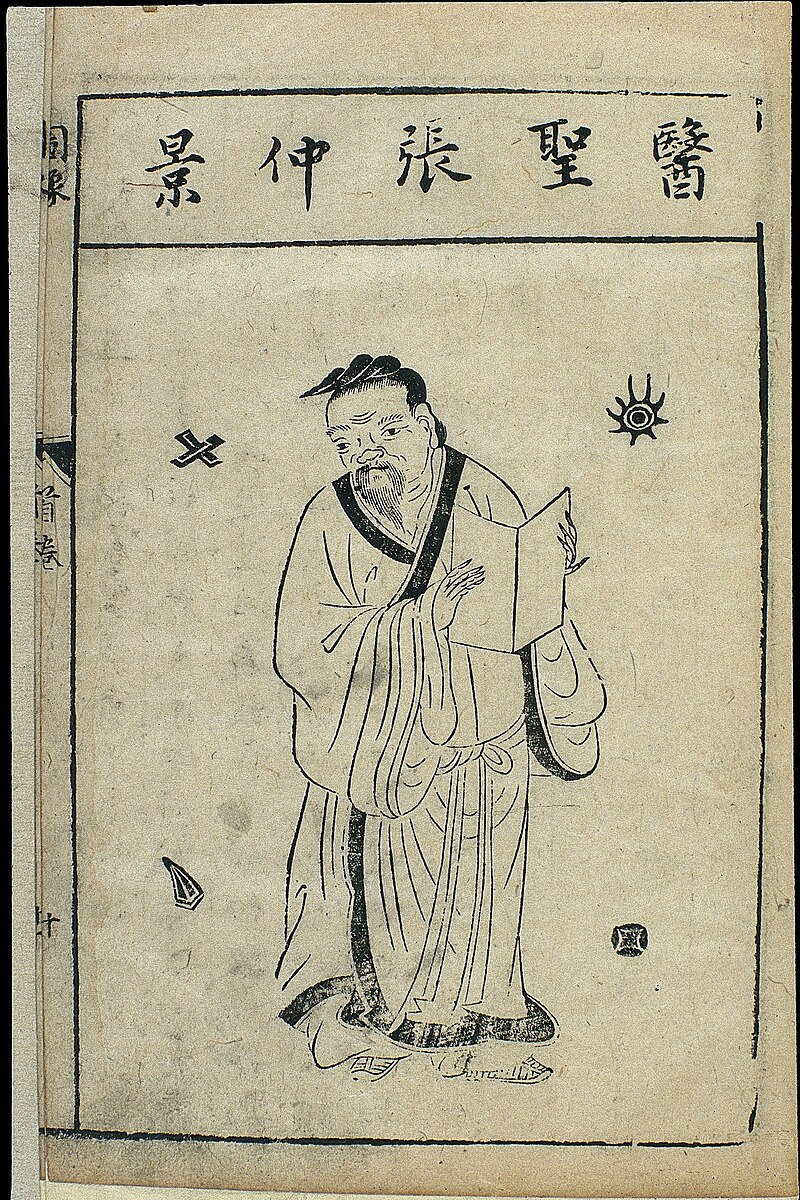
Zhang Zhongjing (张仲景), also known by his courtesy name Zhang Ji, was born around 150 CE in Nanyang commandery, in what is now Henan province, during the final turbulent decades of the Eastern Han dynasty. The political disintegration of the Han state was accompanied by devastating epidemics that ravaged the population across northern China, and these plagues left an indelible mark on Zhang Zhongjing's life and work. In the preface to his magnum opus, the Shanghan Zabing Lun, Zhang Zhongjing wrote with harrowing directness about the catastrophic losses suffered by his own extended family: of more than two hundred clan members, two-thirds had died within a decade, and of those deaths, seven-tenths were attributed to shanghan — a term encompassing various epidemic febrile diseases. This personal experience of mass mortality galvanized Zhang Zhongjing's determination to compile a systematic clinical guide that would enable physicians to recognize and treat epidemic diseases effectively, transforming the grief of personal loss into a lasting contribution to medical knowledge (Unschuld, 1986, pp. 168–185).
The historical context of Zhang Zhongjing's work is essential to understanding its significance. The late Eastern Han period witnessed a series of catastrophic pandemics, beginning around 171 CE and recurring at intervals through the early third century, that may have reduced the population of northern China by as much as half. Modern scholars have debated the specific pathogens responsible — typhoid fever, typhus, influenza, and hemorrhagic fever have all been proposed — but the clinical descriptions in the Shanghan Lun suggest a range of infectious diseases rather than a single pathogen. Zhang Zhongjing's achievement was to develop a clinical framework flexible enough to guide treatment across this range of conditions, focusing not on the identification of specific pathogens (a concept that would not emerge for another seventeen centuries) but on the recognition of characteristic patterns of symptoms and signs that indicated the stage and nature of the body's response to pathogenic invasion. As Sivin (1987) observed, this pattern-based approach to diagnosis — treating the patient's response rather than the putative cause — anticipates aspects of modern personalized medicine and remains therapeutically productive even in the age of microbiology.
Little is known with certainty about Zhang Zhongjing's professional career beyond what can be inferred from his writings. Later sources claim that he served as the prefect (taishou) of Changsha, a position of considerable administrative responsibility, but this claim has been questioned by some modern historians. What is beyond dispute is that Zhang Zhongjing was a physician of extraordinary clinical experience and intellectual ambition, who synthesized the theoretical framework of the Huangdi Neijing with extensive personal clinical observation to produce a work of unprecedented practical utility. His preface reveals a man deeply critical of the medical profession of his day, which he accused of pursuing fame and fortune rather than genuine healing, and profoundly committed to the ideal of the physician as a moral agent whose primary obligation was the relief of suffering. This ethical dimension of Zhang Zhongjing's legacy has been as influential as his clinical contributions, establishing a standard of medical virtue that Chinese physicians have aspired to for nearly two millennia (Harper, 1998, pp. 148–165).
"Diligently seek the teachings of the ancients, broadly collect all formulas."
Zhang Zhongjing, Preface to the Shanghan Zabing LunThe Six-Stage Model of Disease Progression
The most influential theoretical contribution of the Shanghan Lun is its six-stage model of disease progression (liu jing bianzheng, 六经辨证), which describes how externally contracted febrile diseases move through the body in a characteristic sequence if not effectively treated at each stage. The six stages are organized into three yang stages — Taiyang (Greater Yang), Yangming (Yang Brightness), and Shaoyang (Lesser Yang) — and three yin stages — Taiyin (Greater Yin), Shaoyin (Lesser Yin), and Jueyin (Terminal Yin). The yang stages describe the body's active resistance to pathogenic invasion, progressing from the exterior to the interior, while the yin stages describe the progressive depletion of the body's vital resources as the disease overwhelms the defensive response. Each stage is defined not by a single symptom but by a characteristic constellation of signs — pulse quality, temperature pattern, appetite, urination, perspiration, and other clinical indicators — that together constitute a diagnostic pattern (zheng) to which a specific herbal formula can be matched (Unschuld, 1986, pp. 190–215).
The Taiyang stage, the initial phase of disease, is characterized by chills, fever, headache, stiff neck, and a floating pulse, indicating that the pathogen has invaded the body's surface but has not yet penetrated deeper. The classic Taiyang formula, Mahuang Tang (Ephedra Decoction), promotes sweating to expel the pathogen through the skin surface. If treatment at the Taiyang stage fails, the disease may progress to the Yangming stage, marked by high fever, profuse sweating, intense thirst, and a full, surging pulse, indicating that the pathogen has entered the yang organs (particularly the stomach and large intestine). The Yangming formula, Bai Hu Tang (White Tiger Decoction), clears interior heat with gypsum, anemarrhena, and rice. The Shaoyang stage, often described as the "half-exterior, half-interior" stage, presents with alternating chills and fever, bitter taste, chest fullness, and a wiry pulse, and is treated with Xiao Chai Hu Tang (Minor Bupleurum Decoction), one of the most frequently prescribed formulas in the history of Chinese medicine. The progression through the three yin stages — characterized by increasingly severe cold, exhaustion, and organ dysfunction — represents a medical emergency requiring powerful warming and tonifying formulas to prevent collapse and death (Sivin, 1987, pp. 235–258).
The genius of Zhang Zhongjing's six-stage model lies not in its anatomical accuracy — the stages do not correspond to discrete physiological systems in the modern biomedical sense — but in its clinical utility as a decision-making framework. By classifying the patient's presentation into one of six stages, the physician could rapidly determine the appropriate therapeutic strategy (expel the pathogen? clear heat? warm the interior? tonify the deficiency?) and select from a limited number of core formulas whose composition and dosage had been optimized through extensive clinical experience. This pattern-formula matching approach dramatically reduced the cognitive complexity of clinical decision-making, enabling physicians with varying levels of training to provide effective treatment for life-threatening conditions. As Needham and Lu (2000) emphasized, the Shanghan Lun's systematic linking of diagnostic patterns to therapeutic formulas represented a paradigm shift in Chinese medicine, moving the field from a primarily theoretical discipline to a clinically actionable art.
The Art of Formula-Based Medicine
The Shanghan Zabing Lun contains approximately 269 herbal formulas (some counts vary depending on the edition), each precisely specifying the ingredients, dosages, preparation methods, and clinical indications. These formulas are not arbitrary combinations of herbs but carefully designed prescriptions in which each ingredient plays a defined role: the "sovereign" (jun) herb addresses the primary pathology, the "minister" (chen) herb supports the sovereign's action, the "assistant" (zuo) herbs moderate side effects or address secondary symptoms, and the "envoy" (shi) herb guides the formula to the appropriate part of the body. This hierarchical formula structure, while not invented by Zhang Zhongjing, reached its most sophisticated expression in his work and became the standard framework for Chinese herbal prescription that persists to the present day. As Unschuld (1986) observed, Zhang Zhongjing's formulas demonstrated a level of pharmacological reasoning — attention to drug interactions, dose-response relationships, and the modification of formulas based on individual patient presentation — that was unprecedented in the ancient world.
Among the most celebrated formulas in the Shanghan Lun is Guizhi Tang (Cinnamon Twig Decoction), a deceptively simple five-ingredient prescription consisting of cinnamon twig, white peony, fresh ginger, jujube, and honey-prepared licorice. This formula, indicated for the Taiyang stage of cold damage when the patient presents with fever, slight chills, and spontaneous sweating (indicating a deficiency of defensive qi), exemplifies Zhang Zhongjing's approach to therapeutic balance: the warm, dispersing cinnamon twig expels the pathogen from the body surface, while the cool, astringent white peony prevents the loss of vital fluids through excessive sweating. The interaction between these two ingredients — one opening, one containing — creates a therapeutic dynamic that is more than the sum of its parts, illustrating the principle that a well-constructed formula achieves effects that no single herb could accomplish alone. The Shanghan Lun systematically presents variations of Guizhi Tang — adding or subtracting ingredients, adjusting dosages — for different clinical presentations, demonstrating how a core formula can be adapted to the nuances of individual cases (Sivin, 1987, pp. 260–280).
The Jingui Yaolue (Essential Prescriptions from the Golden Cabinet), which constitutes the second half of Zhang Zhongjing's original work, extends the formula-based approach to internal medicine conditions that are not necessarily caused by external pathogenic invasion. Conditions addressed include chest obstruction (xiong bi), a pattern strikingly similar to angina pectoris, treated with formulas containing trichosanthes, allium, and white wine; abdominal masses and accumulations; jaundice; edema; and gynecological conditions. The breadth of clinical coverage in the combined Shanghan Lun and Jingui Yaolue established Zhang Zhongjing as the first physician in Chinese history to provide a comprehensive, formula-based clinical guide that addressed both epidemic and chronic diseases within a unified theoretical framework. The formulas themselves have been subjected to extensive pharmacological investigation in the modern era, and several have demonstrated measurable biological activity in laboratory and clinical studies, lending scientific support to their continued use in contemporary Chinese medical practice (Needham & Lu, 2000, pp. 175–198).
"Observe the pulse and pattern, understand what error was committed, and treat according to the pattern."
Shanghan Lun, Chapter 16Diagnostic Methodology
Zhang Zhongjing's diagnostic methodology, as revealed in the Shanghan Lun, represents a significant refinement of the diagnostic principles outlined in the Huangdi Neijing. While the Neijing provided the theoretical foundation for Chinese diagnostic thinking, Zhang Zhongjing transformed these principles into a systematic clinical method by demonstrating, through hundreds of case-based discussions, exactly how theoretical categories could be applied to the interpretation of real patient presentations. His diagnostic approach relied on the careful integration of information from four sources: observation (wang), including the patient's complexion, body habitus, and tongue coating; listening and smelling (wen), including the quality of the voice, breath sounds, and body odor; interrogation (wen), a detailed inquiry into the history and nature of symptoms; and palpation (qie), particularly the reading of the pulse at the radial artery. Of these four diagnostic methods, pulse diagnosis received the most elaborate treatment in the Shanghan Lun, with Zhang Zhongjing describing over twenty distinct pulse qualities and their diagnostic significance with a precision that established new standards for clinical observation (Unschuld, 2003, pp. 210–230).
The Shanghan Lun's most innovative diagnostic contribution was the concept of "pattern identification" (bianzheng, 辨证), the process of synthesizing multiple clinical signs into a coherent diagnostic pattern that could be matched to a specific therapeutic formula. This approach differed fundamentally from the disease-naming approach that would come to dominate Western medicine: rather than assigning patients to fixed disease categories based on presumed etiology, pattern identification categorized patients according to the current state of their body's response to pathological processes. Two patients with the same biomedically defined disease might present with different patterns and therefore receive different treatments, while two patients with different diseases might present with similar patterns and receive the same formula. This emphasis on the individuality of each clinical presentation, and the corresponding flexibility of therapeutic response, is often cited as one of the most distinctive and valuable features of Chinese medical practice. As Harper (1998) argued, Zhang Zhongjing's pattern identification method represented an early and sophisticated form of personalized medicine, attending to the unique configuration of each patient's body rather than treating all patients with the same condition identically.
The Shanghan Lun also demonstrated remarkable clinical acuity in its description of treatment errors and their consequences. Zhang Zhongjing devoted extensive discussion to iatrogenic complications — conditions caused or worsened by incorrect treatment — detailing what happened when patients at one stage of disease were mistakenly treated with methods appropriate to a different stage. A patient at the Taiyang stage who was incorrectly purged, for example, might develop a Taiyin pattern of cold and deficiency; a patient whose disease had already entered the Yangming stage might be worsened by the administration of sweat-promoting herbs. These discussions of treatment errors served a crucial educational function, teaching practitioners to recognize the signs of mismanagement and providing corrective formulas to address iatrogenic complications. This systematic attention to the consequences of therapeutic error demonstrated a level of clinical self-awareness and accountability that was exceptional in ancient medicine and that contributes to the Shanghan Lun's continuing relevance as a clinical teaching text (Lo, 2001, pp. 75–92).
Textual Transmission and Legacy
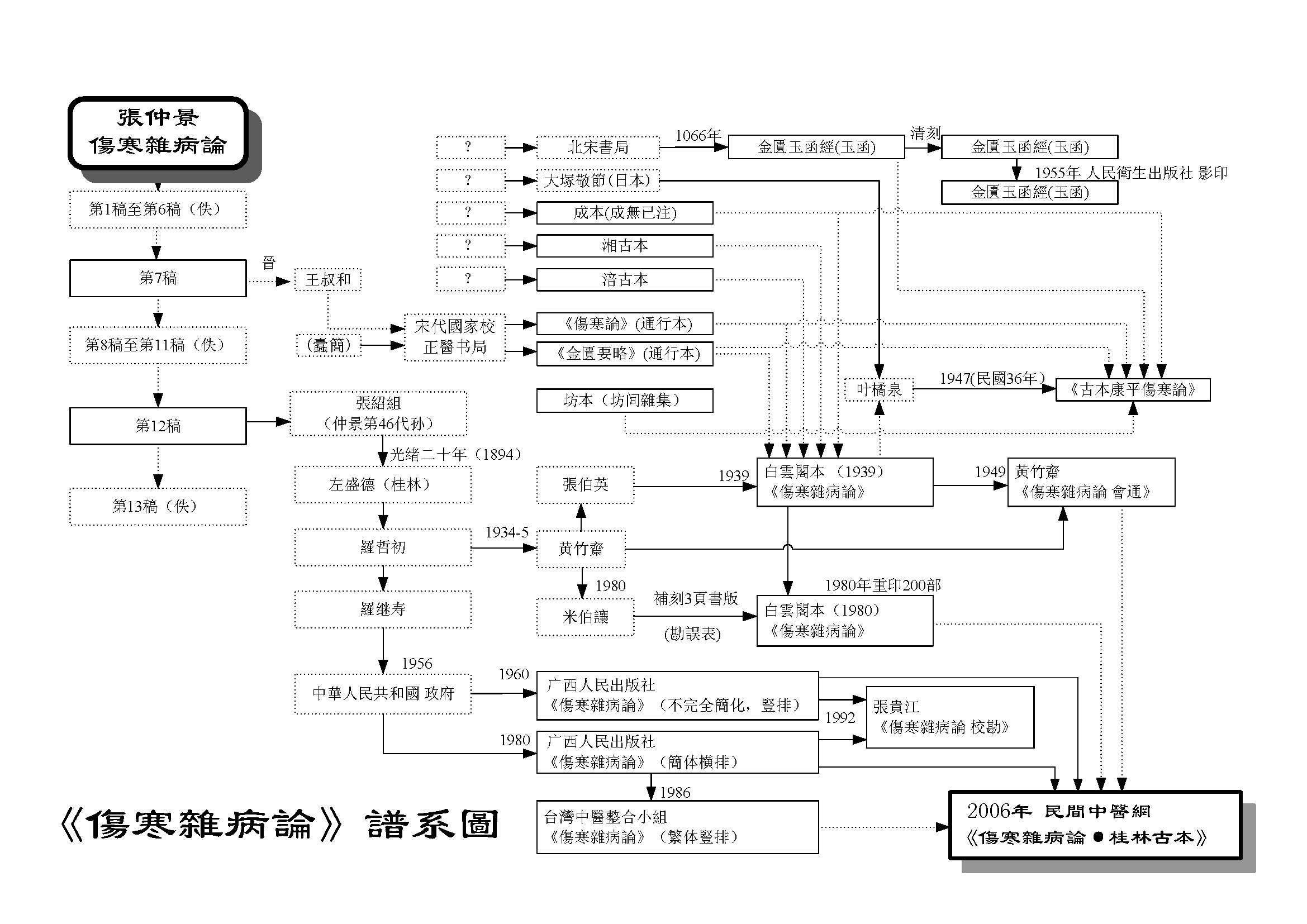
The textual history of the Shanghan Zabing Lun reflects the political chaos of the period in which it was composed. Zhang Zhongjing completed his work during the final years of the Eastern Han dynasty, a period of civil war and social disintegration that culminated in the Three Kingdoms partition. The original text was lost or dispersed during these upheavals, and the work survived only through the editorial efforts of the Jin dynasty physician Wang Shuhe (ca. 210–285 CE), who collected and reorganized the fragments into two separate books: the Shanghan Lun (Treatise on Cold Damage), focusing on externally contracted febrile diseases, and the Jingui Yaolue (Essential Prescriptions from the Golden Cabinet), covering miscellaneous internal conditions. Wang Shuhe's editions inevitably reflected his own interpretive judgments, and scholars have debated for centuries which portions of the received text faithfully represent Zhang Zhongjing's original words and which may have been modified or supplemented by later editors. Despite these textual uncertainties, the core content — the six-stage framework, the diagnostic methods, and the great majority of the formulas — is accepted as authentically originating with Zhang Zhongjing (Unschuld, 1986, pp. 220–240).
The influence of the Shanghan Lun on subsequent Chinese medical thought has been immeasurable. During the Song dynasty, the text was officially printed and distributed by the imperial government, ensuring its preservation and wide dissemination. From the Jin and Yuan dynasties onward, schools of medical thought defined themselves partly in relation to their interpretation of the Shanghan Lun: the "cold damage" school maintained that Zhang Zhongjing's framework was universally applicable, while the "warm disease" school, led by physicians such as Wu Youke and Ye Tianshi, argued that the epidemic febrile diseases of southern China required a different diagnostic framework because their pathogenic mechanisms differed from the cold-invasion model that the Shanghan Lun presupposed. This debate, which continued for centuries, was enormously productive for Chinese medical theory, generating new diagnostic categories, therapeutic strategies, and pharmacological innovations that enriched the tradition even as they challenged specific aspects of Zhang Zhongjing's original framework. As Sivin (1987) observed, the Shanghan Lun's extraordinary influence owed as much to the questions it provoked as to the answers it provided.
Zhang Zhongjing's legacy in the modern era extends well beyond China. His formulas continue to be prescribed by millions of practitioners worldwide, and several have been subjected to rigorous clinical trials. Xiao Chai Hu Tang (Minor Bupleurum Decoction) has been extensively studied in Japan, where it is one of the most widely prescribed kampo formulas, with clinical evidence supporting its use in chronic hepatitis and other conditions. Mahuang Tang's key ingredient, ephedra, was the source of the bronchodilator ephedrine, one of the most important pharmaceutical discoveries of the nineteenth century. The Shanghan Lun's pattern-based approach to diagnosis has attracted interest from researchers in precision medicine and artificial intelligence, who recognize parallels between Zhang Zhongjing's method of matching diagnostic patterns to therapeutic formulas and modern approaches to algorithmic clinical decision support. Nearly two millennia after his death, Zhang Zhongjing remains what his admirers have long called him: the sage of Chinese clinical medicine, whose work transformed a tradition of theoretical speculation into a practical art of healing (Needham & Lu, 2000, pp. 200–225).
"Where there is this pattern, use this formula."
Traditional Shanghan school maximEnduring Clinical Relevance
The continued clinical relevance of Zhang Zhongjing's formulas in the twenty-first century is one of the most remarkable phenomena in the history of medicine. While the vast majority of therapeutic recommendations from ancient medical texts worldwide have been superseded by modern pharmacology, many of the formulas recorded in the Shanghan Lun and Jingui Yaolue remain in active clinical use, prescribed by trained practitioners to millions of patients each year across China, Japan, Korea, and increasingly in Western countries. This longevity reflects not merely cultural conservatism but the genuine clinical utility of formulas that were refined through centuries of clinical experience before being recorded by Zhang Zhongjing and further optimized by subsequent generations of physicians. The Japanese kampo tradition, which bases its pharmacopeia almost entirely on formulas from the Shanghan Lun and Jingui Yaolue, provides a particularly instructive case: kampo formulas are regulated as prescription drugs by the Japanese Ministry of Health, covered by national health insurance, and prescribed by mainstream physicians alongside Western pharmaceuticals. Over 148 kampo formulas are approved for clinical use in Japan, and they account for a significant share of the Japanese pharmaceutical market (Unschuld, 2003, pp. 350–368).
Modern pharmacological research has identified biologically active compounds and mechanisms of action for many of Zhang Zhongjing's classical formulas. Da Chengqi Tang (Major Order the Qi Decoction), a purgative formula used for the Yangming stage of disease, contains rhubarb root, whose anthraquinone compounds are well-established stimulant laxatives in Western pharmacology. Zhen Wu Tang (True Warrior Decoction), used for the Shaoyin stage of cold damage with water retention, contains aconite root processed to reduce its toxic alkaloid content while preserving its cardiovascular stimulant properties — a processing technique that Zhang Zhongjing's text describes in detail. Gui Zhi Fu Ling Wan (Cinnamon Twig and Poria Pill), originally prescribed for gynecological conditions involving blood stasis, has been investigated in modern clinical trials for uterine fibroids, with preliminary results suggesting efficacy comparable to conventional hormonal treatments. These pharmacological investigations validate Zhang Zhongjing's clinical observations while also revealing the molecular mechanisms that underlie the traditional therapeutic claims (Sivin, 1987, pp. 285–310).
The COVID-19 pandemic brought renewed global attention to Zhang Zhongjing's legacy when Chinese health authorities incorporated classical formulas from the Shanghan Lun tradition into official treatment protocols for SARS-CoV-2 infection. Formulas such as Maxing Shigan Tang (Ephedra, Apricot Kernel, Gypsum, and Licorice Decoction) and modified versions of Xiao Chai Hu Tang were prescribed alongside Western antiviral agents in an integrative approach that reflected China's longstanding policy of combining traditional and modern medicine. While the efficacy of these interventions remains debated in the international scientific community, the episode illustrated the continuing vitality of Zhang Zhongjing's clinical framework and its capacity to inform therapeutic responses to novel infectious diseases. The Shanghan Lun was written in response to devastating epidemics that claimed the lives of Zhang Zhongjing's own family members; nearly two thousand years later, his formulas were once again mobilized in response to a global pandemic, demonstrating the remarkable endurance of a clinical tradition built on meticulous observation, systematic reasoning, and compassionate concern for human suffering (Harper, 1998, pp. 170–190).
Quiz
What personal experience influenced Zhang Zhongjing's determination to compile the Shanghan Zabing Lun?
What is the primary focus of Zhang Zhongjing's diagnostic approach in the Shanghan Lun?
What does the six-stage model of disease progression in the Shanghan Lun describe?
Which formula is associated with the Taiyang stage in Zhang Zhongjing's model?
What is the significance of the Shanghan Lun's pattern identification method?
What role does the 'sovereign' herb play in Zhang Zhongjing's herbal formulas?
How did the Shanghan Lun influence Chinese medical thought during the Song dynasty?
What is one reason Zhang Zhongjing's formulas remain clinically relevant today?
Write your thoughts, then get feedback from Jason — you can turn any answer into a full discussion.
9. In what ways does Zhang Zhongjing's pattern-based approach to diagnosis reflect modern personalized medicine?
10. How might the historical context of Zhang Zhongjing's life have shaped his work in medicine?
Frequently Asked Questions
Common questions about Zhang Zhongjing and the Treatise on Cold Damage
Who was Zhang Zhongjing and what did he contribute to Chinese medicine?
Zhang Zhongjing was a physician of the late Eastern Han dynasty (c. 150–219 CE) widely regarded as the greatest clinician in Chinese medical history. His masterwork, the Shanghan Zabing Lun (Treatise on Cold Damage and Miscellaneous Diseases), established the practice of pattern-based diagnosis and systematic herbal prescribing that remains central to Chinese medicine today.
What is the Treatise on Cold Damage about?
The Treatise on Cold Damage (Shanghan Lun) is a clinical manual that systematically categorizes febrile and infectious diseases according to six stages of progression through the body. It provides detailed herbal formulas matched to specific symptom patterns at each stage, creating one of the world's earliest systems of differential diagnosis and treatment protocols.
Why are Zhang Zhongjing's herbal formulas still used today?
Zhang Zhongjing's formulas remain in clinical use because they are based on precise pattern differentiation and have been validated through nearly two thousand years of continuous practice. Many of his classical prescriptions, such as Guizhi Tang and Mahuang Tang, are still prescribed in modern TCM clinics and have been the subject of pharmacological research confirming their therapeutic properties.
What is the six-channel theory in Chinese medicine?
The six-channel theory, developed in the Shanghan Lun, describes how externally contracted diseases progress through six paired meridian systems from the body's exterior to its interior. Each channel (Taiyang, Yangming, Shaoyang, Taiyin, Shaoyin, and Jueyin) has characteristic symptoms and corresponding treatment strategies, providing a dynamic framework for tracking disease evolution.
How did the Treatise on Cold Damage influence global medicine?
The Treatise profoundly shaped medical practice across East Asia, becoming a core text in Japan (where it inspired the Kampo tradition), Korea, and Vietnam. In modern times, its systematic approach to matching treatments with symptom patterns has drawn comparisons to evidence-based medicine, and its formulas are now studied in international pharmacological research.